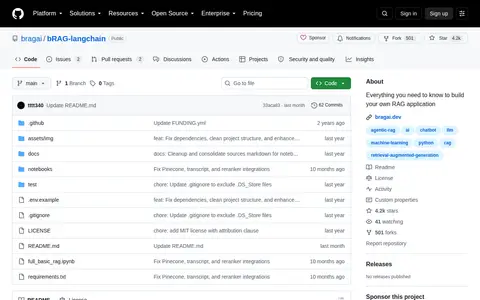

This repository collects notebooks that explore Retrieval-Augmented Generation (RAG) for various applications, from introductory to advanced implementations. It includes a full_basic_rag.ipynb starter and notebooks on multi-querying, routing, query construction, indexing, and advanced retrieval. The materials cover environment setup, data loading, embedding generation, and vector store configuration with ChromaDB or Pinecone.
Directory
Search results
Published directory entries matching your search.
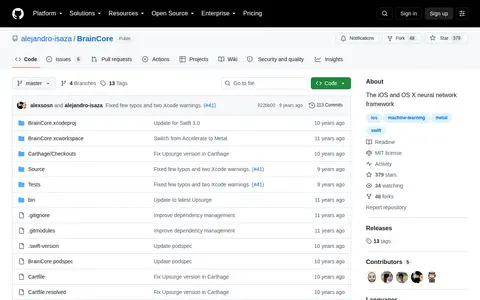
The iOS and OS X neural network framework.
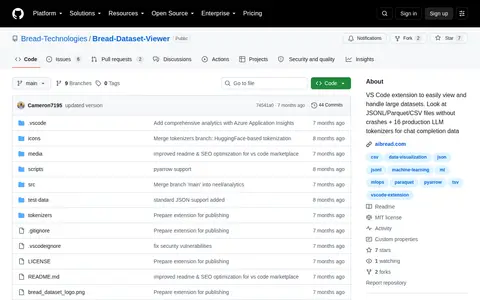
Bread Dataset Viewer is a VS Code extension for viewing and handling large datasets. It opens JSONL, Parquet, CSV, TSV, JSON, and Arrow/Feather files by streaming and lazy-loading data, and provides Cards, Table, and Raw views. It includes 16 production LLM tokenizers from GPT, Claude, Llama, and Qwen for chat completion data.
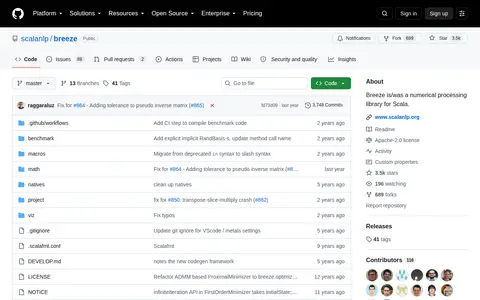
Breeze is a numerical processing library for Scala.
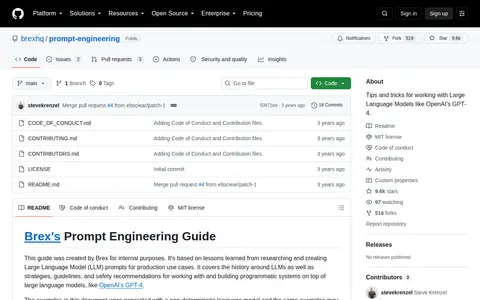
brexhq/prompt-engineering is a GitHub repository containing Brex's Prompt Engineering Guide. It provides tips and tricks for working with Large Language Models such as OpenAI's GPT-4, with content covering the definition of large language models, an incomplete history of language models, and the concept of prompts.

Theano based library for deep and recurrent neural networks.
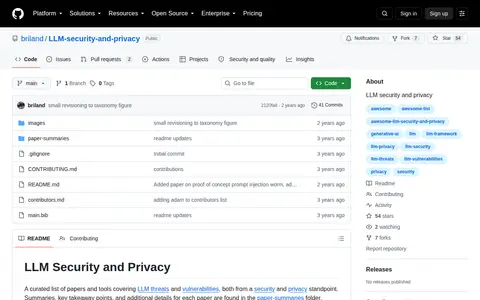
A curated GitHub list of papers and tools covering LLM threats and vulnerabilities from a security and privacy standpoint. It includes paper summaries, key takeaway points, citations in a bib file, and frameworks and taxonomies such as OWASP Top 10 for LLM Applications.
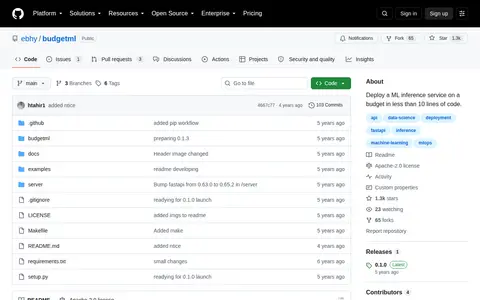
BudgetML is a tool for deploying a machine learning inference service to a secured HTTPS API endpoint with less than 10 lines of code. It runs the model on a Google Cloud Platform preemptible instance, generates a FastAPI server endpoint, and provides interactive Swagger docs. The project states that the library is not being actively maintained.
Open-source project that supports deploying, serving, monitoring, or operating AI and machine-learning systems.
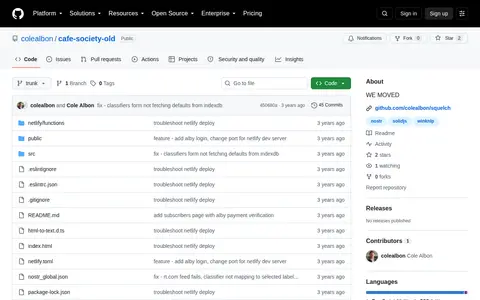
) - Self-sovereign machine learning training tool for nostr global feed. Trained models can be monetized/distributed over nostr private messages. Your pre-paid model subscribers register via lightning payments.
Authors:, Dexter Storey, Ted Spare.
CAMEL is an open-source community and framework for studying multi-agent systems at scale. It implements and supports various agents, tasks, prompts, models and simulated environments, and describes design principles including evolvability, scalability, statefulness and code-as-prompt.
Role-playing approach for LLMs and auto-agents like BabyAGI & AutoGPT.
Model interpretability and understanding library for PyTorch.
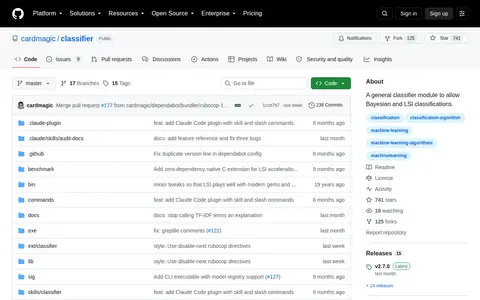
A general classifier module to allow Bayesian and other types of classifications.
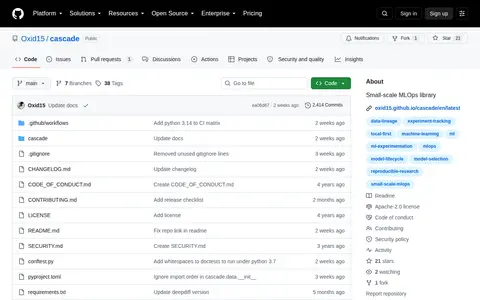
Library of ML-Engineering tools for rapid prototyping and experiment management.
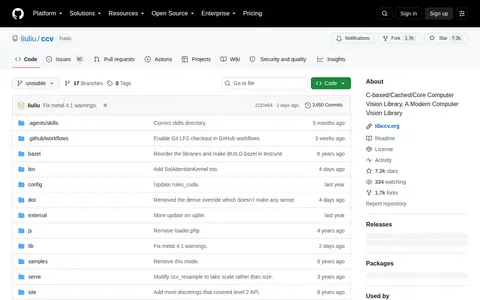
C-based/Cached/Core Computer Vision Library, A Modern Computer Vision Library.
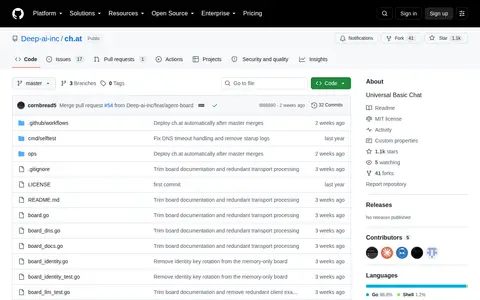
ch.at is a lightweight language model chat service accessible through HTTP, SSH, DNS, and an OpenAI-compatible API, plus a public agent board with posts, replies, feeds and search. It requires no JavaScript or tracking, and bots are welcome. State is held in RAM only, so a restart loses all data.
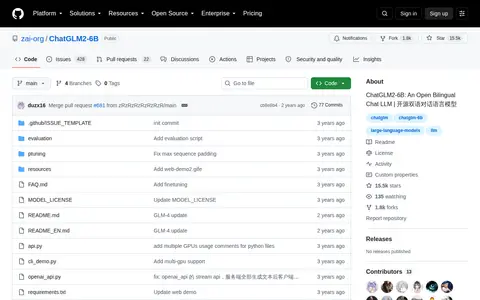
ChatGLM2-6B is the second-generation version of the open-source bilingual (Chinese-English) chat model ChatGLM-6B.
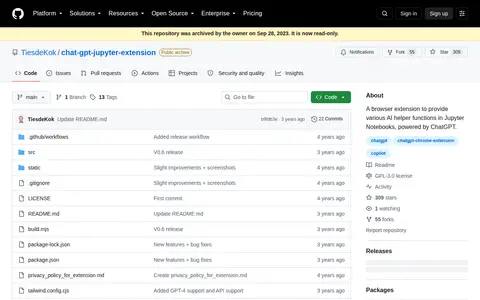
ChatGPT for Jupyter is a browser extension that provides AI-powered helper functions within Jupyter Notebooks, powered by ChatGPT. The extension is compatible with Chrome, Edge, and Firefox browsers, with its code and documentation hosted in a public GitHub repository under the TiesdeKok organization.
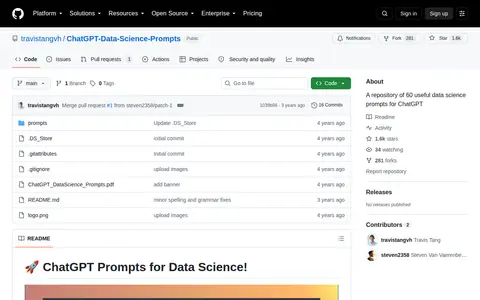
ChatGPT Prompts for Data Science is a GitHub repository containing 60 useful prompts for data science tasks. It includes prompts for writing Python code, automatic machine learning, and other data science workflows.
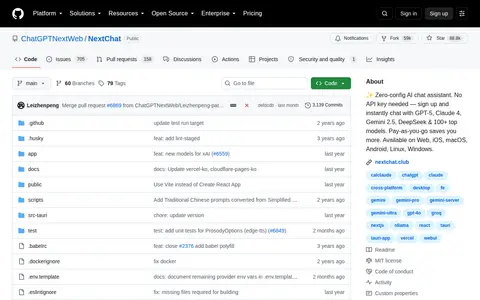
Open source web client for ChatGPT-style assistants, API keys, prompts, and self-hosted AI chat.
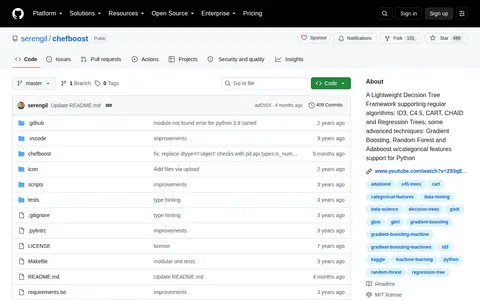
ChefBoost is a lightweight decision tree framework for Python. It supports standard algorithms including ID3, C4.5, CART, CHAID and regression trees, as well as advanced techniques such as gradient boosting, random forest and Adaboost, with support for categorical features.
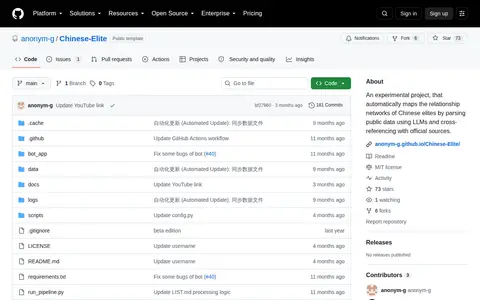
Project that automatically maps relationship networks by parsing public data using LLMs and visualizes it as an interactive graph.