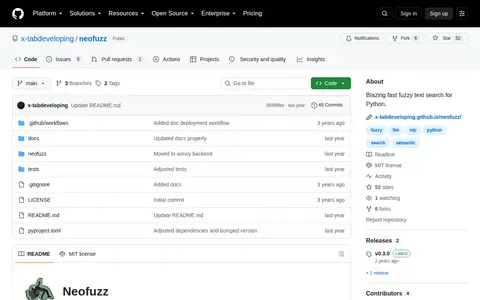

Neofuzz is an open-source Python library that provides high-speed fuzzy text search functionality. It is hosted on GitHub under the x-tabdeveloping repository and is available for community use and contribution.
Directory
Search results
Published directory entries matching your search.
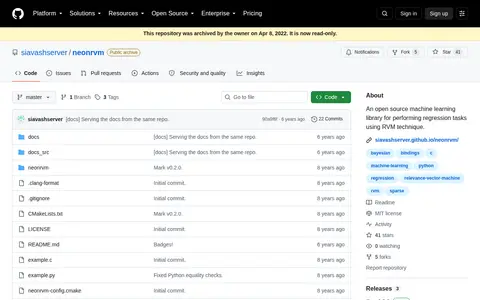
neonrvm is an open-source machine learning library for performing regression tasks using the Relevance Vector Machine (RVM) technique. It is written in Python and available on GitHub. The library aims to provide efficient implementations for RVM-based regression.
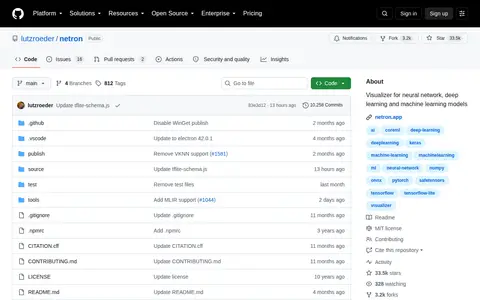
Netron is a viewer for neural network, deep learning and machine learning models. It supports formats including ONNX, TensorFlow Lite, PyTorch, TensorFlow, Core ML, OpenVINO, Keras, Caffe, Darknet, Safetensors and NumPy. It is available as a browser version and installers for macOS, Linux and Windows, plus a Python package. Experimental support exists for MLIR, JAX, GGUF and other formats.
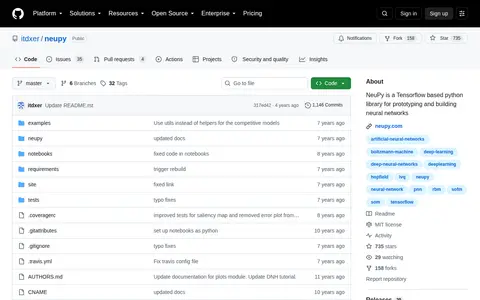
NeuPy is a Python library built on Tensorflow for prototyping and building neural networks. The repository notes that the library is no longer actively maintained. It includes examples and notebooks covering algorithms such as Boltzmann machines and self-organizing maps.
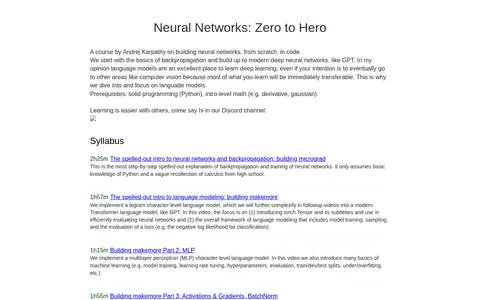
A course by Andrej Karpathy on building neural networks from scratch in code, starting with backpropagation basics and building up to modern deep neural networks like GPT. Prerequisites are solid Python programming and intro-level math such as derivatives and gaussians.
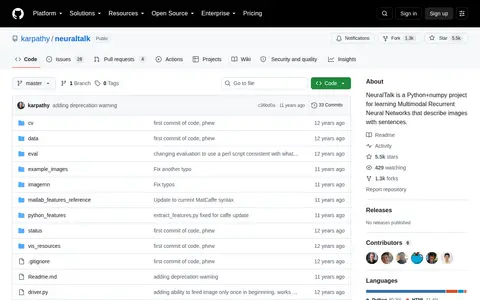
NeuralTalk is a Python+numpy project for learning Multimodal Recurrent Neural Networks that describe images with sentences.
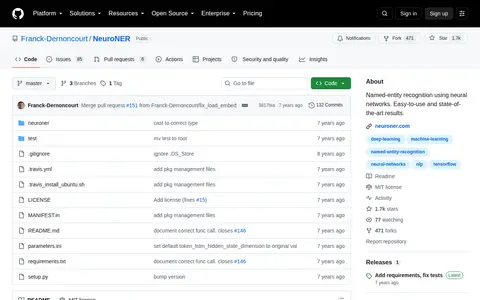
NeuroNER is a program that performs named-entity recognition using neural networks. It relies on Python 3 and TensorFlow 1.0+, optionally uses the BRAT annotation tool, and provides installation instructions, sample datasets and pretrained models.
A guide page for OpNewblood, aimed at people new to Anonymous. It explains setting up IRC chat for regular contact with other Anonymous users and browsing the internet without exposing location or other sensitive information. It describes IRC as an old, low-resource chat method supporting Python or Perl scripts, FiSHLiM message encryption and file transfers.
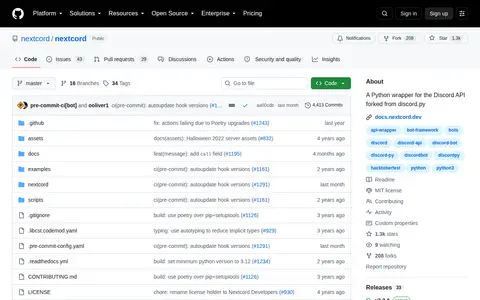
A Python wrapper for the Discord API forked from discord.py
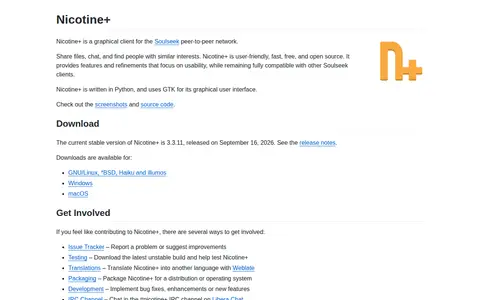
Nicotine+ is a graphical client for the Soulseek peer-to-peer network, used to share files, chat and find people with similar interests. It is written in Python with a GTK interface and is compatible with other Soulseek clients.
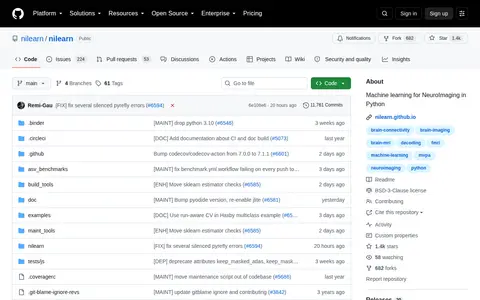
Nilearn provides statistical and machine-learning tools for analyses of brain volumes and surfaces, with documentation and a community. It supports general linear model based analysis and uses the scikit-learn toolbox for multivariate statistics, with applications such as predictive modeling, classification, decoding and connectivity analysis. It is written in Python and installable with pip.
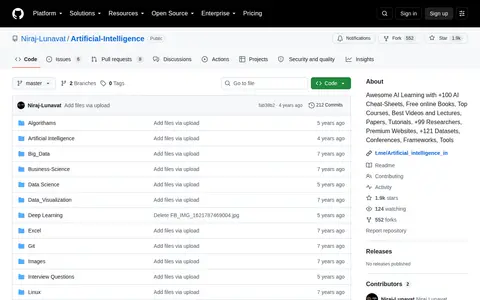
A GitHub repository collecting AI learning resources, including over 100 cheat-sheets, free online books, courses, videos and lectures, papers, tutorials, researchers, websites, datasets, conferences, frameworks and tools. Topics include machine learning, deep learning, big data, data science and Python.
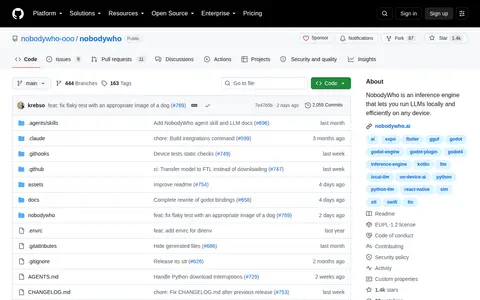
NobodyWho is an inference engine that runs LLMs locally and offline on any device, powered by llama.cpp. Bindings are available for Kotlin, Swift, React Native, Flutter, Python and Godot. It supports GGUF models, tool calling, multimodal input, text-to-speech and speech-to-text.
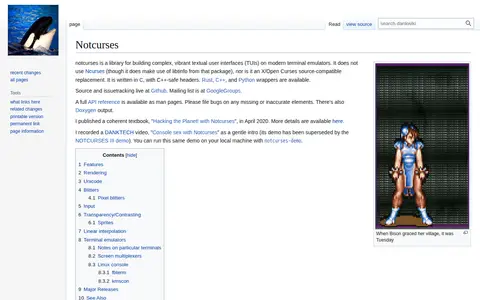
Notcurses is a C library for building complex textual user interfaces on modern terminal emulators. It does not use Ncurses, though it uses libtinfo from that package, and is not a source-compatible X/Open Curses replacement. Rust, C++, and Python wrappers are available. Source and issue tracking are hosted on GitHub, with a man page API reference.
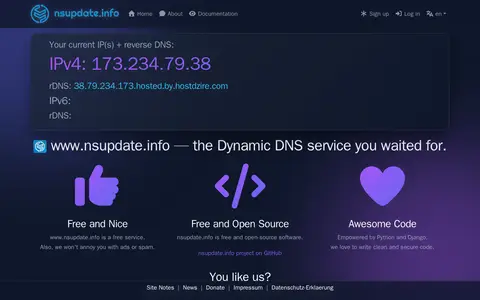
nsupdate.info is a free dynamic DNS service and free and open-source software. It is written in Python and Django, and the site states it will not display ads or spam.
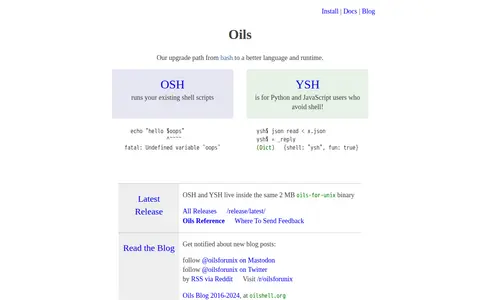
Oils is a project offering OSH, which runs existing shell scripts, and YSH, intended for Python and JavaScript users who avoid shell. Both live inside the same 2 MB oils-for-unix binary. Published documentation includes a getting-started guide, a YSH tour, an Oils reference, and comparisons of YSH with shell idioms.
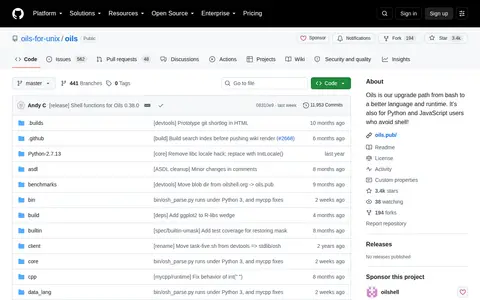
Oils is a project that provides an upgrade path from Bash to a better language and runtime. It is also intended for Python and JavaScript users who avoid shell scripting. The repository includes source code, contribution guidelines, and development build instructions.
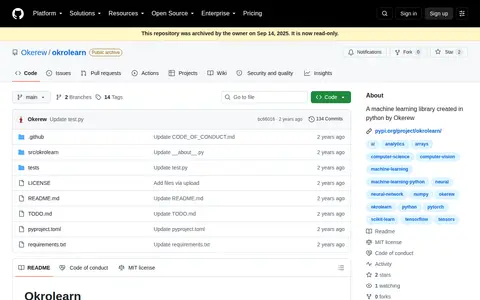
Okrolearn is a machine learning library created in Python by Okerew. It provides a Tensor type and can be installed from PyPI for CPU or GPU use. The repository was archived by its owner on Sep 14, 2025, and is now read-only.
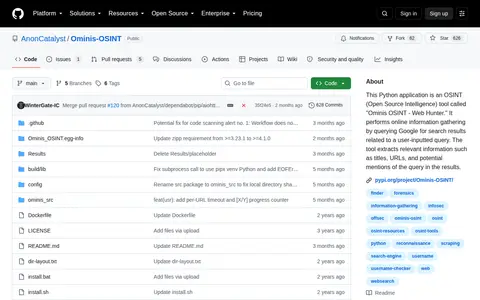
This Python application is an OSINT (Open Source Intelligence) tool called "Ominis OSINT - Web Hunter." It performs online information gathering by querying Google for search results related to a user-inputted query. The tool extracts relevant information such as titles, URLs, and potential mentions of the query in the results.
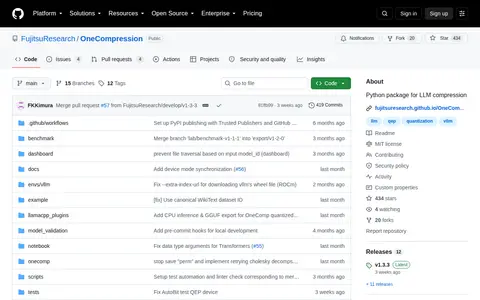
OneComp is a Python package for large language model (LLM) compression, hosted as a public repository under the FujitsuResearch GitHub organization. The project is designed for LLM compression tasks and accepts community contributions to its codebase.

onionsearch is a Python script that scrapes URLs on different .onion search engines. It is distributed on PyPI as version 1.3, released on October 22, 2021, under the GNU General Public License v3. The package page states the author has not provided a project description.
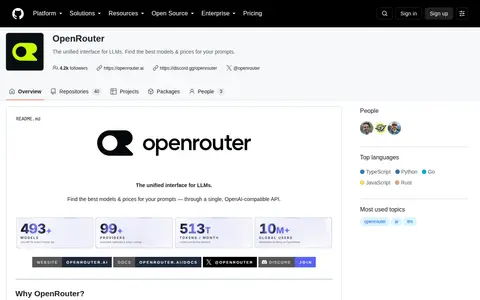
OpenRouterTeam is the GitHub organization behind OpenRouter, described as a unified interface for LLMs. The organization publishes open source SDKs for TypeScript, Python and Go, plus agent tooling, and maintains the Mintlify-hosted documentation repository for openrouter.ai/docs.
Open WebUI is a self-hosted AI interface for running AI on the user's own hardware. It connects to local or cloud models including Ollama, OpenAI, Anthropic, or compatible services, and can be extended with Python. The project offers community-shared prompts, models, tools, and functions, and lists deployment options including on-premises or air-gapped setups. Installation can be done with a pip command.
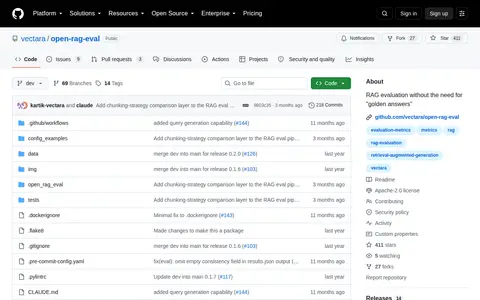
Open RAG Eval is an open-source Python evaluation toolkit for Retrieval-Augmented Generation pipelines. It provides TREC-RAG evaluation metrics and a modular design for custom metrics and connectors, with core metrics that do not require golden chunks or golden answers.