prometheus is a distributed digital image archive that makes over 135 databases from institutes, research facilities and museums searchable through a common user interface, with more than 4,176,000 records from art, culture and history. It is situated at the Institute of Art History of the University of Cologne and supported by the non-profit association prometheus e.V.
Directory
Search results
Published directory entries matching your search.

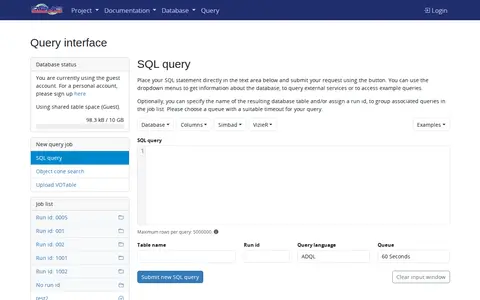
Dataset repository covering basic in biology and medicine, with searchable datasets.
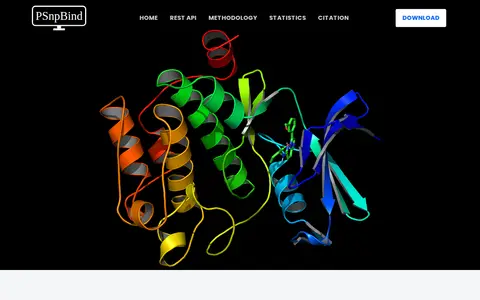
PSnpBind is a database of proteins from the PDB, covering 26 proteins, focused on the effect of pocket SNPs on protein-ligand binding affinity. It was developed by Ammar Ammar and its data is licensed under CC-BY v4.0.
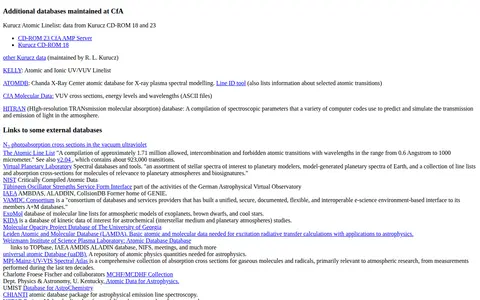
The R. L. Kurucz atomic linelist is hosted among databases maintained at the CfA. The source describes it as data from Kurucz CD-ROM 18 and 23, with links to CD-ROM 23, the CfA AMP Server and CD-ROM 18. Other Kurucz data are maintained separately by R. L. Kurucz.
Search atmospheric data collections and supporting datasets from NLD.
Find and access astrophysics and astronomy research data, with indexed observational data.
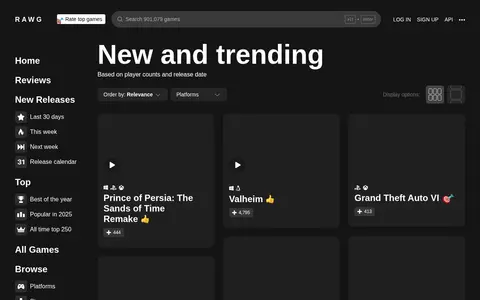
RAWG is a video game discovery site with a database of games across many platforms, including PC, consoles and mobile. It lets users keep games in one profile and see what friends are playing. Pages list popular and new games, with display based on player counts and release date.
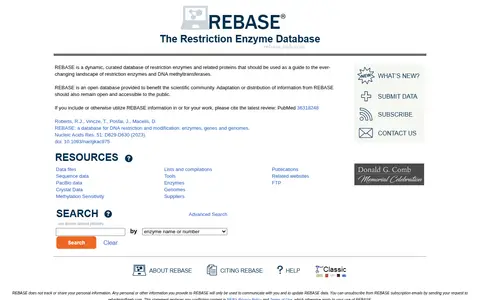
REBASE is a curated, open database of restriction enzymes and related proteins, including DNA methyltransferases. It provides data on enzymes, genomes, sequences and scientific literature, along with data files, tools, lists and compilations. The site states that information from REBASE should remain open and accessible to the public.
LEGO database for sets, parts, minifigures, build tracking, and custom model discovery.
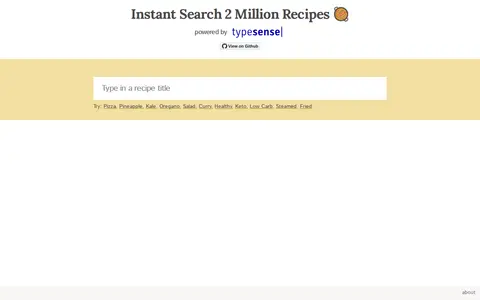
Recipe Search is a search interface for browsing recipes from the RecipeNLG recipe database, using Typesense Instant Search. The page states it covers 2 million recipes and suggests example searches such as Pizza, Kale and Curry.
Reciprocal Net is a distributed crystallography network and distributed database used by research crystallographers to store information about molecular structures, with much of the data available to the general public. It is funded by the U.S. National Science Foundation as part of the National Science Digital Library project and is still under development, with 18 participating crystallography laboratories online.
REPOSIT is the institutional repository of Hamburg University of Applied Sciences, built on DSpace-CRIS and hosted by Hamburg University of Technology, managed by its library service. It publishes documents and research data and records research information, including articles, working papers, technical reports, dissertations, theses and conference materials, mostly as Open Access, plus metadata-only records continuing the university's publication database.
The Repository of the University of Life Sciences in Lublin disseminates the academic achievements of the University's employees and promotes research conducted at the University. It provides search, special collections, and a people and publication database. Depositors must determine the legal status of materials before making them available.
The Research Catalogue is a non-commercial collaboration and publishing platform for artistic research provided by the Society for Artistic Research. It describes itself as an international database for artistic research with institutional portals, journals, projects and researcher listings, and states that it is free to use for artists and researchers.
Browse research datasets and datasets related to astrophysics and astronomy.
Online database of researcher biographies and publication lists operated by the Japan Science and Technology Agency.
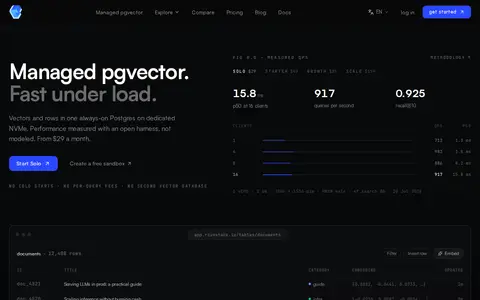
Rivestack offers managed pgvector on dedicated PostgreSQL with local NVMe storage, keeping vectors and application rows in one database. It provides tuned HNSW and StreamingDiskANN indexes, always-on compute with no cold starts, and migration help. Published measurements cover search latency and throughput. New customers get a 7-day free trial, then a plan from $29 per month.
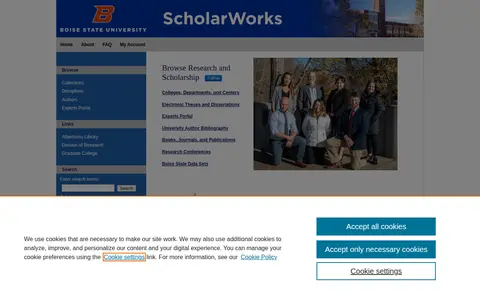
ScholarWorks is a collection of services to capture and showcase scholarly output by the Boise State University community. It makes documents, files and other scholarship available online and offers SelectedWorks pages, usage reports, electronic publishing of series, journals and monographs, and a searchable database. It includes theses, dissertations, an experts portal, an author bibliography, publications, conference materials and data sets.
Interactive discovery environment for scholarly research across all disciplines.
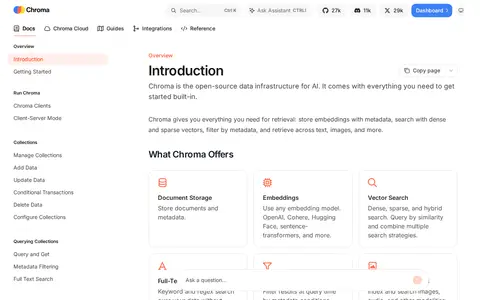
Chroma - Open-source search and retrieval database for AI applications. Vector, full-text, regex, and metadata search. or Cloud available.
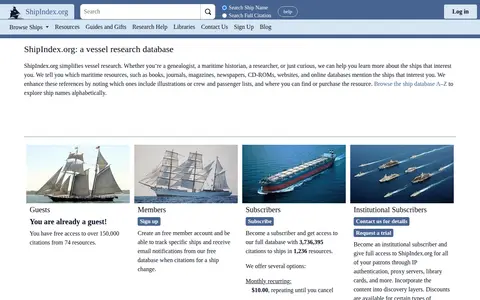
ShipIndex.org is a vessel research database that indexes citations of ship names across maritime resources including books, journals, magazines, newspapers, CD-ROMs, websites and online databases. It notes which references include illustrations or crew and passenger lists and where resources can be found or purchased. Guests have free access to over 150,000 citations from 74 resources.
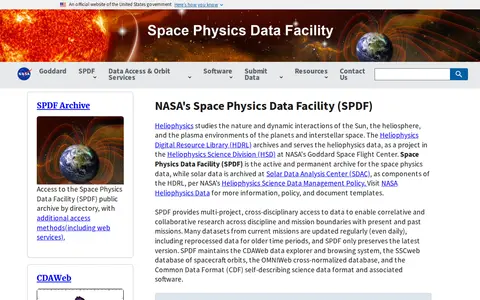
The Space Physics Data Facility (SPDF) is NASA's active and permanent archive for space physics data, operated by the Heliospheric Physics Laboratory at Goddard Space Flight Center. It provides multi-project, cross-disciplinary access to data from current and past missions, and maintains CDAWeb for data browsing and downloads, SSCWeb for spacecraft orbits, the OMNIWeb database, and the Common Data Format.
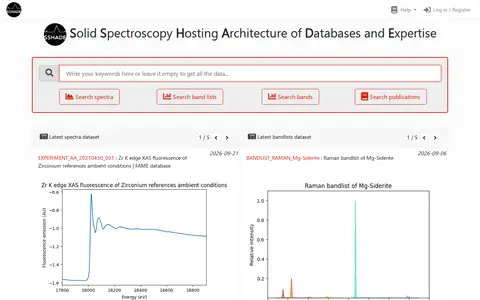
SSHADE is an interoperable solid spectroscopy database infrastructure providing spectral and photometric data from gamma to radio wavelengths. Measured samples include ices, minerals, rocks, organic and carbonaceous materials, and liquids. It contains specialized databases from various research groups, mostly from Europe, and can also be searched through the VESPA virtual observatory.
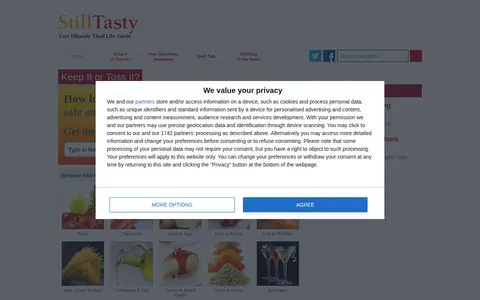
StillTasty is a shelf-life guide launched in February 2009 with a searchable database of shelf life information for thousands of foods and beverages. It answers how long items stay safe and tasty and how best to store them, drawing on government and other research.