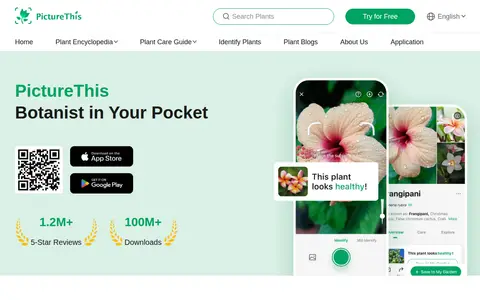
PictureThis is a plant identifier app and website that identifies flowers, leaves, trees and herbs from a photo. It provides information on disease prevention, treatment, toxicity, care, uses and symbolism, along with a plant encyclopedia and plant care guide covering houseplants, garden plants, flowers, fruits and vegetables.
Directory
Search results
Published directory entries matching your search.
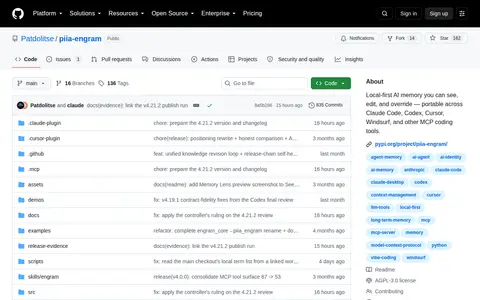
piia-engram is described as a local-first AI memory that can be seen, edited, and overridden. It is portable across Claude Code, Codex, Cursor, Windsurf, and other MCP coding tools. The project presents a user-owned identity layer stored in local files.

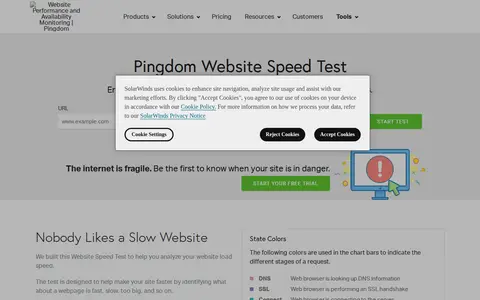
Pingdom's free Website Speed Test analyzes a webpage's load time and identifies bottlenecks. A full page test breaks requests into stages such as DNS lookup, SSL handshake, connect, send, wait, receive and blocked, and flags redirects and 4xx or 5xx responses. Pingdom also offers uptime and performance monitoring from more than 70 global polling locations.

Pl@ntNet is a tool to help identify plants with pictures, organized into regional and thematic floras. Its World flora contains more than 70,000 identifiable species. A newer service identifies plant diseases and pests, with more than 2,000 illustrated entries. Users can explore observations and share their own.
PlagiarismDetector is a free online plagiarism detection tool that identifies copied text in assignments and documents. It supports multiple languages, offers quick and deep search options, and allows URL or file uploads for checks. A paid PRO plan includes features such as no ads, support for multiple file uploads, and detailed accurate reports, with free checks accommodating up to 25k words.
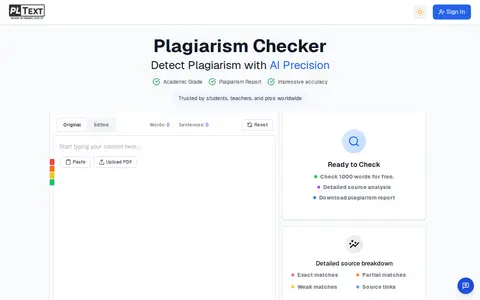
PLText is a free AI-powered plagiarism checker, detector, and remover. It scans text against billions of web pages, academic resources, and journals to identify exact, partial, and weak matches. Users receive detailed reports with source links and an originality score. A one-click rewrite function can modify flagged content. The service offers a free tier with up to 1000 words per search without login. Paid subscription plans include Basic at $7.93 per month (annual), Pro at $15.68 per month, and Pro+ at $30.04 per month, as well as pay-as-you-go options.
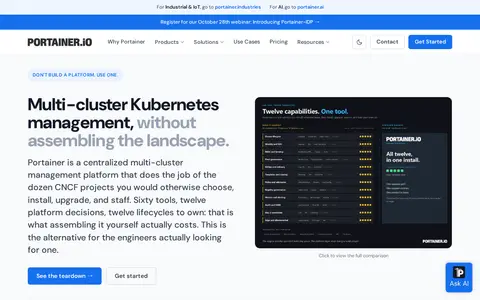
Portainer is a platform for deploying, running, securing, and governing Kubernetes across a fleet from a single control plane. It provides multi-cluster fleet management, GitOps deployment workflows, self-service with guardrails, and enterprise identity and access. Docker, Swarm, and Podman hosts join the same console. Portainer Business Edition is free for 3 nodes and includes RBAC, GitOps, fleet governance, and audit logs.
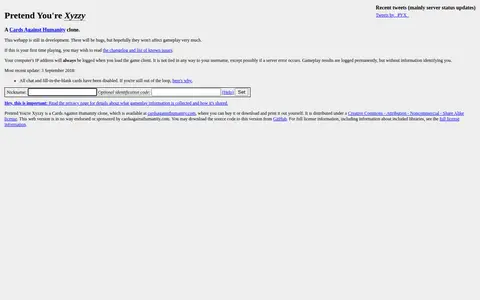
Pretend You're Xyzzy is a web version of a Cards Against Humanity clone. The page states the webapp is still in development and that bugs may occur. It notes gameplay results are logged permanently without identifying information, and that all chat and fill-in-the-blank cards were disabled in a 2018 update.
Privatiser anonymizes IPs, API keys, passwords, PII and cloud identifiers before text is pasted into AI tools. It runs in the browser with local processing, preserves structure, and offers a reversible mapping to restore values in replies. It is free and open source.
Prophy is an AI expert-identification platform for research funding and scientific publishing. It provides referee finding, panel composition, peer reports and institutional reports, drawing on a database of 199 million articles and 103 million researcher profiles. An API allows integration of referee-finding capabilities into other systems.
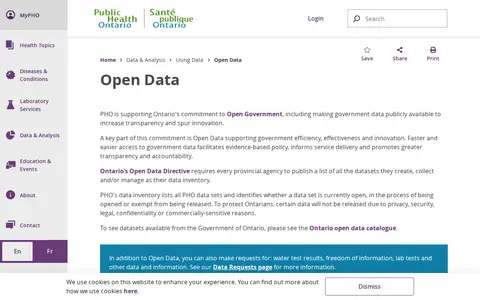
Public Health Ontario's Open Data page describes the agency's data inventory, which lists all PHO datasets and identifies each as open, in the process of being opened, or exempt from release. Some data is withheld for privacy, security, legal, confidentiality or commercial reasons. The page refers readers to the Ontario open data catalogue for Government of Ontario datasets.
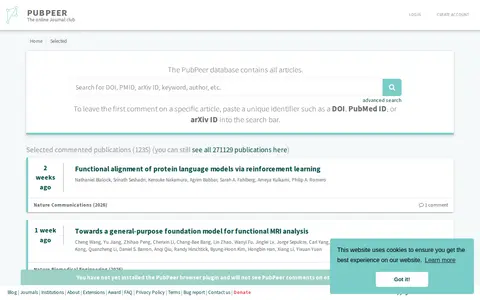
PubPeer is a scientific research platform that allows users to search for academic publications and submit anonymous feedback or start discussions about them, including leaving comments on specific articles via identifiers such as DOI, PubMed ID, or arXiv ID.
Python tool that identifies hashes, emails, IPs, URLs, and other strings found in text or files.
Quick, Draw! is a machine learning game developed by Google Creative Lab and Data Arts Team. Players draw objects within a 20-second time limit, and a neural network attempts to identify the drawing. Completed drawings are added to a publicly available doodling dataset to support machine learning research. The game supports multiple languages.
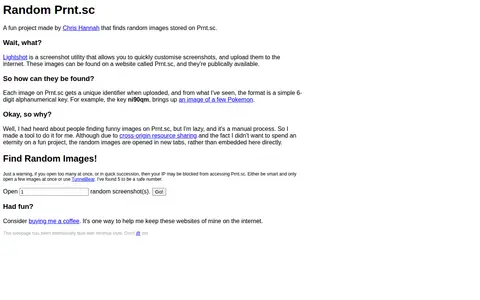
Random Prnt.sc is a fun project that locates random publicly available images stored on Prnt.sc. Due to cross-origin resource sharing constraints, each random image opens in a new browser tab rather than being embedded directly on the page. Opening too many images in quick succession may result in the user's IP being blocked from accessing Prnt.sc, with 5 images at once identified as a safe limit.
RandomTools is a website that hosts tools for finding Facebook user, page and group IDs. The page describes entering a Facebook profile, page or group URL and clicking a button to get a numeric identifier. The site also lists additional Facebook, Twitter, Instagram, YouTube, random generator, developer, text and image tools.
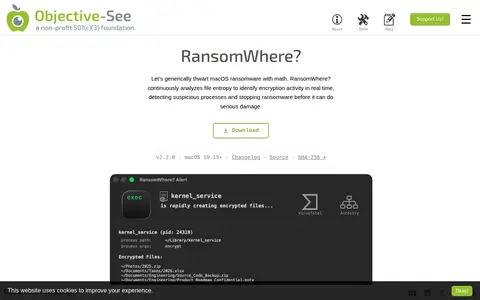
RansomWhere? is a macOS utility that analyzes file entropy to identify encryption activity and detect untrusted processes creating encrypted files. It suspends suspect processes and alerts the user, who can allow or block them. It runs on macOS 10.15 and later.
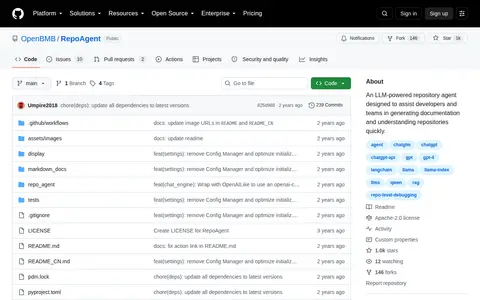
RepoAgent is an LLM-powered repository agent for generating documentation and understanding repositories. It detects changes in Git repositories, analyzes code structure through AST, and identifies bidirectional invocation relationships between objects. It supports GitHub Actions and can be installed via pip or PDM.
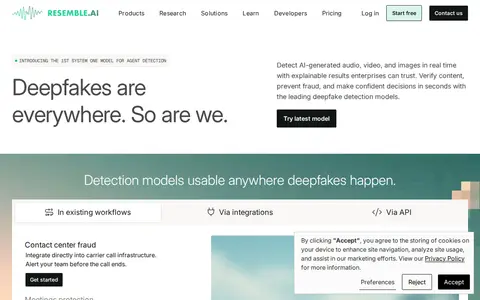
Resemble AI provides multimodal deepfake detection and watermarking for enterprise. It powers real-time detection of synthetic audio, video, and images, offers APIs, intelligence insights, and identity registration. It includes tools like meetings protection, agent detection, a Chrome extension, and integrates with Microsoft Teams. The company develops research models such as DETECT-World and PerTh Multimodal. It serves industries including telecom, finance, media, health, and public sector.
OSINT.sh tool for finding websites connected by shared Google AdSense identifiers.
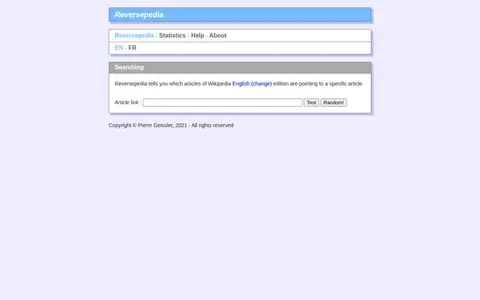
Reversepedia is a Wikipedia browsing tool that does not host original content, only reversed hyperlinks between English Wikipedia articles. It enables users to identify which Wikipedia articles link to a specified article, and includes a random article search function.
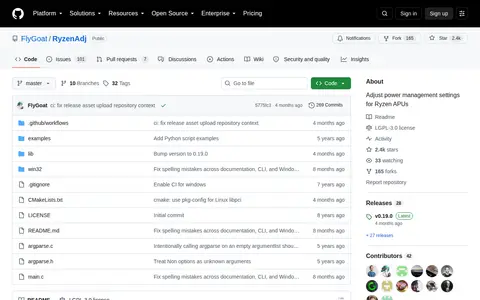
RyzenAdj is a command line tool that adjusts power management settings for Ryzen Mobile Processors. Its command line interface is identical on Windows and Unix-Like operating systems. On Windows it should be run with Administrator, and on Linux as root. It exposes options for power limits, current limits, clock frequencies and temperature limits.
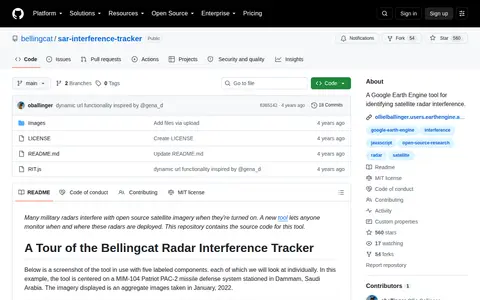
A Google Earth Engine tool for identifying satellite radar interference.
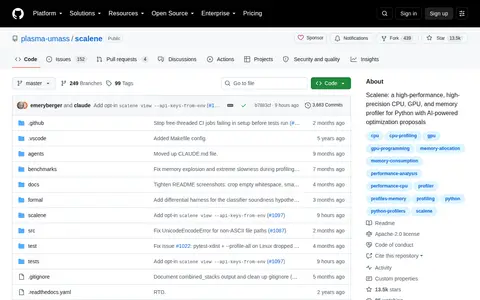
Scalene is a Python profiler that measures CPU, GPU and memory usage. It identifies inefficiencies and can request optimization suggestions from AI providers, including Amazon Bedrock, Microsoft Azure, OpenAI and local models via Ollama. It can be used at the command line or as a Visual Studio Code extension, and installs via pip or conda.