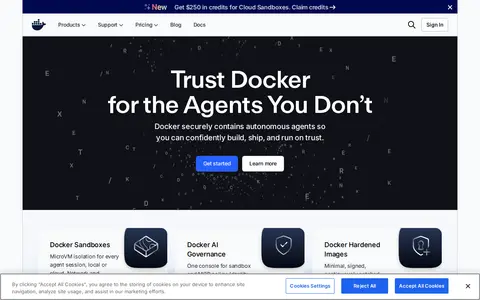
Docker is a platform for building, sharing, and running containerized applications. It provides tools for AI agent sandboxing, agent governance, secure software supply chain management, containerization, local LLM inference, and enterprise-grade application security. The platform is designed to simplify development setup, support local to scaled deployment, and avoid vendor lock-in.
Directory
Search results
Published directory entries matching your search.
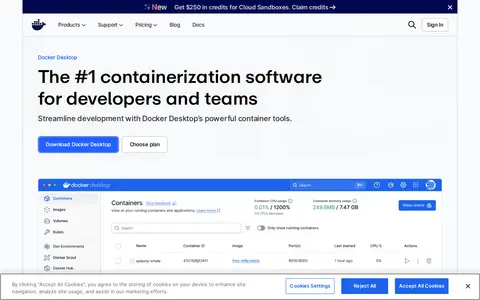
Docker Desktop is containerization software for developers, available for Mac, Windows and Linux. It includes Docker Engine, the Docker CLI, Docker Compose, Docker Build, built-in Kubernetes support, volume management and Docker Debug.
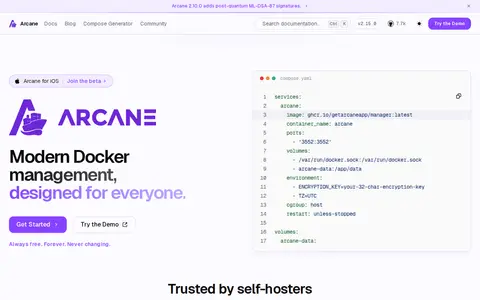
Arcane is a free, open-source Docker management UI covering containers, images, volumes, networks, Compose projects, and remote hosts. It runs as a single container that manages Docker on the same host through the Docker socket and can be installed with Docker Compose or a Linux install script. Documentation also covers agents for managing other Docker hosts.
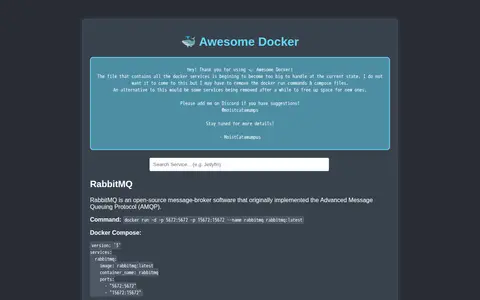
Awesome Docker is a page about a file containing Docker services. It notes the file is becoming too large to handle and that docker run commands and compose files may be removed, with services possibly removed over time to free up space.
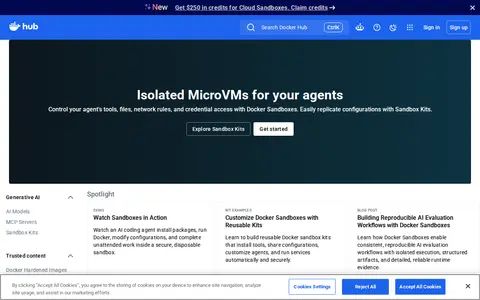
Docker Hub is a container registry where developers and open source contributors find, use and share container images. It supports building, pushing and pulling images, and offers Docker Official Images, Verified Publisher, Sponsored OSS and Sandbox Kits.
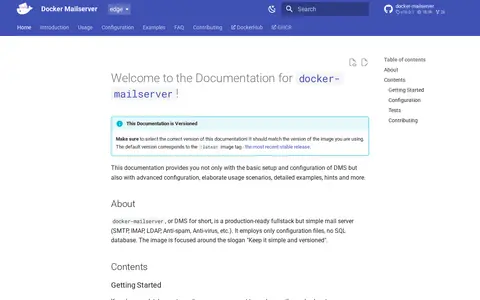
Docker Mailserver is a self-hosted mail server provided as a Docker image, supporting SMTP, IMAP, LDAP, anti-spam, and anti-virus. It uses configuration files instead of an SQL database and includes a setup.sh script for configuration and administration.
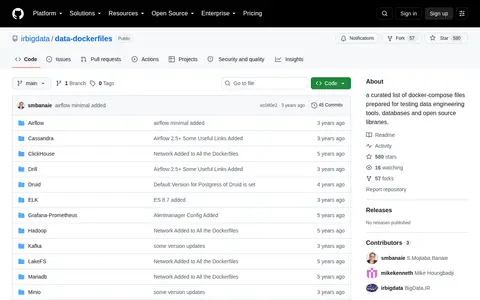
Data Dockerfiles is a GitHub repository or organization with source code, releases, documentation, or project resources.

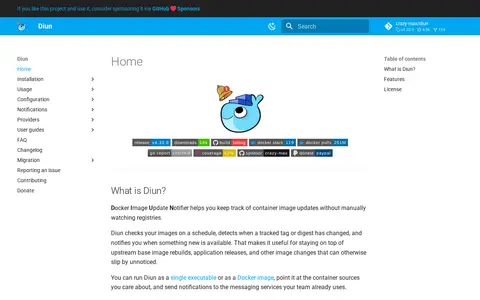
Diun is a Docker image update notifier that tracks container images on a registry and reports when a tracked tag or digest changes. It checks images on a schedule and sends notifications through services such as Gotify, Mail, Slack and Telegram. It can discover images from providers including Docker, Containerd, Kubernetes, Swarm, Nomad, Dockerfile and File, and runs as a single binary or official Docker image under the MIT license.
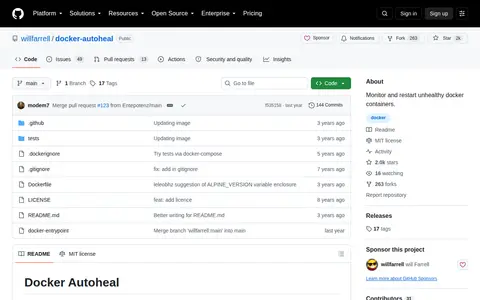
Docker AutoHeal is a GitHub repository or organization with source code, releases, documentation, or project resources.
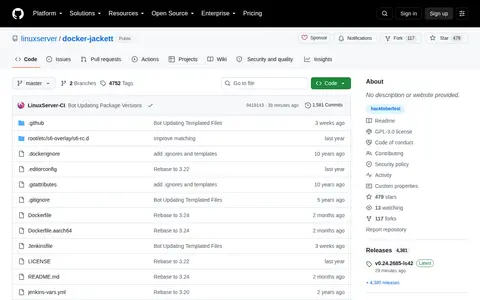
Docker-Jackett is an open source Linux, macOS, or Unix resource with code, tools, or setup notes.
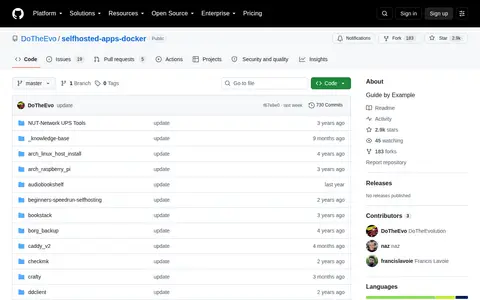
Selfhosted-Apps-Docker is a GitHub repository or organization with source code, releases, documentation, or project resources.
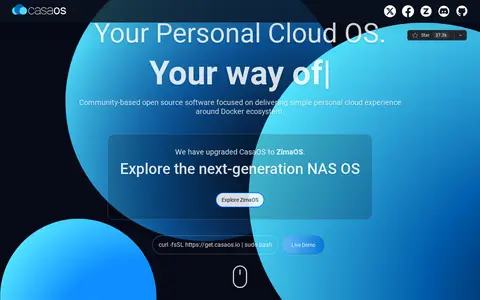
CasaOS is an open-source personal cloud system built around the Docker ecosystem. It offers a dashboard, a command-line interface, and pre-installed Docker apps alongside community-verified self-hosted apps. It runs on hardware including ZimaBoard, Intel NUC, and Raspberry Pi, and supports Ubuntu, Debian, Raspberry Pi OS, and CentOS through a one-line installation.
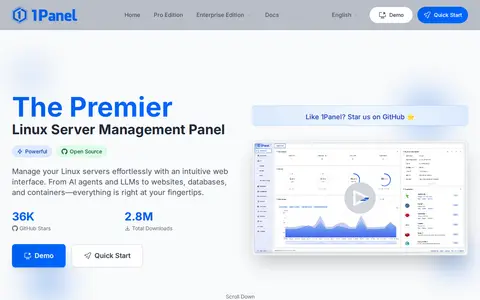
An open-source Linux server management panel with a web interface for managing Docker, websites, databases, and containers. It also provides AI management features and an app store for one-click deployment of open-source applications.
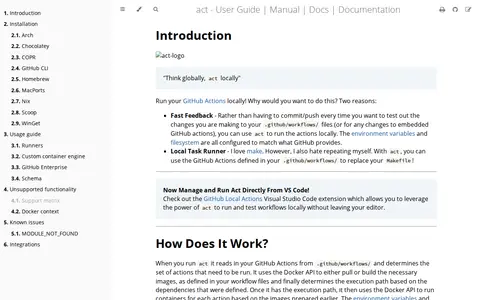
act runs GitHub Actions locally, reading workflows from .github/workflows/ and determining which actions to execute. It uses the Docker API to pull or build the necessary images and run containers for each action, with environment variables and filesystem configured to match GitHub.
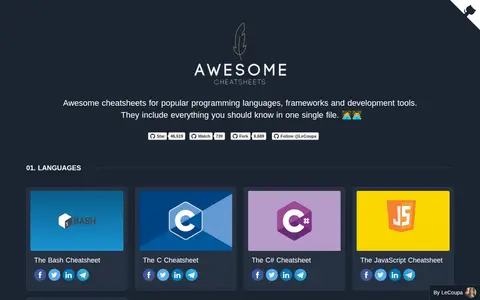
A collection of cheatsheets for popular programming languages, frameworks and development tools, each intended to include everything needed in one file. It covers languages such as Bash, C, C# and JavaScript, backend tools including Django and Node.js, frontend frameworks such as React and Vue, plus Redis, Docker and Kubernetes.
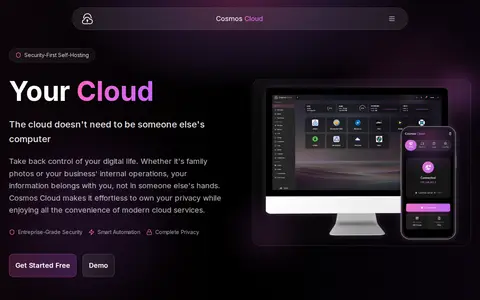
Cosmos Cloud is a self-hosted platform for running apps and services at home or in a business. It includes a reverse proxy, automatic HTTPS, SmartShield, a built-in VPN and backups. It can run as a standalone service or as a Docker container, and documentation covers installation, apps, URLs, users, backups, domains and HTTPS, Constellation VPN and storage.
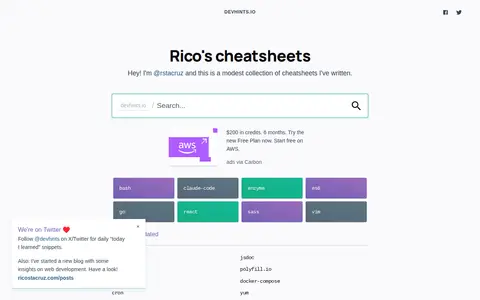
Devhints is a collection of web development cheatsheets covering topics such as JavaScript, CSS, Git, Docker, and various command line tools. Each sheet is a one-page quick reference with usage examples, links, and snippets. The site also includes guidance on writing cheatsheets and on writing Vim help files.
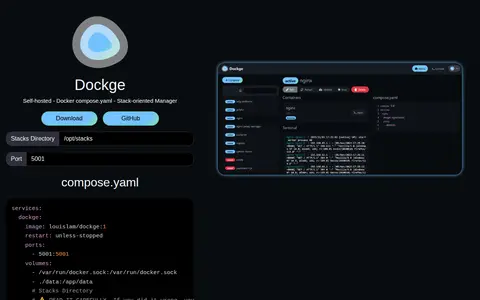
Manage Docker Compose application stacks through a web interface.
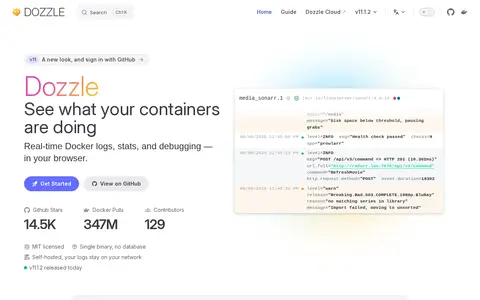
Dozzle is a lightweight, open-source log viewer for Docker, Swarm, and Kubernetes. It streams container logs in real time and allows searching, filtering by level or time range, and querying JSON fields with SQL from the browser.
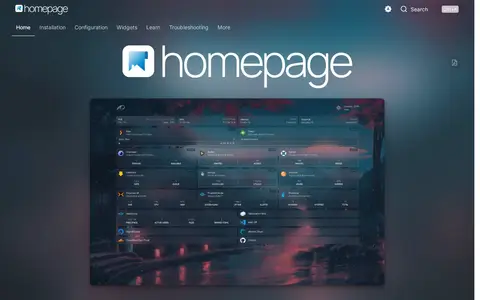
Homepage is an application dashboard described as modern, fast, secure and fully proxied, with integrations for over 100 services and translations into multiple languages. It is configured through YAML files or via Docker label discovery.
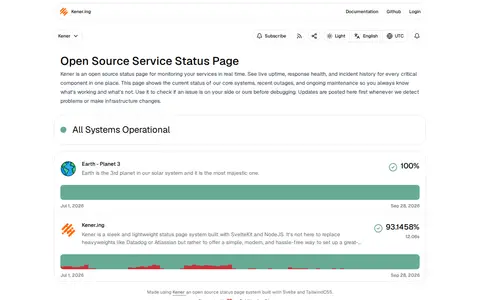
Kener is a free, open-source status page and uptime monitor that can be self-hosted with Docker. It monitors API, Ping, TCP, DNS, SSL, SQL, Heartbeat, GameDig, and gRPC services with configurable check intervals and thresholds, and it provides incident management, maintenance scheduling, notifications, embeddable widgets, and a REST API.
LinuxServer.io is a community group that builds and maintains Docker images. Its images share a common base using s6-overlay, and rebuild automatically when upstream applications or dependencies are updated. Setup guides are provided on GitHub and a documentation site, with support through Discord and a Discourse forum.
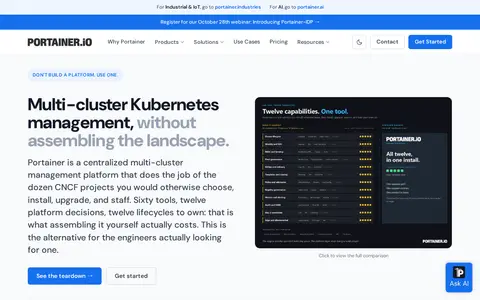
Portainer is a platform for deploying, running, securing, and governing Kubernetes across a fleet from a single control plane. It provides multi-cluster fleet management, GitOps deployment workflows, self-service with guardrails, and enterprise identity and access. Docker, Swarm, and Podman hosts join the same console. Portainer Business Edition is free for 3 nodes and includes RBAC, GitOps, fleet governance, and audit logs.
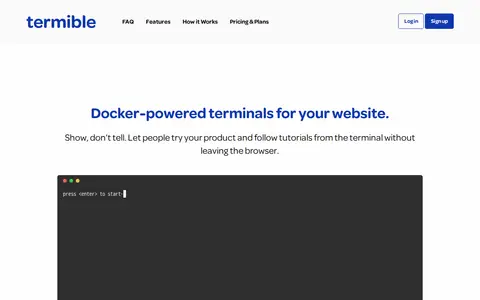
Termible is a subscription service for embedding an actual Linux terminal into a website, letting visitors try a CLI tool, REST API or programming language without installation. It launches Docker-powered containers as users connect, and supports executable code examples, embedded terminals and session recording. The service is in private beta, and plans list free, startup and enterprise tiers with concurrent terminal limits.