
gitstar-ranking.com
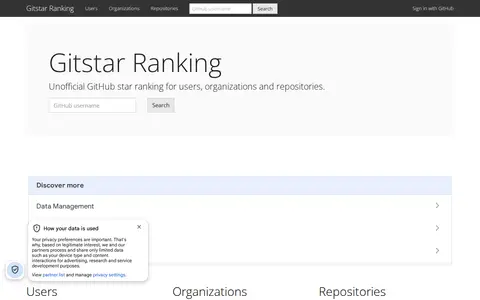
Gitstar Ranking is a developer resource for coding, documentation, communities, security research, or software tools.
Directory
Search published websites, apps and repositories.
Gitstar Ranking is a developer resource for coding, documentation, communities, security research, or software tools.

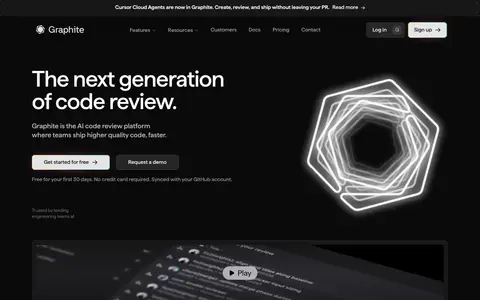
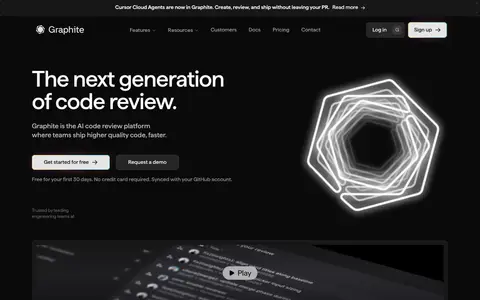
Graphite is a code review platform for teams on GitHub. It offers AI code review through Graphite Chat, stacked pull requests, a pull request inbox, a merge queue, and developer metrics. A CLI and VS Code extension support creating and managing stacks. The first 30 days are free.

Graphite is a developer resource for coding, documentation, communities, security research, or software tools.

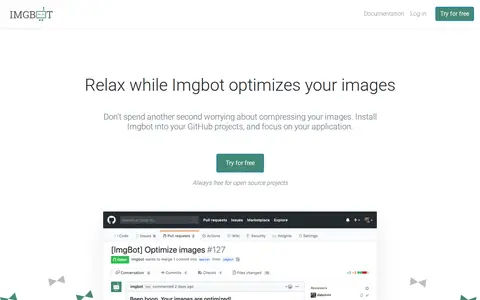
Imgbot is a GitHub app that optimizes images. After installation, it opens pull requests compressing the images it finds in a repository and watches for new images. It is always free for open source projects.
A service that provides shareable links to download build artifacts from GitHub Actions builds. Public repositories are accessible by default without login, and links can point to the latest artifact or a particular run. A GitHub App can be installed so downloads for a repository do not share the global API rate limit.

Notabug is a developer resource for coding, documentation, communities, security research, or software tools.

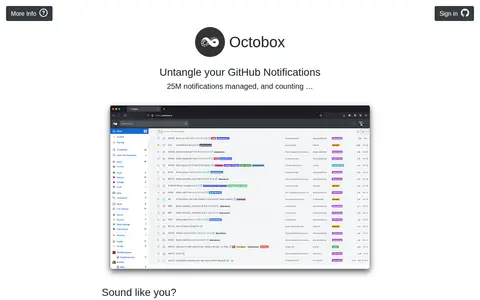
Octobox is a notification manager for GitHub. It adds an archived state to notifications so they can be marked done, and moves archived threads back into the inbox when activity occurs. Notifications can be searched and filtered by repository, organisation, type, action, state, CI status and reason. Octobox is free for open source projects, with paid private repository access available by donation or through the GitHub Marketplace.
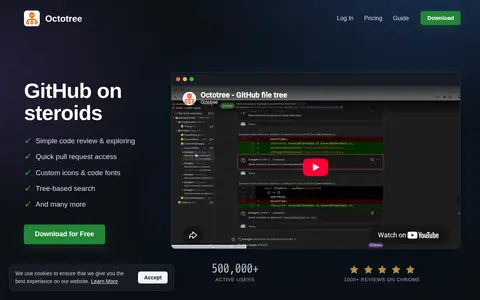
Octotree is a developer resource for coding, documentation, communities, security research, or software tools.

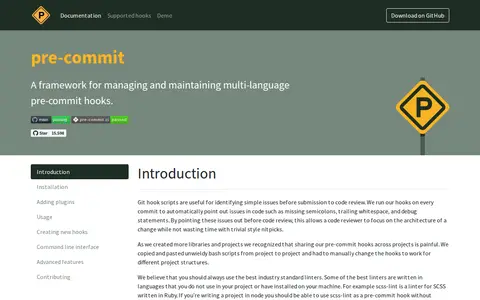
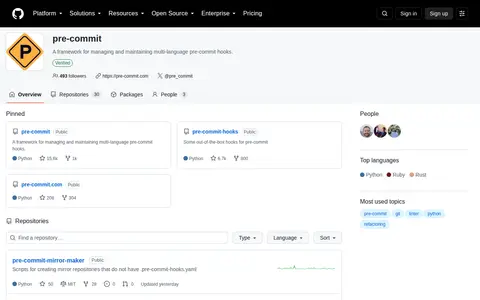
pre-commit is a multi-language package manager for pre-commit hooks. Users specify a list of hooks, and pre-commit manages their installation and execution before every commit, automatically pointing out issues such as missing semicolons, trailing whitespace and debug statements. It is designed to not require root access and can be installed with pip or as a zipapp.
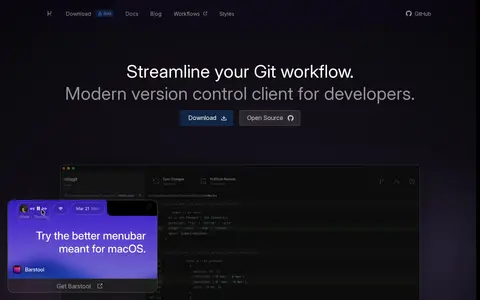
RelaGit is a graphical Git client built with SolidJS and Electron, available for Windows, macOS, and Linux. It provides extensible workflow and theme APIs for managing source code, and integrates with GitHub, GitLab, and Codeberg. Downloads are labeled Beta, and macOS 10.14 or later is required.

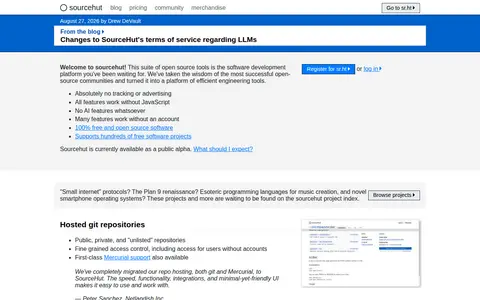
sourcehut is a network of open source tools for software project maintainers and collaborators, including hosted git and Mercurial repositories, continuous integration, mailing lists and code review tools, ticket tracking, real-time chat, and wikis. It states no tracking or advertising and that features work without JavaScript. sourcehut is currently available as a public alpha.

The stacking workflow describes stacked pull requests, stacked diffs and stacked changes as an alternative workflow for managing pull requests. The site argues that code review takes a long time and slows developers down, and that stacking parallelizes development and code review so work can build on changes not yet merged. It notes that stacking manually is hard.

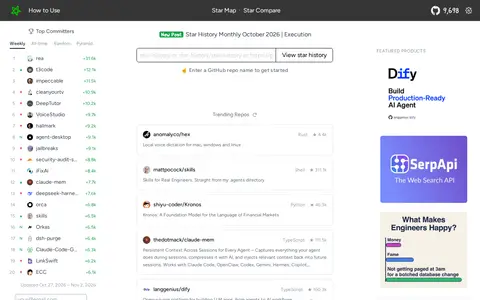
Star History is a web tool for viewing and comparing the GitHub star history graph of open source projects. The site also lists a top committers ranking and provides a Chrome extension.

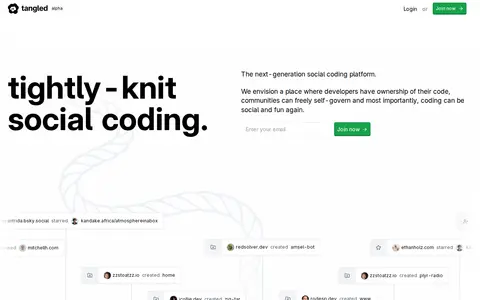
Tangled is a developer resource for coding, documentation, communities, security research, or software tools.

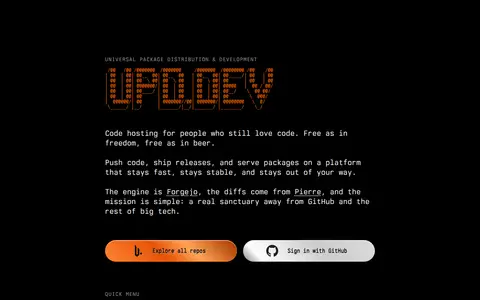
Upd.dev is a code hosting and package distribution platform built on Forgejo, with diffs rendered by Pierre. It presents itself as a smaller, quieter alternative to GitHub for creating repositories, pushing code and shipping releases. It natively serves packages for Go, Rust, Arch and other ecosystems directly from repositories, and infrastructure is geo-distributed across US and EU regions.

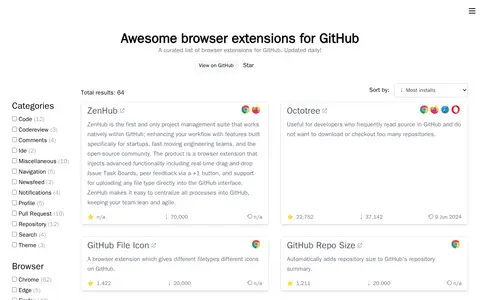
A curated list of browser extensions for GitHub, organized by categories such as code, pull requests, notifications and themes, and browsable by browser. It includes entries such as Octotree for reading source without downloading repositories and Refined GitHub for simplifying the interface.

Pre Commit is a GitHub repository or organization with source code, releases, documentation, or project resources.

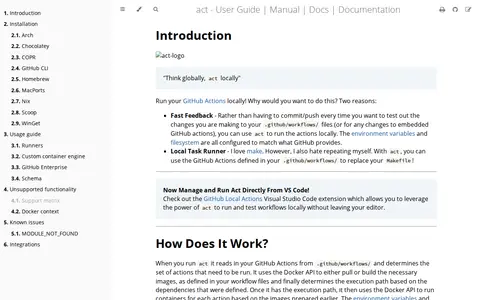
act runs GitHub Actions locally, reading workflows from .github/workflows/ and determining which actions to execute. It uses the Docker API to pull or build the necessary images and run containers for each action, with environment variables and filesystem configured to match GitHub.

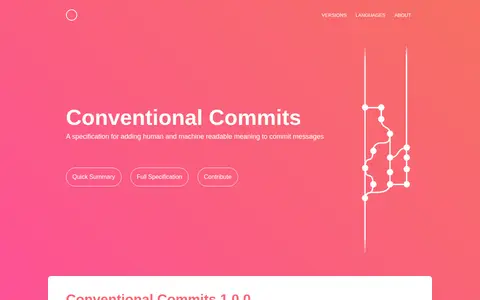
Conventional Commits is a developer resource for coding, documentation, communities, security research, or software tools.

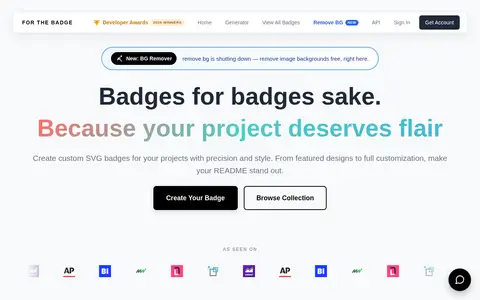
For the Badge creates custom SVG badges for projects. It offers a visual generator for badge design and a REST API that returns badges via query parameters. The project is open source, and badges can be exported as SVG or copied as markdown for use in READMEs.

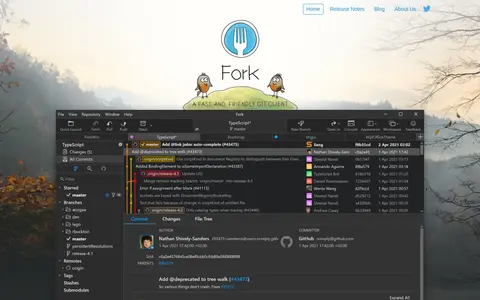
Fork is a git client for Mac and Windows. It provides a commit list, side-by-side diff viewer, interactive rebase, merge-conflict resolver, history and blame views, GitHub notifications, image diffs, Git-flow, Git LFS and GPG support. The download is priced at $59.99 with a free evaluation.

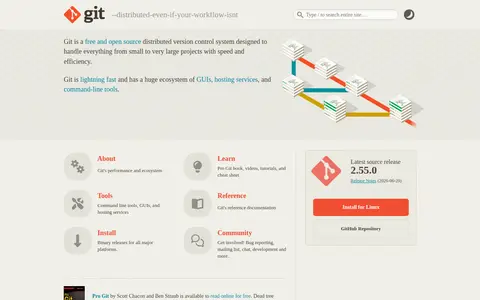
Git is a free and open source distributed version control system designed to handle projects of varying sizes with speed and efficiency. It has an ecosystem of GUIs, hosting services and command-line tools. The latest source release is 2.56.0.

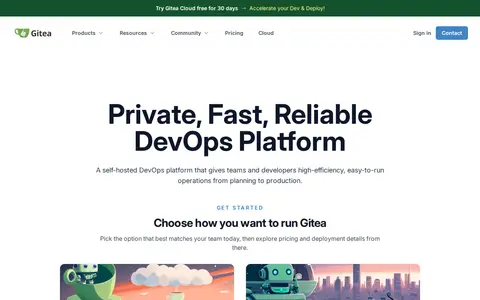
Gitea is a self-hosted software development service that includes Git hosting, code review, team collaboration, package registry and CI/CD. It offers Gitea Actions, a built-in CI/CD system compatible with GitHub Actions, and runs on Linux, Windows, macOS, FreeBSD and Kubernetes. An open source version is free under the MIT license, while an enterprise plan requires a one-year commitment.

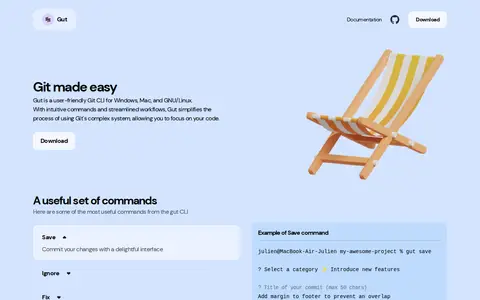
Gut is a user-friendly Git command-line client for Windows, macOS and GNU/Linux, built with Golang. It provides commands such as Save, Ignore, Revert, Undo and Sync, and is fully compatible with Git, allowing switching between the two. It saves credentials in the system keychain and can use GitHub or GitLab to diff changes.