
github.com
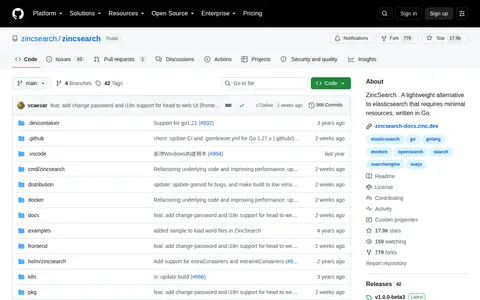
Zincsearch is an open source Linux, macOS, or Unix resource with code, tools, or setup notes.
Directory
Published directory entries matching your search.
Zincsearch is an open source Linux, macOS, or Unix resource with code, tools, or setup notes.
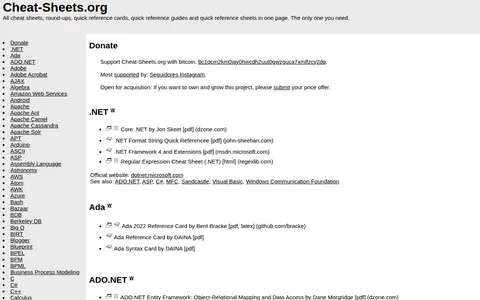
A website collecting cheat sheets, round-ups, quick reference cards and quick reference guides on a single page, organized by topics such as .NET, Ada, Adobe Systems, AJAX, Algebra and Amazon Web Services. Entries link to external PDF or HTML documents and list official project websites.
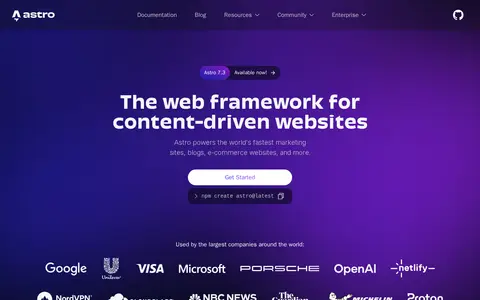
Astro is a JavaScript web framework for building content-driven websites. It renders components on the server and sends HTML to the browser, and it works with content from the file system, external APIs, or a CMS. It includes content collections, view transitions, optimized images, middleware, and deployment adapters.

An open-source platform for building AI agents, internal apps, tables and automations. Agents answer employee questions and run workflows such as creating records, routing approvals and updating apps, while apps and tables connect teams to databases, spreadsheets and business systems. It can be self-hosted or run via Budibase Cloud.

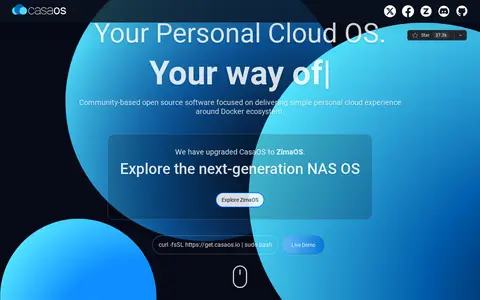
CasaOS is an open-source personal cloud system built around the Docker ecosystem. It offers a dashboard, a command-line interface, and pre-installed Docker apps alongside community-verified self-hosted apps. It runs on hardware including ZimaBoard, Intel NUC, and Raspberry Pi, and supports Ubuntu, Debian, Raspberry Pi OS, and CentOS through a one-line installation.

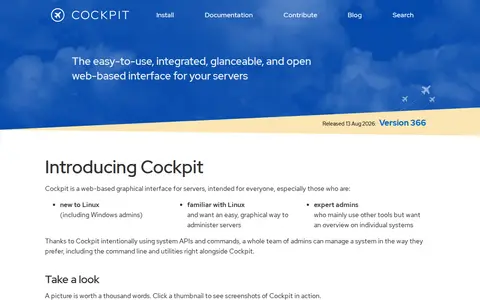
Cockpit is a web-based graphical interface for administering Linux servers through a browser. It uses existing system APIs and commands, defaults to normal user logins and privileges, and runs on demand via systemd socket activation. Tasks include managing storage, configuring networks and firewalls, running containers, and managing virtual machines and user accounts.

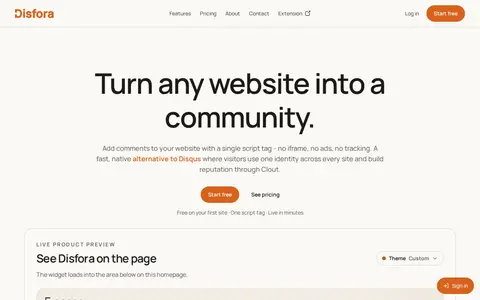
Disfora is a comment system added to a website with one script tag. It shows comments, star ratings, polls and forms on pages, with a dashboard for moderation. It works on static sites, CMS platforms and frameworks, with a WordPress plugin. The widget shows no ads and does not track readers for advertisers; the first site is free.

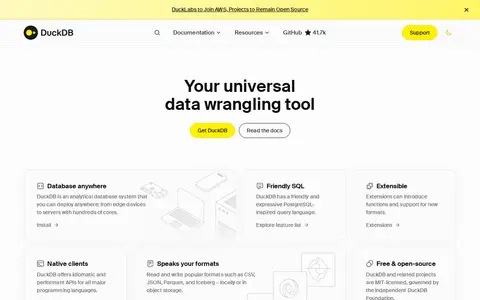
DuckDB is an open-source SQL OLAP database management system. It is an analytical database that runs in-process and can be deployed from edge devices to servers with hundreds of cores. It offers idiomatic APIs for major programming languages and reads and writes formats such as CSV, JSON, Parquet, and Iceberg, locally or in object storage.

GNU Emacs is a free/libre, extensible and customizable text editor. Its core is an interpreter for Emacs Lisp, and it offers content-aware editing modes with syntax coloring, built-in documentation and a packaging system for installing extensions. It also provides functionality beyond text editing, such as a project planner, mail and news reader, debugger interface and calendar.

Framer is an AI design agent that assists users in designing and building projects on a canvas. It includes built-in hosting, security, analytics, content management system, and search engine optimization functionality, with all changes remaining editable.

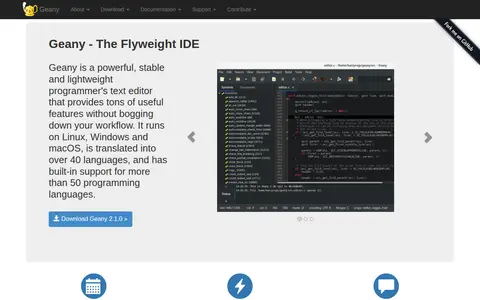
Geany is a small and lightweight integrated development environment and programmer's text editor. It runs on Linux, Windows, macOS, and other platforms, requires only the GTK3 runtime libraries, and offers syntax highlighting, code folding, symbol completion, a build system, and a plugin interface. The code is licensed under the GNU General Public Licence.

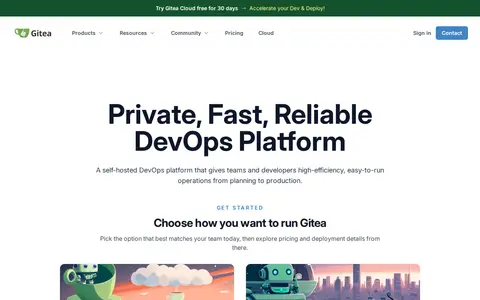
Gitea is a self-hosted software development service that includes Git hosting, code review, team collaboration, package registry and CI/CD. It offers Gitea Actions, a built-in CI/CD system compatible with GitHub Actions, and runs on Linux, Windows, macOS, FreeBSD and Kubernetes. An open source version is free under the MIT license, while an enterprise plan requires a one-year commitment.

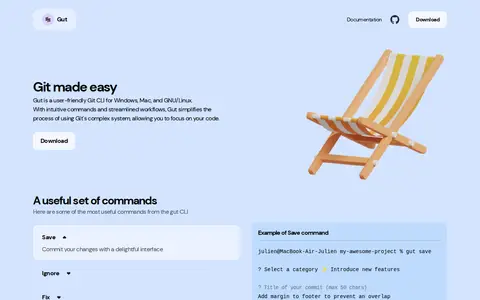
Gut is a user-friendly Git command-line client for Windows, macOS and GNU/Linux, built with Golang. It provides commands such as Save, Ignore, Revert, Undo and Sync, and is fully compatible with Git, allowing switching between the two. It saves credentials in the system keychain and can use GitHub or GitLab to diff changes.

Helix is a modal text editor built in Rust for the terminal. It uses multiple selections as a core editing primitive and integrates Tree-sitter for syntax highlighting, indent calculation and code navigation. Language server support provides completion, goto definition, documentation and diagnostics. Built-in features include a fuzzy finder, project-wide search and themes. A plugin system and GUI frontend are planned but not currently available.

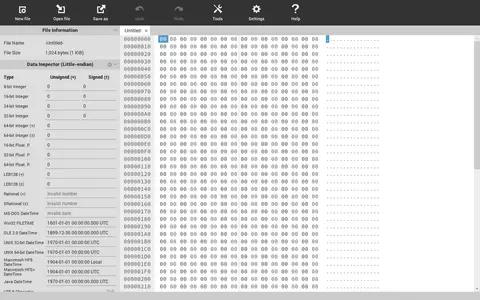
HexEd.it is a free hex editor that runs in a web browser using HTML5 and JavaScript technology. It is intended for Windows, MacOS, Linux and other modern operating systems, and lets users analyse hexadecimal binary dumps and files and read, manipulate, write, import and export byte as well as bit data.

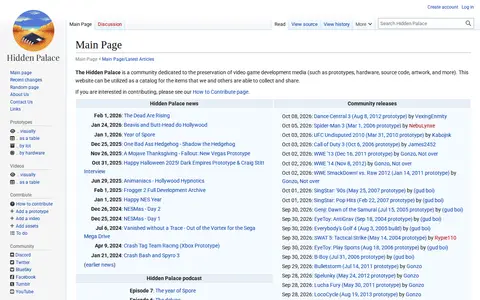
A community dedicated to the preservation of video game development media such as prototypes, hardware, source code and artwork, started in 2006. The website serves as a catalog for items collected and shared. It has archived over 1000 development builds for various video game systems.
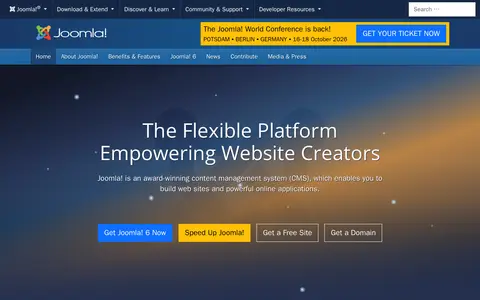
Joomla! is a free and open source content management system used to build, organize, manage and publish content for websites, blogs, intranets and mobile applications. The site lists benefits including search engine friendly and mobile friendly output, multilingual support, unlimited design, multi-user permission levels and extensibility, along with thousands of free extensions and templates.

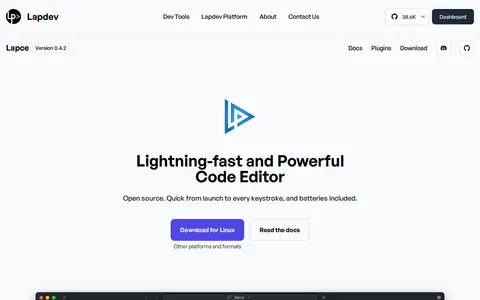
Lapce is a modern open source code editor written in Rust, featuring a native GUI with GPU acceleration in Floem. It offers remote development, built-in LSP support with Tree-sitter syntax highlighting, Vim-like modal editing and a WASI plugin system for writing plugins in languages that compile to WASI. It includes a built-in terminal.

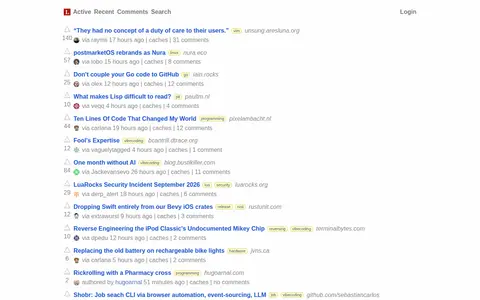
A computing-focused community centered around link aggregation and discussion. Users post links with tags and comment on them, with recent posts covering security, CSS, operating systems, databases and programming languages.

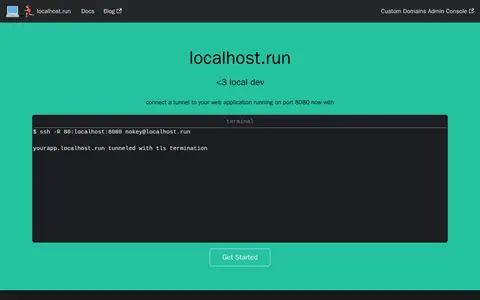
localhost.run connects web applications running on a computer to the internet using the SSH client already installed on major operating systems, with no download or signup required for free domains. It supports custom domains, automatic TLS certificates for HTTPS, and sharing URLs to show clients work or access a local application from another device.

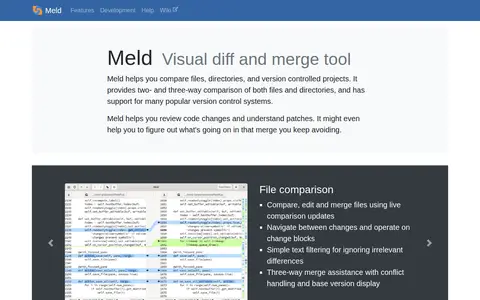
Meld is a visual diff and merge tool that helps compare files, directories, and version controlled projects. It provides two- and three-way comparison of files and directories, assists with three-way merges and conflict handling, and supports version control systems including Git, Mercurial, Bazaar and Subversion. It is packaged for most Linux/Unix distributions and available on Flathub; macOS is not yet supported.
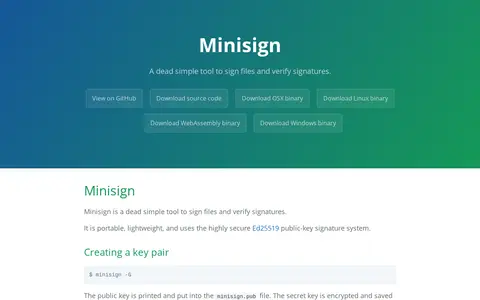
Minisign is a portable, lightweight tool for signing files and verifying signatures, using the Ed25519 public-key signature system. It supports creating key pairs, signing one or more files, and verifying signatures, with signatures stored in .minisig files and optional trusted comments included.
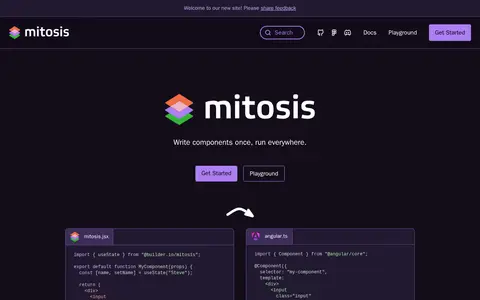
Mitosis is an open-source tool that transforms JSX components into functional components for frameworks such as Angular, React, Qwik, Vue, Svelte, Solid, and React Native. Writing UI components once in JSX allows them to be deployed across platforms without rewriting code for each framework. It also integrates with Figma to sync design systems to code and can generate Lit, Stencil, and raw web components.
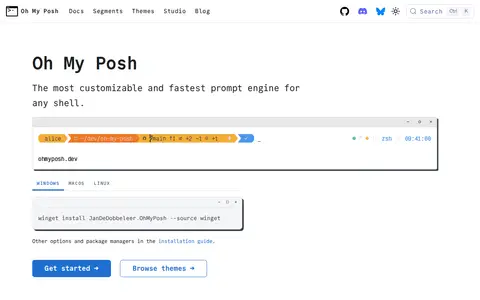
Oh My Posh is a prompt engine for shells, with one configuration intended to work across PowerShell, Bash, Zsh, Fish, Nu and others on Windows, macOS, Linux, WSL, containers and SSH. It is written in Go, and its segments run concurrently and cache results so prompts render in milliseconds. Around 120 segments cover git status, cloud context, language versions and system metrics.