
github.com
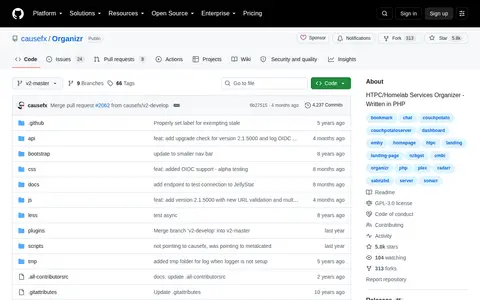
Organizr is an open source Linux, macOS, or Unix resource with code, tools, or setup notes.
Directory
Published directory entries matching your search.
Organizr is an open source Linux, macOS, or Unix resource with code, tools, or setup notes.

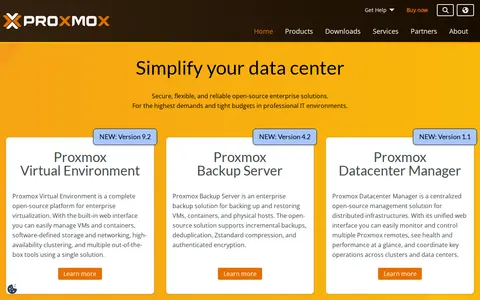
Proxmox is a Linux, macOS, BSD, or Unix resource for tools, documentation, communities, or system workflows.

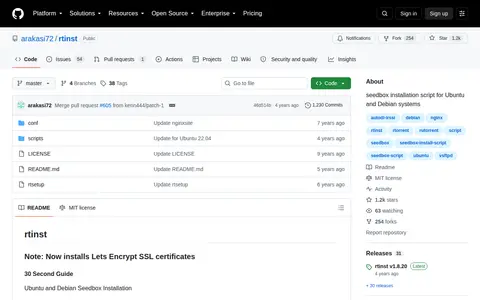
rtinst is an open source Linux, macOS, or Unix resource with code, tools, or setup notes.

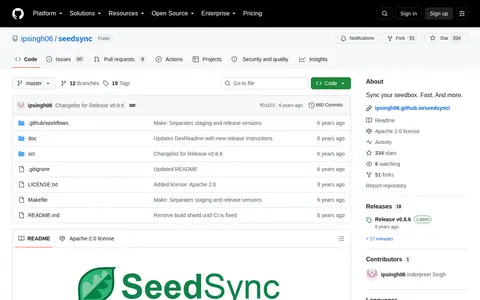
SeedSync is an open source Linux, macOS, or Unix resource with code, tools, or setup notes.
Self Managed Life provides Linux, macOS, BSD, or Unix documentation, tutorials, manuals, and learning guides.

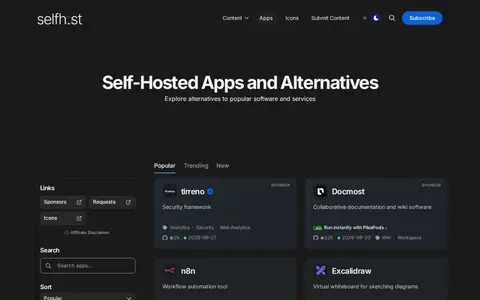
Selfh.st is a Linux, macOS, BSD, or Unix resource for tools, documentation, communities, or system workflows.

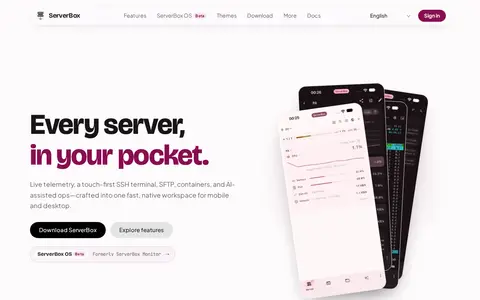
serverbox is a Linux, macOS, BSD, or Unix resource for tools, documentation, communities, or system workflows.

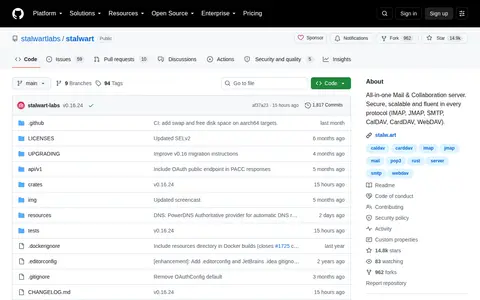
Stalwart is an open source Linux, macOS, or Unix resource with code, tools, or setup notes.

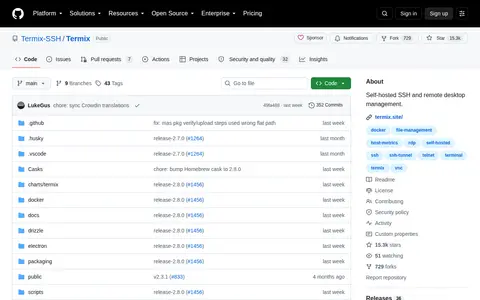
Termix is an open source Linux, macOS, or Unix resource with code, tools, or setup notes.

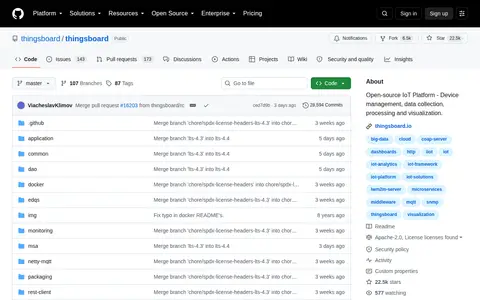
ThingsBoard is an open source Linux, macOS, or Unix resource with code, tools, or setup notes.

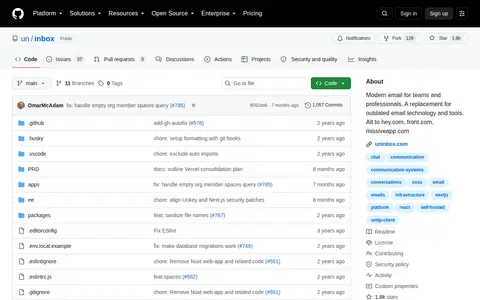
UnInbox is an open source Linux, macOS, or Unix resource with code, tools, or setup notes.

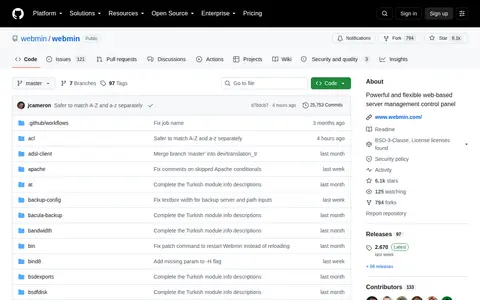
Webmin is an open source Linux, macOS, or Unix resource with code, tools, or setup notes.

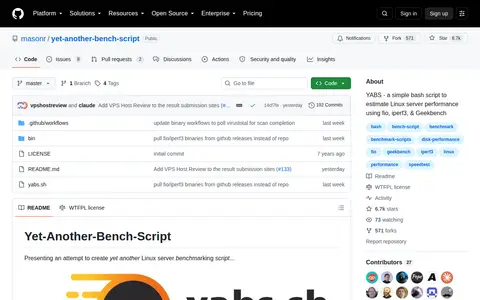
yet another bench script is an open source Linux, macOS, or Unix resource with code, tools, or setup notes.

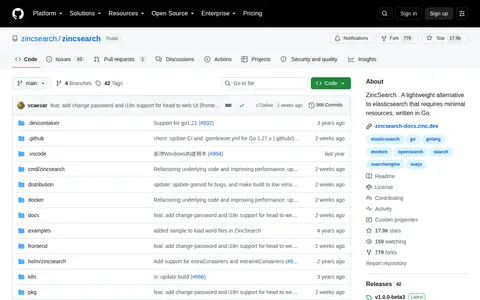
Zincsearch is an open source Linux, macOS, or Unix resource with code, tools, or setup notes.

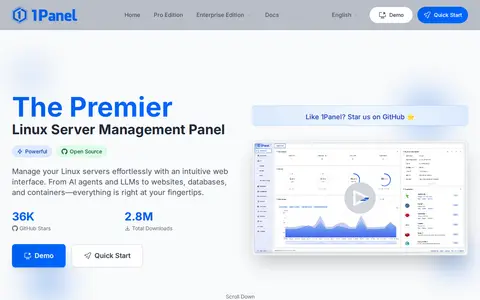
An open-source Linux server management panel with a web interface for managing Docker, websites, databases, and containers. It also provides AI management features and an app store for one-click deployment of open-source applications.

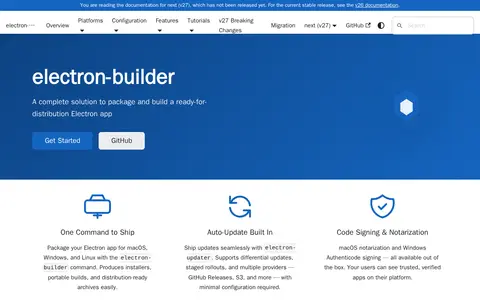
electron-builder is a tool for packaging and building Electron apps for distribution with auto-updating support. It packages apps for macOS, Windows and Linux, producing installers, portable builds and distribution archives. Auto updates are enabled by the electron-updater package and are ideally configured to run in a CI pipeline. Code signing and macOS notarization are available out of the box.

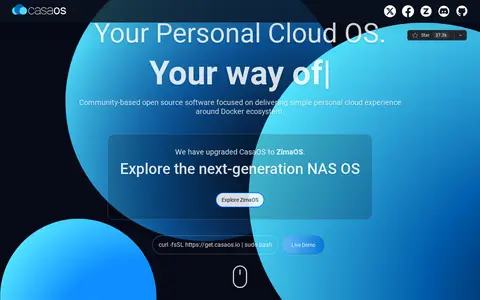
CasaOS is an open-source personal cloud system built around the Docker ecosystem. It offers a dashboard, a command-line interface, and pre-installed Docker apps alongside community-verified self-hosted apps. It runs on hardware including ZimaBoard, Intel NUC, and Raspberry Pi, and supports Ubuntu, Debian, Raspberry Pi OS, and CentOS through a one-line installation.

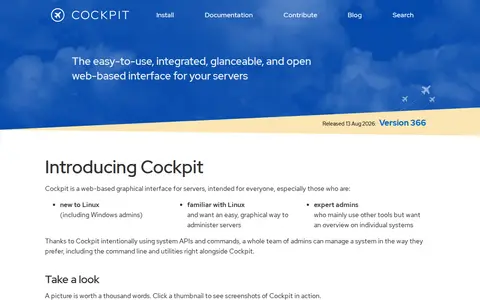
Cockpit is a web-based graphical interface for administering Linux servers through a browser. It uses existing system APIs and commands, defaults to normal user logins and privileges, and runs on demand via systemd socket activation. Tasks include managing storage, configuring networks and firewalls, running containers, and managing virtual machines and user accounts.
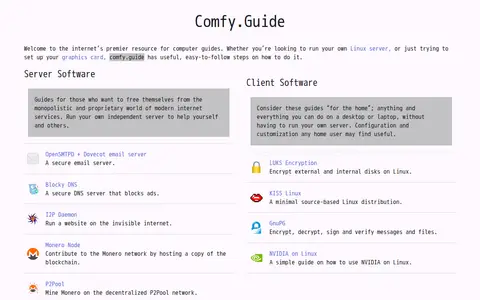
Comfy.Guide is a collection of computer guides. Its server software section covers self-hosting services such as email, DNS, IRC, Matrix, XMPP and PeerTube. Its client software section covers desktop tasks, including disk encryption, GnuPG, the KISS Linux distribution and using NVIDIA on Linux.

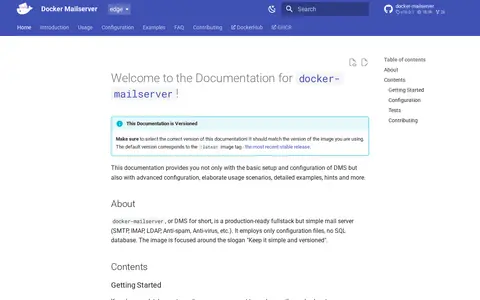
Docker Mailserver is a self-hosted mail server provided as a Docker image, supporting SMTP, IMAP, LDAP, anti-spam, and anti-virus. It uses configuration files instead of an SQL database and includes a setup.sh script for configuration and administration.

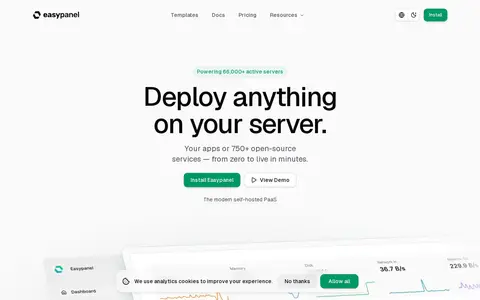
Easypanel is a self-hosted platform as a service for deploying applications and open-source services on a server. It provides continuous deployment, SSL, monitoring, logs and databases. It installs on a fresh Ubuntu server with at least 2 GB of RAM. A free plan covers up to three projects.

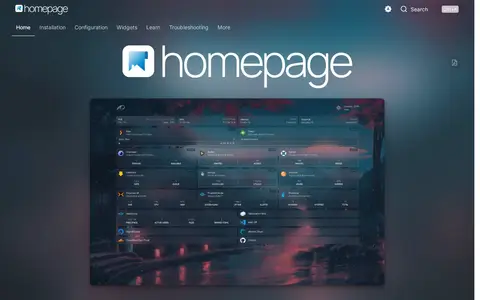
Homepage is an application dashboard described as modern, fast, secure and fully proxied, with integrations for over 100 services and translations into multiple languages. It is configured through YAML files or via Docker label discovery.

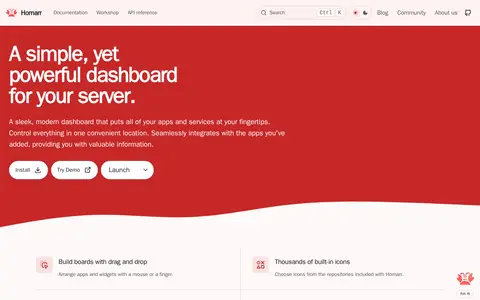
Homarr is a dashboard for a server that places apps and services in one location. Boards are built with drag and drop, and icons come from included repositories. It connects services to show status, activity and controls, and includes authentication and permissions via credentials, OIDC or LDAP. The interface is available in 26 languages, and integrations are managed without YAML configurations.

HowtoForge is a site offering Linux tutorials and howtos. Tutorials cover topics such as ISPConfig server setup, installing PHP versions with PHP-FPM and FastCGI, firewall installation, and installing Moodle LMS on Debian. Users can contribute their own Linux tutorials and discuss Linux-related problems in a forum.