metrics.torproject.org
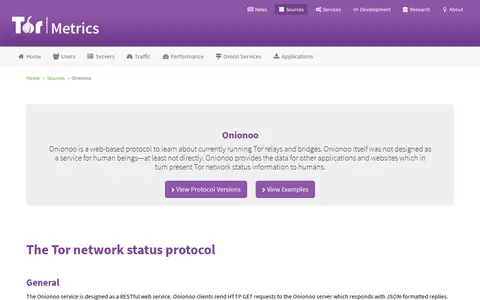
Protocol and API documentation for Tor relay and bridge status data used by network tools.
Directory
Search published websites, apps and repositories.
Protocol and API documentation for Tor relay and bridge status data used by network tools.
Tor measurement project collecting performance data for public relays, bridges and onion services.

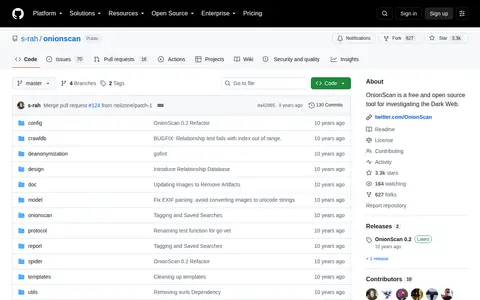
Open-source scanner for auditing onion-service metadata and operational security.

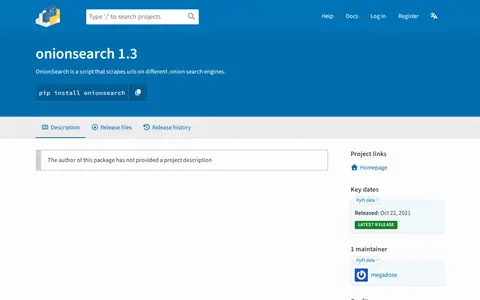
onionsearch is a Python script that scrapes URLs on different .onion search engines. It is distributed on PyPI as version 1.3, released on October 22, 2021, under the GNU General Public License v3. The package page states the author has not provided a project description.

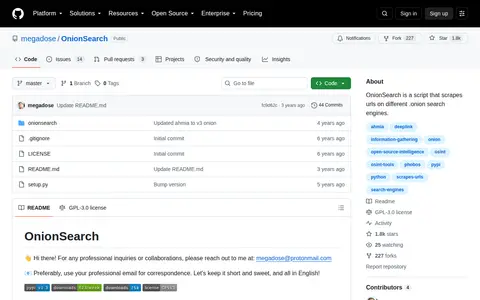
Open-source command-line tool that queries multiple onion search engines and exports results.

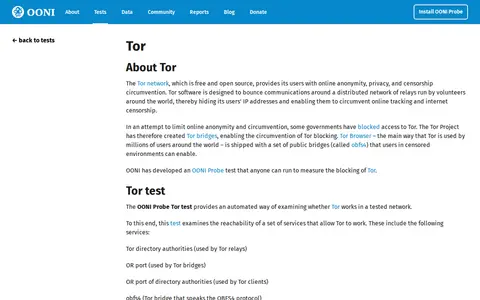
The OONI Probe Tor test provides an automated way of examining whether Tor works in a tested network. It measures the reachability of Tor directory authorities, OR ports and obfs4 bridge addresses. The Tor network is described as free and open source, providing online anonymity, privacy and censorship circumvention.

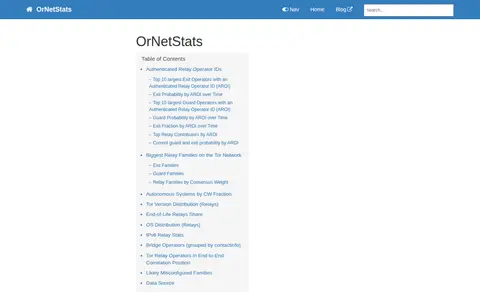
OrNetStats presents statistics and network health data about the Tor network and its relay groups. It reports on relay families, Autonomous System shares, MyFamily misconfigurations, end-of-life tor releases and potential risk to users, and displays Authenticated Relay Operator IDs in place of unverified ContactInfo strings.

Cybernews checker for seeing whether an email or phone appears in known data leaks.

ProPublica instructions for submitting documents securely through its verified SecureDrop service.
RAND study of illicit online markets and the operational lessons they present for public policy.

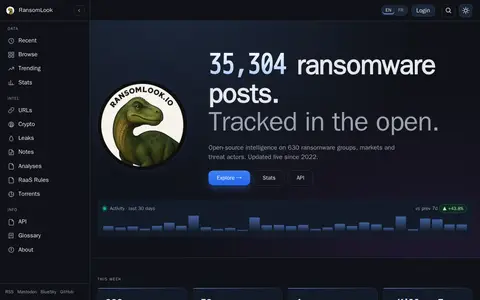
RansomLook is an open-source intelligence site that tracks ransomware groups, markets and threat actors, displaying posts and activity statistics. It reports 35,915 ransomware posts across 634 groups, 147 markets and 32 actors, alongside leak, ransom note and crypto address counts. An API and torrent intelligence features are listed.
Research article cataloging ransomware leak sites and explaining how their status is tracked.
Open-source tracker monitoring ransomware leak sites and publishing structured status data.

Insikt Group is the research unit of Recorded Future. It conducts research on cybercrime, state-sponsored threats and global issues, and supplies analyst-validated data, analytics and cyber and geopolitical intelligence to the Recorded Future Platform. Its resources include intelligence reports, threat briefings and information on threat actors.

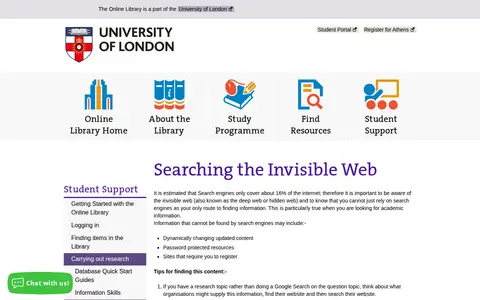
A library support page explaining the invisible web, also called the deep web or hidden web. It states that search engines cover about 16% of the internet and advises against relying on them alone, especially for academic information. It lists content search engines cannot find, such as dynamically changing content, password protected resources and sites requiring registration, and suggests web directories and asking a librarian.

Research and explainers on dark-web investigations, criminal forums and threat-intelligence methods.

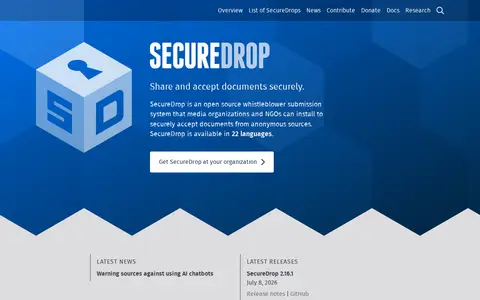
Open-source whistleblowing system that lets sources submit documents to newsrooms over Tor.

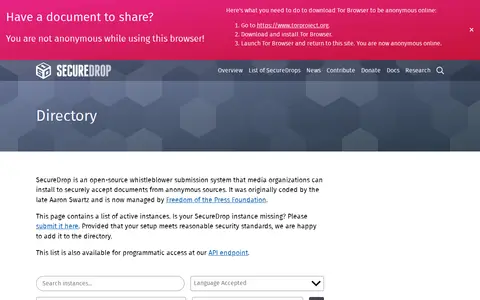
Official directory of active, verified SecureDrop instances operated by news and advocacy organizations.
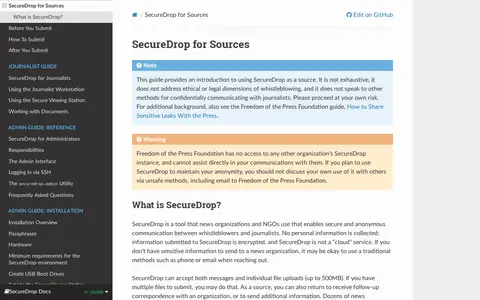
SecureDrop for Sources is a documentation guide introducing sources to using SecureDrop. SecureDrop is a tool news organizations and NGOs use for secure and anonymous communication between whistleblowers and journalists. Submitted information is encrypted, no personal information is collected, and it is not a cloud service. It accepts messages and individual file uploads up to 500MB.

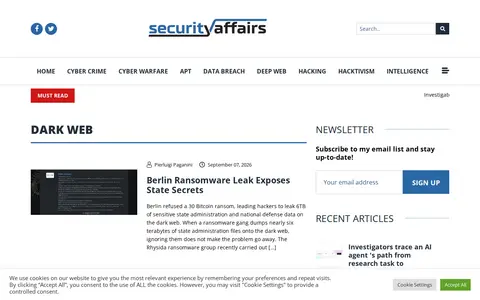
Reporting archive on dark-web crime, underground forums, data leaks and law-enforcement actions.

WikiLeaks archive for searching the Sony email release and related historical documents.
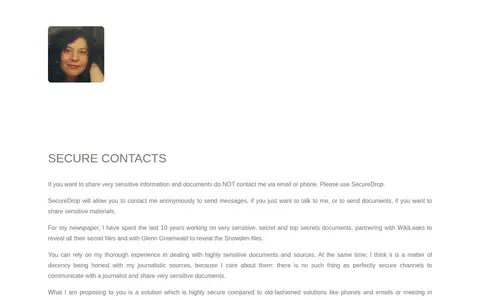
A secure contact page for journalist Stefania Maurizi directing sources to use SecureDrop rather than email or phone. Visitors access the .onion SecureDrop address through the Tor Browser to anonymously send messages or documents. The page recommends using Tails from a public computer and public WiFi at a location not usually visited.

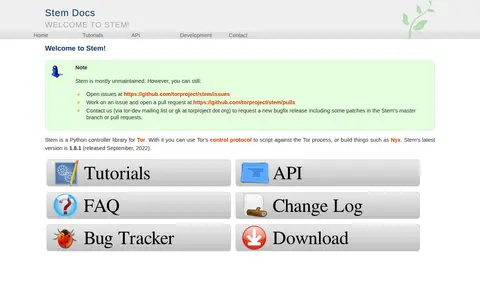
Stem is a Python controller library for Tor. It implements Tor's directory and control specifications, allowing scripts and applications to interact with the Tor process through its control protocol. The latest version is 1.8.1, released September 2022, and the project is noted as mostly unmaintained. It requires only Python.

Süddeutsche Zeitung instructions for submitting documents securely through its verified SecureDrop service.