MEKA is an open source implementation of methods for multi-label learning and evaluation, based on the WEKA Machine Learning Toolkit. It includes dozens of multi-label methods from the scientific literature and a wrapper to the MULAN framework. The project is distributed via SourceForge, with code hosted on GitHub.
Directory
Search results
Published directory entries matching your search.
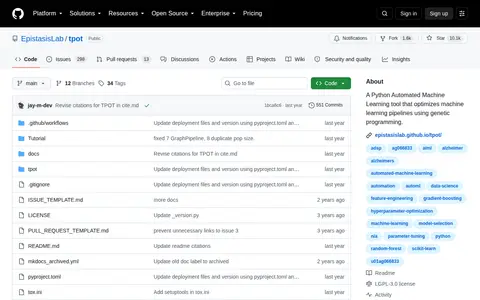
TPOT (Tree-based Pipeline Optimization Tool) is a Python automated machine learning tool that optimizes machine learning pipelines using genetic programming. The project underwent a major refactoring, merging what was once called TPOT2 into the main package, with new features including genetic feature selection, multi-objective optimization and an expanded method of defining search spaces.
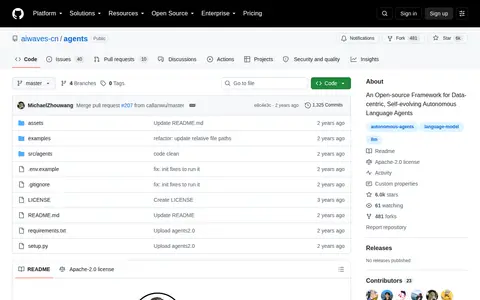
Agents is an open-source framework for data-centric, self-evolving autonomous language agents. It introduces agent symbolic learning, which treats an agent pipeline like a computational graph and uses prompt-based loss, back-propagation and weight updates to train agents. The project also supports optimizing multi-agent systems and was updated to Agents 2.0 with agent learning and evaluation support.
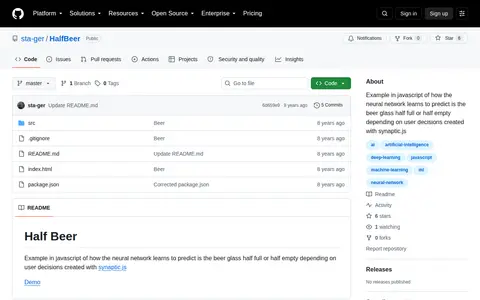
Half Beer is an open-source JavaScript example project that demonstrates a neural network learning to predict whether a beer glass is perceived as half full or half empty based on user decisions. It is built using the synaptic.js neural network library.
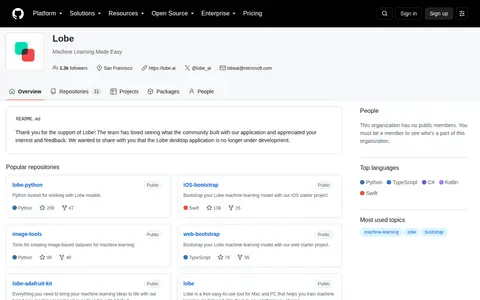
Lobe is a free tool for Mac and PC that helps users train machine learning models and ship them to any platform. The GitHub organization hosts starter projects for iOS and web, a Python toolset for working with Lobe models, and tools for creating image-based datasets. The team states the Lobe desktop application is no longer under development.
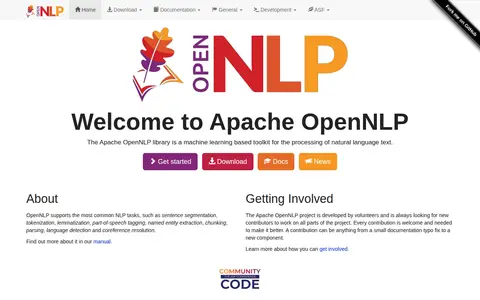
Apache OpenNLP is a machine learning based toolkit for the processing of natural language text. It supports tasks such as sentence segmentation, tokenization, lemmatization, part-of-speech tagging, named entity extraction, chunking, parsing, language detection and coreference resolution. The project is developed by volunteers and welcomes contributions, from small documentation fixes to new components.
A hands-on, project-based introduction to programming with Python by Eric Matthes, published in its third edition in December 2022. The book covers basic concepts such as variables, lists, classes, and loops, and guides readers through projects including a Space Invaders-inspired arcade game, data visualizations, and a simple web application.
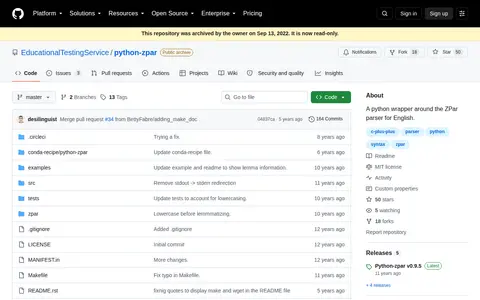
A Python wrapper around the ZPar statistical natural language parser, providing a ctypes-based interface and an XML-RPC ZPar server for batch processing. It works only with English ZPar models and supports 64-bit Linux and OS X. The repository was archived on Sep 13, 2022 and is read-only; the project is no longer under active development.
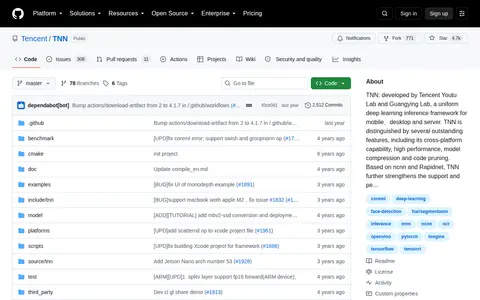
TNN is a deep learning inference framework for mobile, desktop and server, developed by Tencent Youtu Lab and Guangying Lab. It is based on ncnn and Rapidnet and extends support to X86 and NV GPUs. The project states that it has been used in Tencent applications including Mobile QQ, Weishi and Pitu.
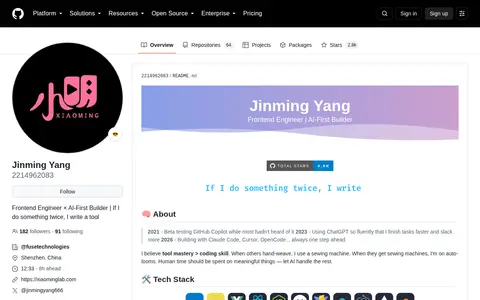
Jinming Yang's GitHub profile describes him as a frontend engineer and AI-first builder based in Shenzhen, China. It links to current projects including ai-workflow, Vsync, UnMarket and aide, and lists legacy projects such as dom-to-code, gpt-runner and ios-scriptable-tsx.
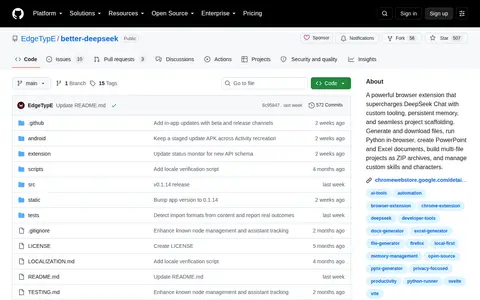
Better DeepSeek is an open-source browser extension that adds tools to the DeepSeek chat interface, including a customizable system prompt, persistent memory, and tag-based output. It can generate downloadable files, PowerPoint and Excel documents, and multi-file ZIP projects, and run Python in the browser. The project is described as unofficial and independent.
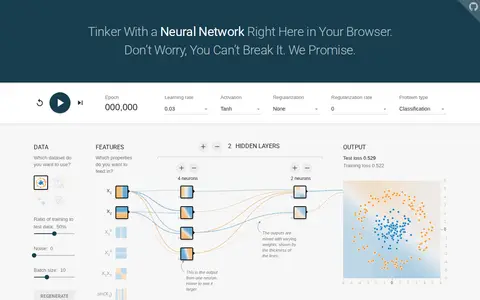
A Neural Network Playground is a browser-based educational visualization created by Daniel Smilkov and Shan Carter for experimenting with a real neural network. Users adjust controls to explore how a network learns from data. The project is open sourced on GitHub under the Apache License so its features can be tailored to a topic or lesson.
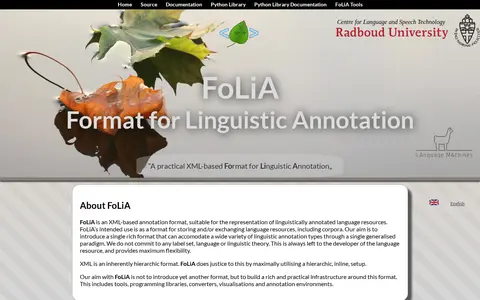
FoLiA is an XML-based format for linguistic annotation intended for representing and exchanging written language resources such as corpora. It aims to accommodate many annotation types through a generalized paradigm without committing to a particular label set, language or linguistic theory. The project includes documentation, a RelaxNG schema and software libraries.
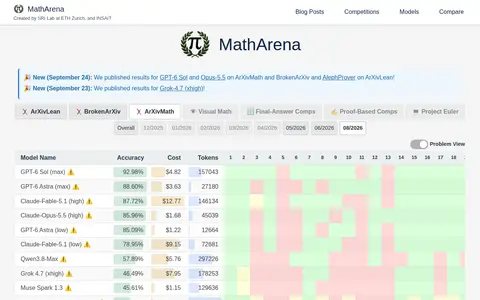
MathArena evaluates large language models on uncontaminated math benchmarks. It presents model analysis across competitions such as ArXivLean, BrokenArXiv, ArXivMath, Visual Math, Final-Answer Comps, Proof-Based Comps and Project Euler. A competition is selected to load tables and a leaderboard, and clicking a cell shows the raw model output.
S2DS (Science to Data Science) is a data science bootcamp that offers intensive project-based training to help academics transition into data science roles. It is Europe's largest data science and AI training programme, providing real business experience, mentorship, and agile management skills.
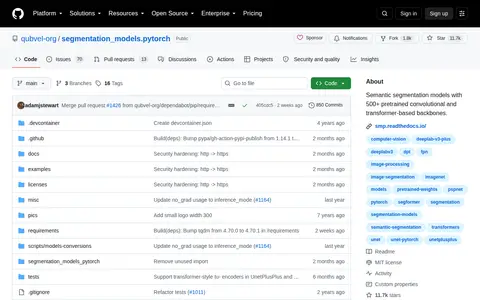
segmentation models.pytorch is a library that offers semantic segmentation models paired with more than 500 pretrained convolutional and transformer-based backbones. It is maintained as an open source project on GitHub.
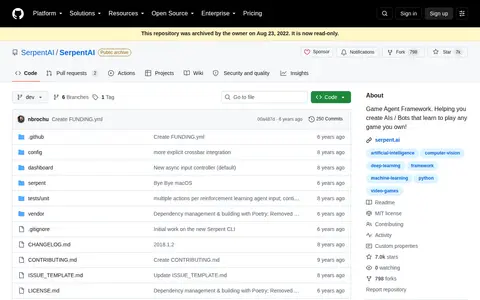
Serpent.AI is a Python-based Game Agent Framework intended to help users create artificial intelligences and bots that learn to play video games. The project was marked as end of life in November 2018, with a revival update released in May 2020.