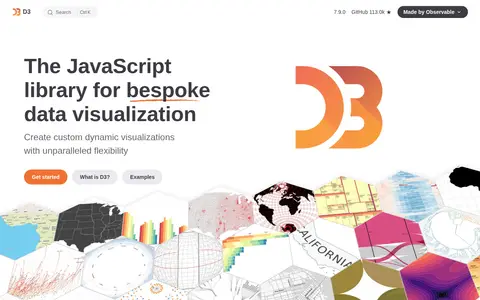

D3.js is a JavaScript library for bespoke data visualization developed by Observable. It enables creation of custom dynamic visualizations with features including selections and transitions, scales and axes, shape rendering, interactive behaviors, layout algorithms, and geographic map projections. The library also powers Observable Plot, a high-level visualization API.
Directory
Search results
Published directory entries matching your search.
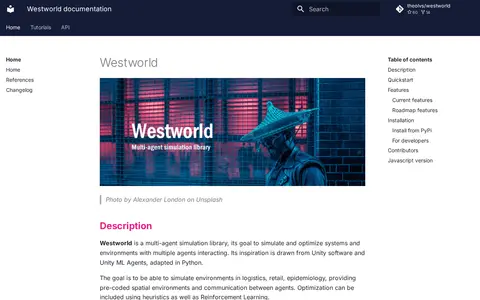
Westworld is a multi-agent simulation library for simulating and optimizing systems with multiple interacting agents. Inspired by Unity and Unity ML Agents and adapted in Python, it provides grid environments, agents, obstacles, collectibles and triggers, spawning, simple pathfinding and wandering behaviors, maze generation and simulation visualization and export. The project is described as extremely experimental and in alpha release.
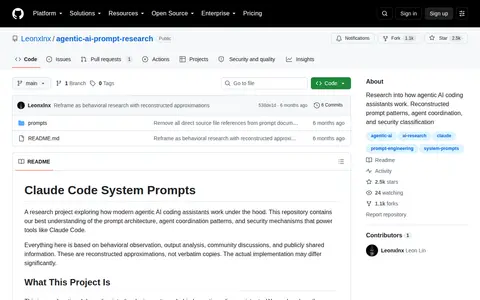
A research repository examining how agentic AI coding assistants work, covering reconstructed prompt patterns, agent coordination and security classification. It documents design patterns such as system prompts, sub-agent coordination and permission mechanisms, described as approximations based on observation rather than verbatim copies. It aims to help AI engineers and researchers learn from these architectural patterns.
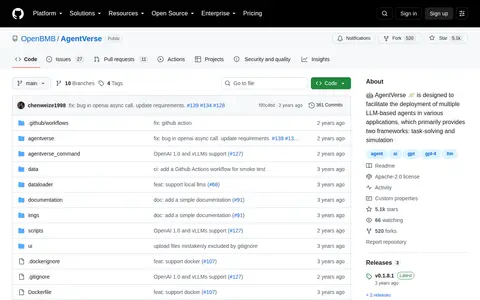
AgentVerse is designed to facilitate deployment of multiple LLM-based agents in various applications. It provides two frameworks: task-solving, which assembles multiple agents as an automatic multi-agent system to collaboratively accomplish tasks, and simulation, which lets users set up custom environments to observe or interact with multiple agents.
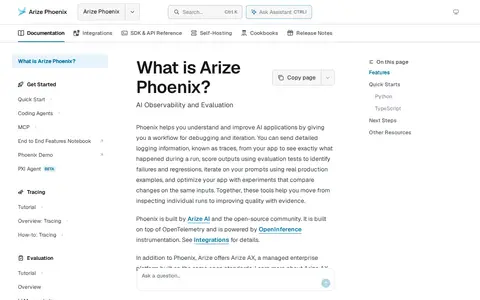
Arize Phoenix is an AI observability and evaluation tool built by Arize AI and the open-source community on OpenTelemetry and OpenInference. It provides tracing for debugging individual runs, evaluations to score output quality, a prompt playground, and datasets and experiments for comparing changes on the same inputs.
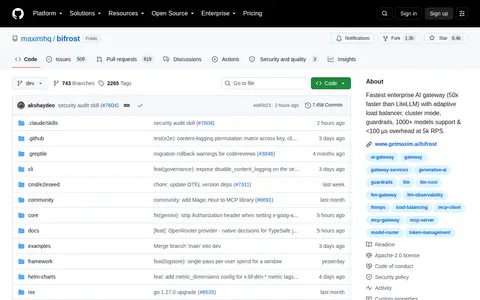
An open-source LLM gateway with routing, load balancing, guardrails, and observability for 1000+ models. opensource.
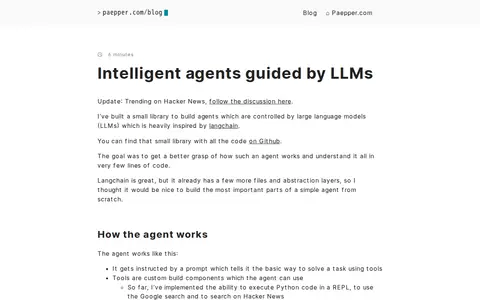
A blog post describing a small library for building agents controlled by large language models, inspired by langchain. The agent is instructed by a prompt and runs in a loop of Thought, Action and Observation. Implemented tools include executing Python code in a REPL, Google search and Hacker News search.
Helps teams build, deploy, observe or operate machine-learning systems.
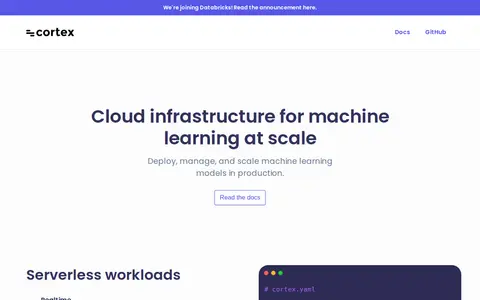
Cortex is cloud infrastructure for machine learning at scale, used to deploy, manage and scale machine learning models in production. It supports realtime, async and batch serverless workloads, along with automated cluster management including cluster autoscaling and spot instances with on-demand backups. Environments, provisioning and CI/CD and observability integrations are also listed. A notice states the project is joining Databricks.
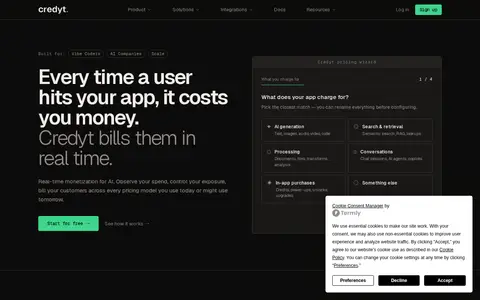
Credyt is real-time monetization infrastructure for AI. It is intended to let builders observe spend per API call, model and customer, enforce budget limits before usage is authorized, and bill customers across usage-based, subscription, hybrid, credit and token pricing models. The team cites backgrounds at Visa, Checkout.com, TrueLayer and SumUp.

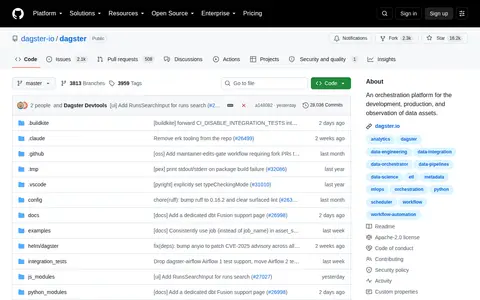
Dagster is an open source, cloud-native data pipeline orchestrator for the data development lifecycle, with integrated lineage and observability. Users declare data assets as Python functions, and Dagster runs them and keeps assets up to date. It is designed for developing and maintaining data assets such as tables, data sets, machine learning models, and reports.
Datacast is the personal blog and podcast series of James Le. It features written posts and podcast episodes covering topics such as data infrastructure, data observability, responsible AI, product management, and data engineering.
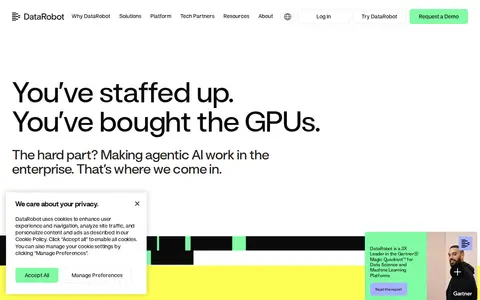
DataRobot is a unified agent workforce platform for enterprise use. It delivers AI applications and a platform designed to maximize AI impact and minimize business risk, supporting the building, operation, and governance of AI agents. Its offerings include foundational, business, and purpose-built agents, an agentic AI platform, generative AI and predictive AI tools, AI governance and observability features, and industry and function-specific agent solutions.
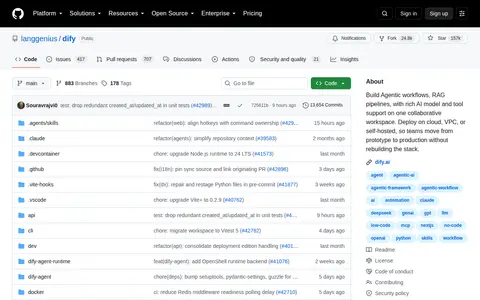
Dify is an open-source LLM app development platform with a visual canvas for AI workflows and RAG pipelines, plus model management and observability. It can be deployed on cloud, VPC, or self-hosted, and integrates with proprietary and open-source LLMs.
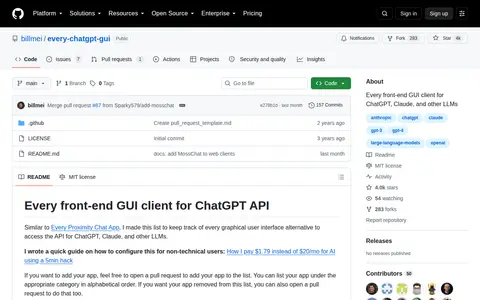
Every ChatGPT GUI is a repository list tracking graphical user interface alternatives for accessing the API for ChatGPT, Claude and other LLMs. It groups open source web AI chats, browser extensions, Obsidian plugins, self-hosted tools and desktop apps, with demo and source links. The repository is MIT licensed and accepts pull requests to add or remove apps.
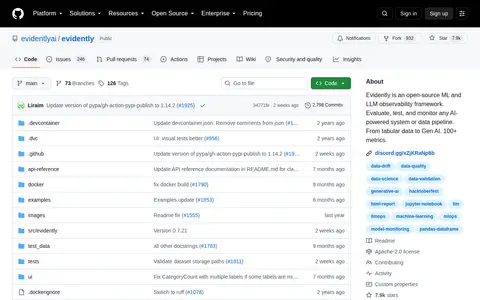
Evidently is an open-source observability framework for machine learning and large language models, hosted on GitHub under the evidentlyai organization. It enables users to evaluate, test, and monitor AI-powered systems and data pipelines, with support for use cases ranging from tabular data processing to generative AI, and includes more than 100 built-in metrics.
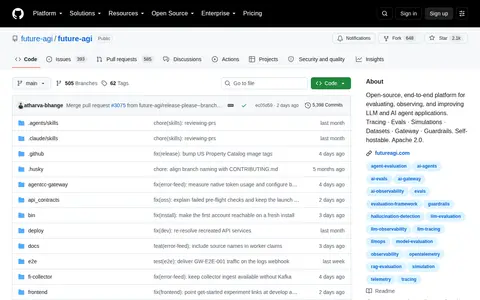
Future AGI is an open-source, self-hostable platform for evaluating, observing, and improving LLM and AI agent applications. It combines tracing, evals, simulations, datasets, a gateway and guardrails on one platform with a feedback loop. The Apache 2.0 core can be self-hosted, and a managed Cloud option is offered.
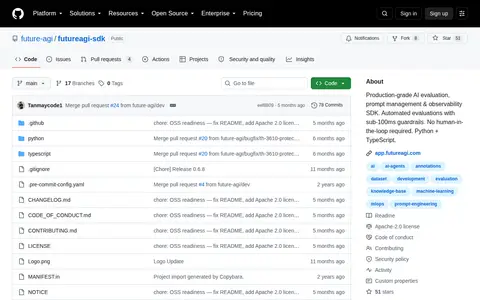
Future AGI SDK is a production-grade software development kit for AI evaluation, prompt management, and observability. It offers automated evaluations with sub-100ms guardrails and does not require human-in-the-loop. The SDK supports Python and TypeScript.
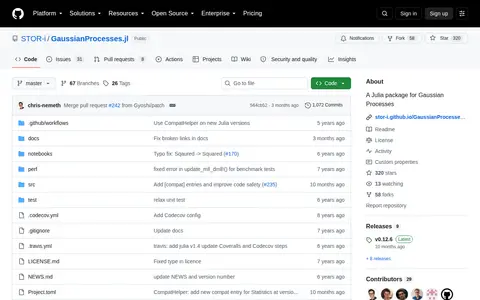
GaussianProcesses.jl is a Julia package for Gaussian Processes that allows fitting exact Gaussian process models when observations are Gaussian distributed about the latent function. The main GP function fits Gaussian and non-Gaussian data, and parameters can be estimated by maximizing the log-likelihood or sampled with Hamiltonian Monte Carlo.
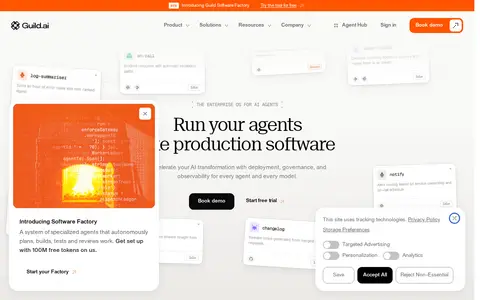
Guild is a vendor-neutral control plane for AI agents. It lets engineering teams manage, govern, and share agents in production, with security and observability built in. Features include scoped credentials, action approval, policy enforcement, tracing, and evaluations. It supports any model or framework and provides a shared agent catalog and CLI access.
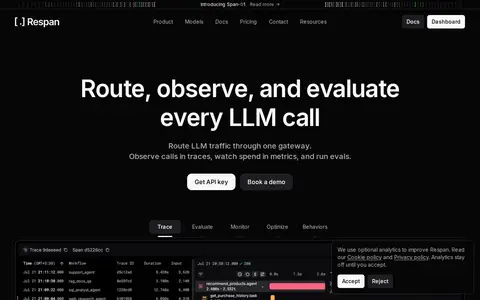
Respan is an AI gateway that routes requests to over 1,000 models through one API endpoint, with automatic fallbacks, response caching, and spending limits. It also provides built-in observability for tracing LLM calls, tool calls, and agent steps, plus automated evaluations and security testing for masking PII and red-teaming agents before launch.
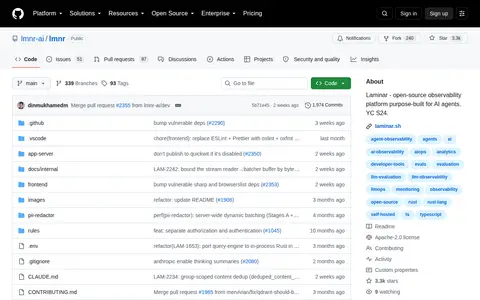
Laminar is an open-source observability platform purpose-built for AI agents. It provides OpenTelemetry-native tracing with a one-line SDK setup, plain-English signals that alert in Slack, and an SDK and CLI for running evals. It is written in Rust with 20x trace compression, and can be used via a managed platform or self-hosted with Docker Compose.
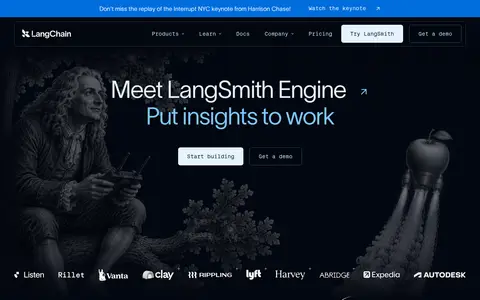
LangChain is an open agent engineering platform that enables organizations to own, control, govern, and compound their intelligence. Its LangSmith platform offers tools for autonomous agent improvement, observability, performance evaluation, production deployment, safe code execution sandboxes, LLM call control, and no-code agent creation. The platform also provides open source agent frameworks including deepagents, langgraph, and langchain.
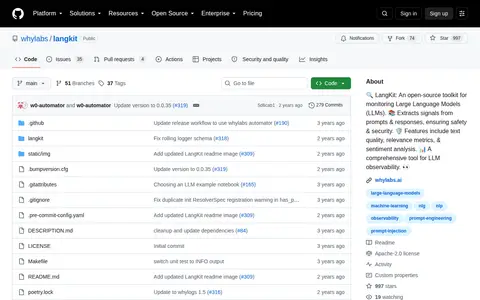
LangKit is an open-source toolkit for monitoring large language models (LLMs). It extracts signals from LLM prompts and responses, and offers features such as text quality assessment, relevance metrics, and sentiment analysis to support LLM observability.