
Aidbase is an AI-powered support ecosystem for SaaS startups. It combines an AI chatbot trained on user data, a knowledge base, AI-assisted ticketing, and a unified email inbox. It offers customization, no-code deployment, webhooks, and SDKs, APIs and webhooks for integration. Pricing plans include Standard at €29 per month, Pro at €39 per month, and Expert at €199 per month.

Directory
Search results
Published directory entries matching your search.
Build and customise autonomous AI agents to support your employees and customers 24/7, including full integration with the Salesforce ecosystem.
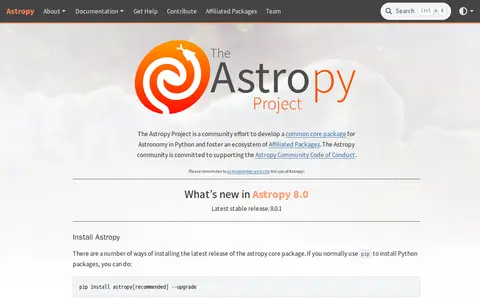
Astropy is a community effort to develop a common core package for astronomy in Python and foster an ecosystem of Affiliated Packages. Installation is available via pip and other package managers, and the project provides tutorials, documentation, and community help channels.
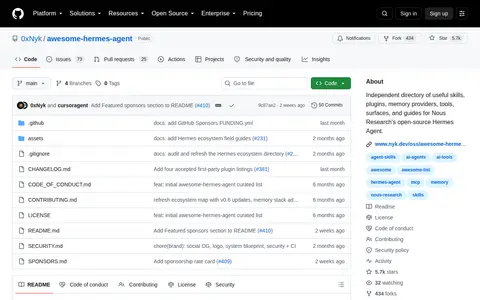
awesome-hermes-agent is an independent directory of useful skills, plugins, memory providers, tools, surfaces, and guides for Nous Research's open-source Hermes Agent. It serves as a resource for developers working with the Hermes Agent ecosystem.
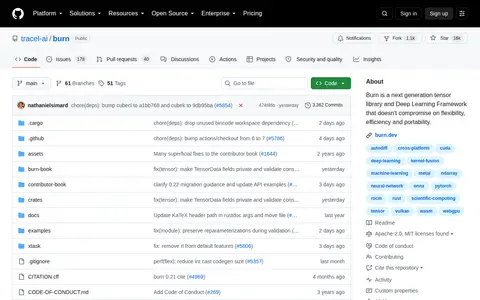
burn is a next-generation tensor library and deep learning framework developed by tracel-ai. It is designed to prioritize flexibility, efficiency, and portability, with available resources covering use with Rust, its ecosystem, supported backends, and training and inference functionality.
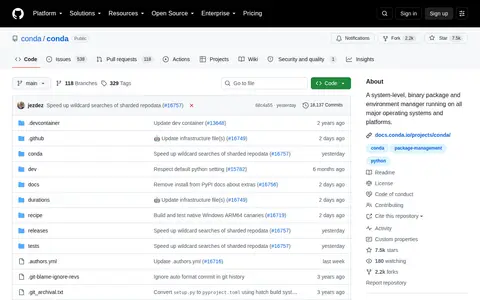
OS-agnostic, system-level binary package manager and ecosystem.
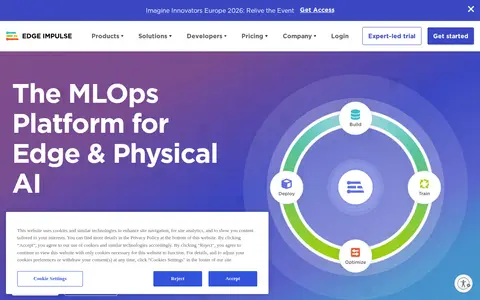
Edge Impulse is an MLOps platform for edge AI and physical AI. It provides native MLOps workflows covering end-to-end pipelines, security, versioning and model monitoring, and is used to develop, deploy and manage AI solutions at scale across the edge hardware ecosystem. A Developer plan is offered at $0 per month.
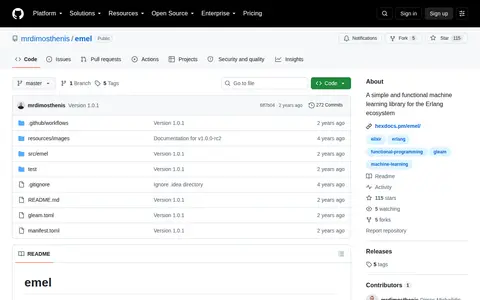
emel is a simple and functional machine learning library built for the Erlang ecosystem and implemented in Gleam. It turns data into functions and supports installing through rebar.config, mix.exs or gleam add. Implemented algorithms include linear regression, k nearest neighbors, decision tree, naive Bayes, k means, perceptron, logistic regression and neural network, along with mathematics, algebra, geometry and statistics.
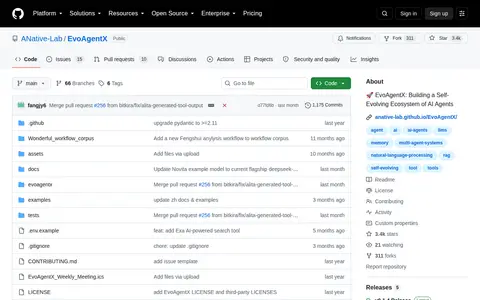
EvoAgentX is building a Self-Evolving Ecosystem of AI Agents, it will give you automated framework for evaluating and evolving agentic workflows.
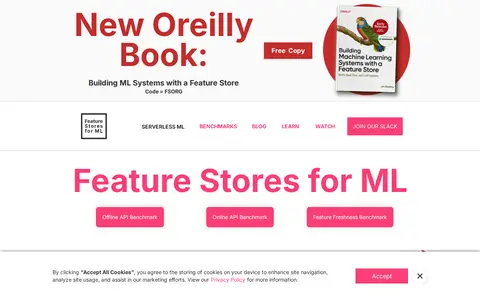
Feature Stores for ML is a global community of data science professionals, researchers, and engineers focused on feature stores for machine learning pipelines. It creates educational content about feature stores and the surrounding data and AI ecosystem, hosts monthly industry meetups, and provides resources including blog posts, videos, benchmarks, and an MLOps dictionary.
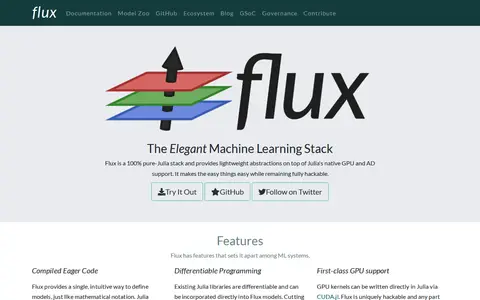
Flux is a machine learning library built as a pure-Julia stack, offering lightweight abstractions over Julia's native GPU and automatic differentiation support. It is compiled and eager, and existing Julia libraries can be incorporated into Flux models. Its ecosystem includes probabilistic programming, graph neural networks, computer vision and natural language processing packages, and it is maintained by a community team.
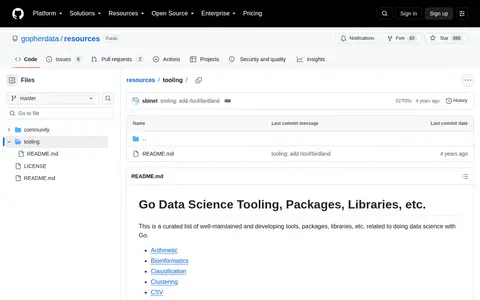
Gopherdata's tooling directory is a curated list of tools, packages, and libraries for doing data science with Go. It organizes resources across categories such as classification, clustering, CSV handling, distributed data analysis, geospatial work, machine learning, and plotting, and also lists proposed packages meant to fill gaps in the ecosystem.
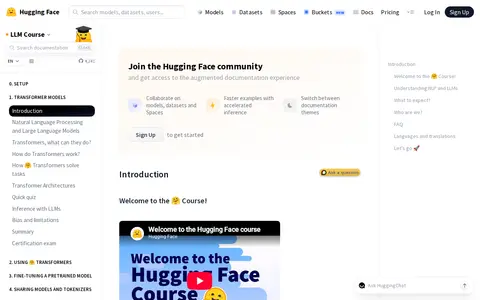
A free LLM course from Hugging Face that teaches large language models and natural language processing. It covers the Transformers, Datasets, Tokenizers, and Accelerate libraries and the Hugging Face Hub, along with some libraries outside the ecosystem. The course is without ads.
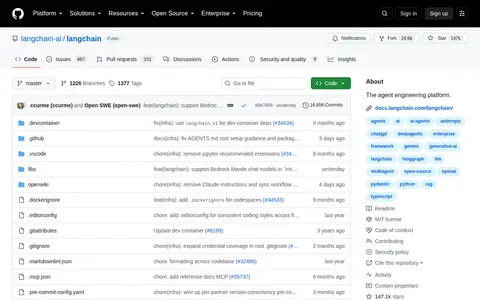
hwchase17/langchain is a GitHub repository for LangChain, an agent engineering platform. The repository hosts resources related to the LangChain ecosystem, including quickstart guides and documentation for users and developers working with the platform.
JSON Schema is a declarative language for annotating and validating JSON documents' structure, constraints, and data types. It enables JSON data consistency, validity, and interoperability, and has a tooling ecosystem of validators, generators, and linters. Documentation covers schema design, guides, and keyword reference.
A weekly news and interview podcast covering the Kubernetes community, including release discussions, projects, and AI policy topics. Episodes feature guests from the Kubernetes ecosystem and are hosted as numbered installments with accompanying show notes.
Marquez is an open source metadata service for collecting, aggregating and visualizing a data ecosystem's metadata. It maintains provenance of how datasets are consumed and produced and provides visibility into job runtime and dataset access. Metadata is collected via OpenLineage, and a web UI shows job and dataset dependencies through a lineage graph.

Retext is an ecosystem of plugins that work with natural language as structured data, specifically concrete syntax trees. It is a tool that transforms natural language with plugins, which can inspect and change the natural language. The repository is a monorepo containing packages for parsing English, Dutch and Latin-script prose and serializing syntax trees.
TensorFlow is an end-to-end open source machine learning platform. It provides a flexible ecosystem of tools, libraries, and community resources for machine learning development, including libraries for web, mobile, edge, and production ML pipelines, as well as pre-trained models, datasets, and educational resources for users.
The Analytics Engineering Roundup is a Substack newsletter curating articles on analytics engineering and its adjacent ecosystem, curated by Tristan Handy. He describes analytics engineering as creating and disseminating knowledge within organizations, covering cloud data platforms, dimensional modeling and data quality.