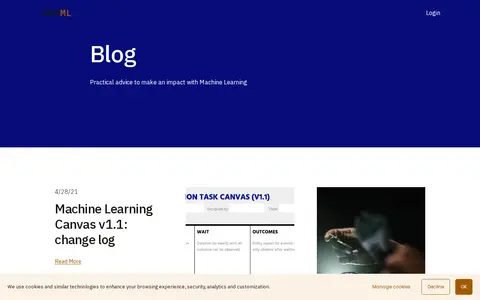
A blog by Louis Dorard offering practical advice on applying machine learning. Posts cover the Machine Learning Canvas, the Prediction Task Canvas, an investor's approach to ML projects, choosing machine learning APIs, and trusting AI with important decisions.
Directory
Search results
Published directory entries matching your search.
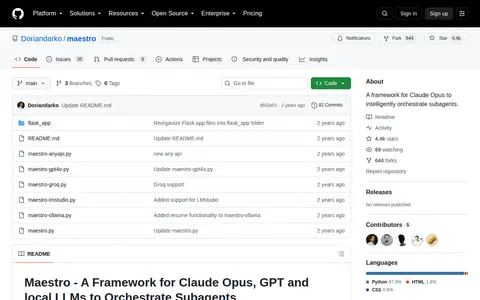
Maestro is a framework for Claude Opus, GPT and local large language models to orchestrate subagents. It supports use with APIs from providers including Anthropic, Gemini, OpenAI and Cohere, and has been updated to support Claude 3.5 Sonnet.
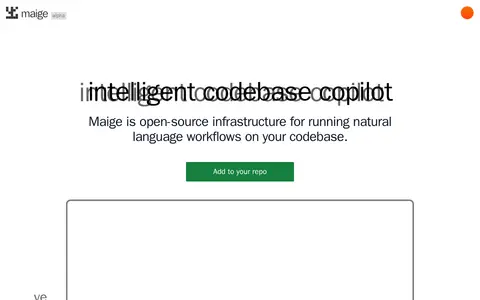
Maige is open-source infrastructure for running natural language workflows on a codebase. After connecting a repository, users write rules describing what should happen when issues and pull requests are opened, and the tool can label, assign, comment, review code, and run simple code snippets. It works with the GitHub API. A standard plan is offered after free use, with usage-based payment.
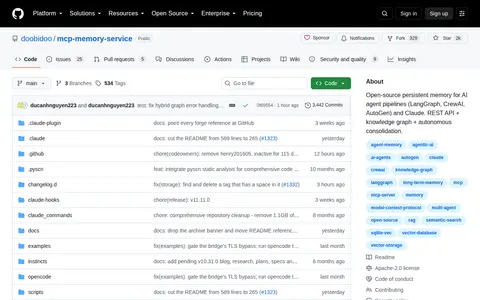
MCP Memory Service is an open-source tool that provides persistent memory for AI agent pipelines including LangGraph, CrewAI, AutoGen and Claude, with a REST API, knowledge graph and autonomous consolidation functionality.
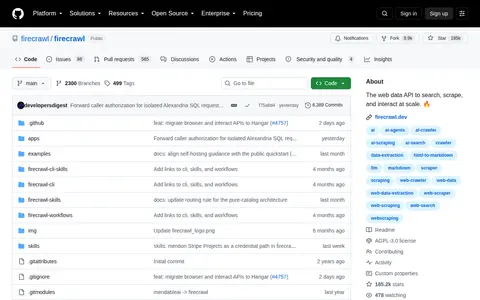
Turn entire websites into LLM-ready markdown or structured data. Scrape, crawl and extract with a single API.
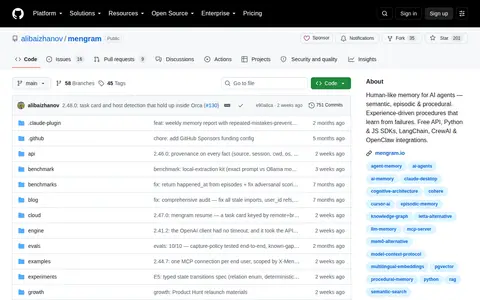
Mengram is an open-source project that provides human-like memory capabilities for AI agents. It supports semantic, episodic, and procedural memory types, with experience-driven procedures designed to learn from failures. The project offers a free API, Python and JavaScript SDKs, and integrations with LangChain, CrewAI, and OpenClaw.
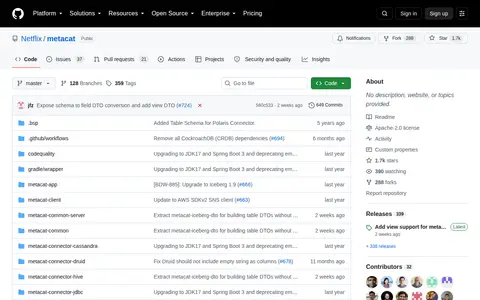
Unified metadata exploration API service for Hive, RDS, Teradata, Redshift, S3 and Cassandra.
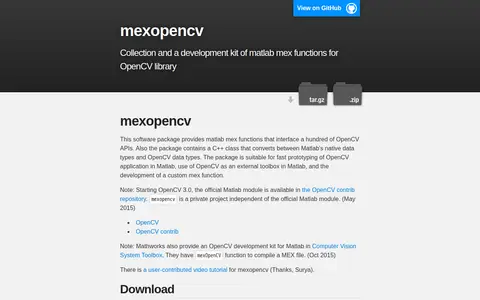
mexopencv is a collection and development kit of MATLAB MEX functions for the OpenCV library. It provides MATLAB MEX functions interfacing a hundred OpenCV APIs and includes a C++ class converting between MATLAB and OpenCV data types. The package is intended for fast prototyping of OpenCV applications in MATLAB and for developing custom MEX functions.
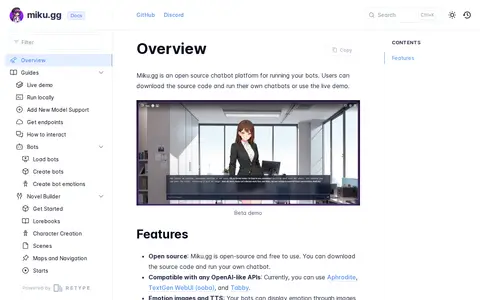
Miku.gg is an open source chatbot platform for running bots. Users can download the source code and run their own chatbots or use the live demo. It works with any OpenAI-like APIs and currently supports Aphrodite, TextGen WebUI and Tabby. Bots can show emotion through images and use TTS, with Azure TTS, NovelAI and ElevenLabs supported. A bot directory allows sharing, downloading or trying bots without local installation.
MiMo Studio helps build, test, automate, or manage AI agents, prompts, models, and API workflows.
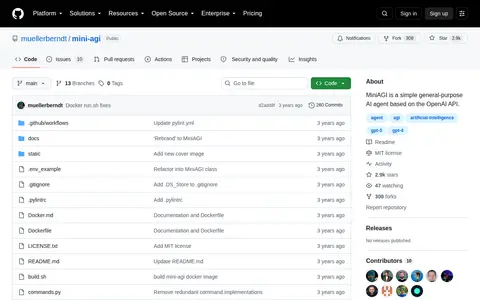
MiniAGI is a simple autonomous agent compatible with GPT-3.5-Turbo and GPT-4. It combines a prompt with a minimal set of tools, chain-of-thoughts and short-term memory with summarization, and is capable of inner monologue and self-criticism. A critic can be enabled for additional API requests.
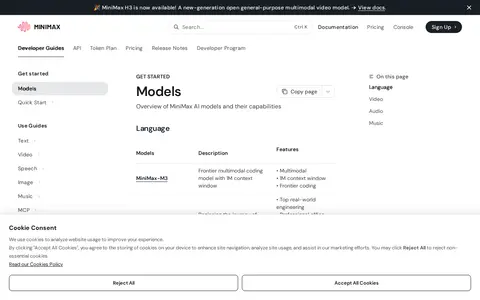
MiniMax AI helps build, test, automate, or manage AI agents, prompts, models, and API workflows.
Overview of MiniMax AI models and their capabilities.
Mistral Studio helps build, test, automate, or manage AI agents, prompts, models, and API workflows.
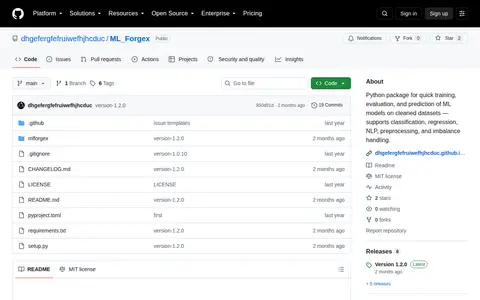
Lightweight ML utility for automated training, evaluation, and prediction with CLI and Python API support.
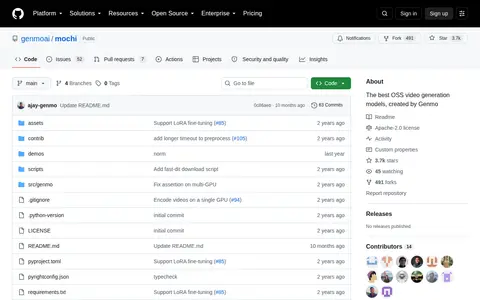
Mochi is an open-source video generation model by Genmo, released under an Apache 2.0 license. The repository provides installation, weight downloads, a Gradio UI, CLI, and API, plus LoRA fine-tuning support and an inference harness.
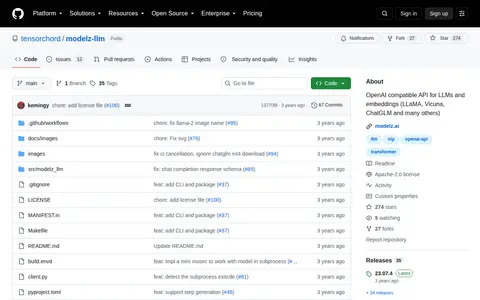
Modelz LLM is an inference server for running open source large language models such as FastChat, LLaMA and ChatGLM on local or cloud environments with an OpenAI compatible API. It supports interaction through the OpenAI python SDK or LangChain and provides docker images for deployment on Kubernetes or Modelz.
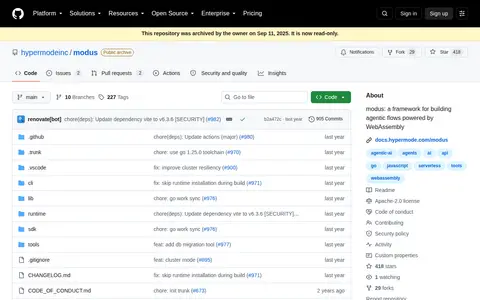
An open source, serverless framework for building intelligent agents and APIs in Go or AssemblyScript (a TypeScript-like language).
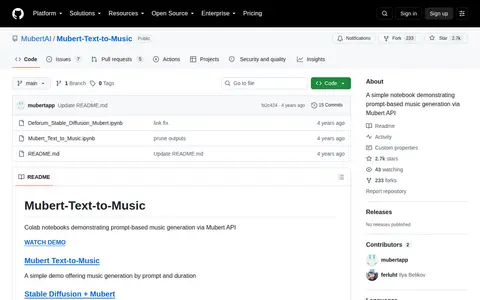
MubertAI/Mubert-Text-to-Music is a GitHub repository maintained by MubertAI. It hosts a simple notebook that demonstrates prompt-based music generation via the Mubert API, providing a reference implementation for users looking to generate music from text prompts using the service.
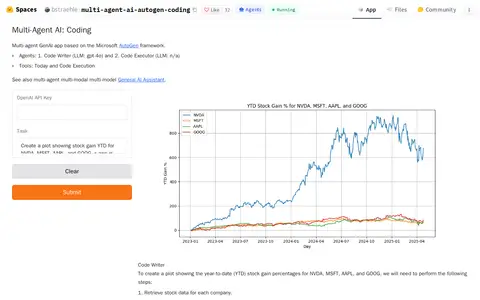
A Hugging Face Space by bstraehle that uses a team of AI agents to write code. Users enter an OpenAI API key and describe a programming task, and the app returns the needed code as formatted text. It is built with Microsoft AutoGen.
Multi-Agent AI - Coding is a Hugging Face Space created by harry85, duplicated from the bstraehle/multi-agent-ai-autogen-coding space. It uses the Microsoft AutoGen multi-agent AI system, allowing users to input an OpenAI API key and programming task to generate formatted code solutions via a team of AI agents. The space is currently sleeping due to inactivity.
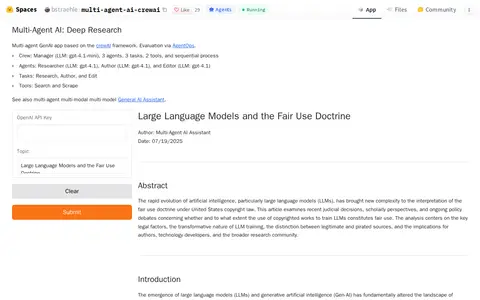
A Hugging Face Space by bstraehle that generates a detailed article from a topic. Users enter an OpenAI API key and a topic, and the app produces a comprehensive piece of writing based on that input. It is built with crewAI.
Multi-Agent AI - Deep Research is a Hugging Face Space developed by bstraehle. Users provide an OpenAI API key and a research topic, and the application generates a detailed research article based on the provided input. The space is currently sleeping due to inactivity.
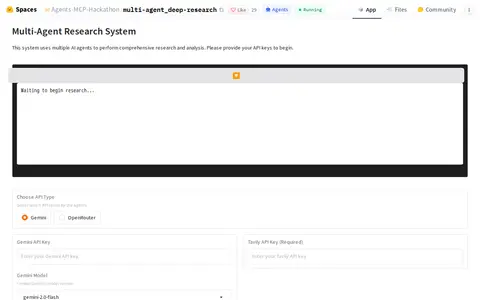
Multi-agent Deep-research System is a Hugging Face Space created by Agents-MCP-Hackathon. The system uses AI agents to perform web searches and analyze information, generating detailed research reports in response to user-provided research questions. Users must supply API keys for web search functionality. The space is currently running.