
getdesign.md is a collection of DESIGN.md files containing independent design system analyses of popular websites. These files serve as design references for AI coding agents to ensure consistent visual styling across AI-built projects. It offers a catalog of over 550 public DESIGN.md files, private DESIGN.md creation services, and website and mobile app starter kits.

Directory
Search results
Published directory entries matching your search.
Ghostwriter is a Replit feature that adds machine-learning tools to the integrated development environment. It offers an ML-powered pair programmer that completes code in realtime, tools to generate, transform and explain code, and an in-editor search utility for finding and importing open-source code. Its flagship feature, Complete Code, was in closed beta at the time of the announcement.
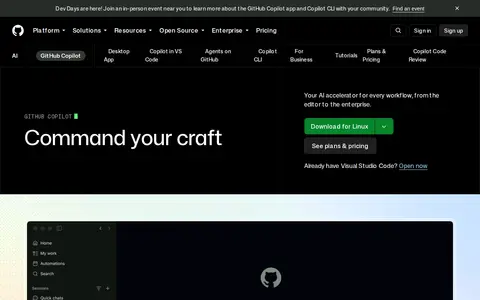
GitHub Copilot is an AI coding agent from GitHub that assists across the workflow, from an open issue to reviewing and merging a pull request. It works in the editor, the terminal, on the desktop and on GitHub. Users can assign tasks to Copilot and third-party agents such as Claude by Anthropic and OpenAI Codex.
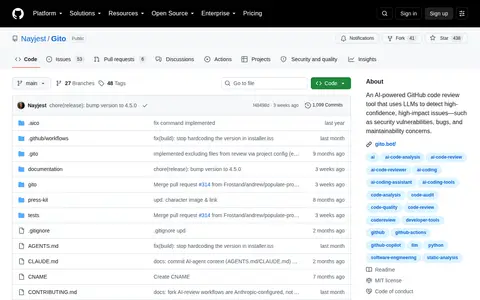
Gito is an open-source AI code reviewer that works with any language model provider. It detects issues in GitHub pull requests or local codebase changes, posts results as PR comments, and reacts to maintainer comments. GitLab support is in beta; Bitbucket support is planned.

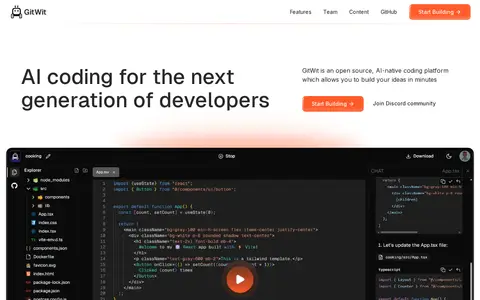
GitWit is described as an open source, AI-native coding platform intended for building ideas. The site also presents an AI Editor with AI-powered suggestions and real-time collaboration for building, testing, and deploying.

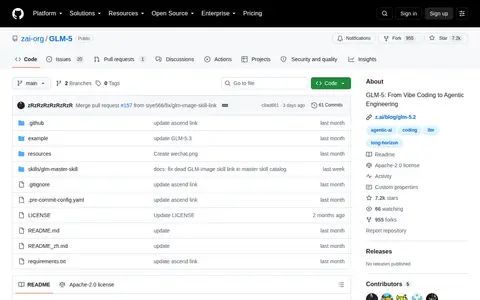
GLM-5.1 is a version of the GLM-5 project hosted on GitHub under the zai-org organization. The project focuses on transitioning from vibe coding to agentic engineering, with multiple released versions including GLM-5.1, GLM-5.2, and GLM-5.3.
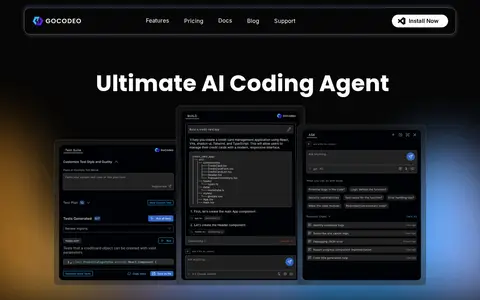
GoCodeo is an AI coding agent that integrates with IDEs to generate code and tests. Its sources describe framework support, MCP-based tool integration, Supabase integration and Vercel deployment, and automated test generation.
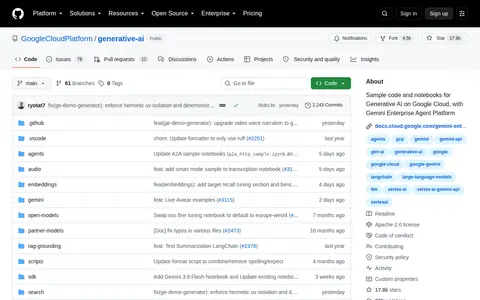
Sample code and notebooks for Generative AI on Google Cloud.
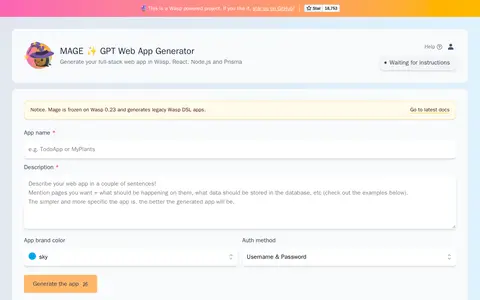
GPT Web App Generator, also referred to as MAGE, is a tool that generates full-stack web applications built with React, Node.js, and Prisma, using GPT and the Wasp full-stack framework. It is hosted at usemage.ai.
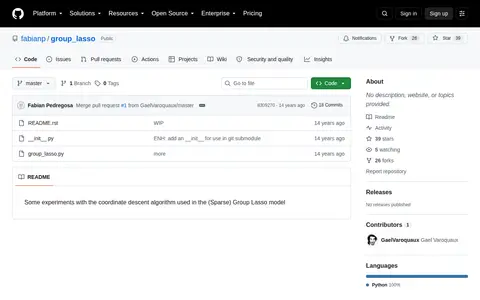
Some experiments with the coordinate descent algorithm used in the (Sparse) Group Lasso model.
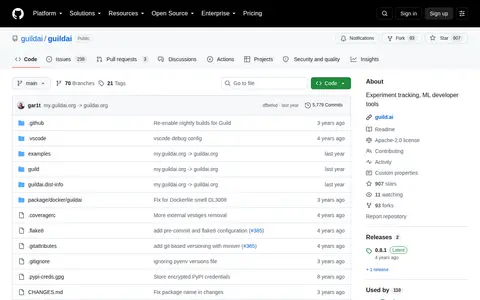
Guild AI is the source repository for an open source toolkit that automates and optimizes machine learning experiments. It runs unmodified training scripts, captures each run result as a unique experiment, and automates trials using grid search, random search and Bayesian optimization.
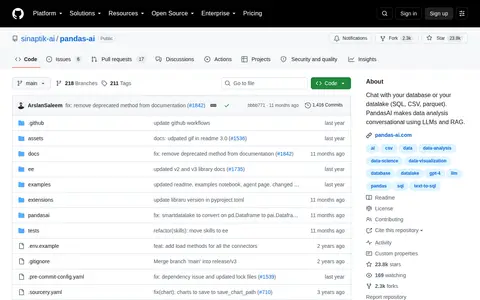
PandasAI is an open-source library that enables conversational data analysis using large language models and retrieval-augmented generation. It allows users to interact with databases or datalakes supporting SQL, CSV, and parquet file formats.
H2O AutoML is an open-source automatic machine learning tool developed by H2O.ai. It automatically generates features and selections for model building with no coding required. It is part of the H2O.ai platform, with offerings designed for model builders, data scientists, and enterprise developers.
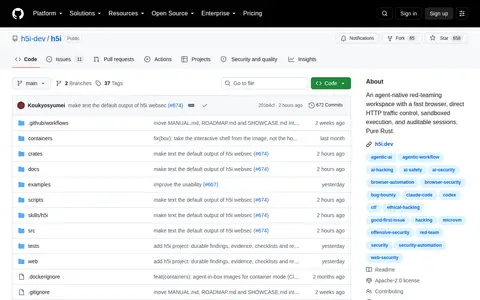
h5i is a workspace for securing web applications through two approaches: finding vulnerabilities with AI agents and proving correctness with formal verification. It provides AI agents a toolkit for browser automation, HTTP traffic manipulation and reconnaissance, and includes h5i-app, an Axum-based Rust framework for verification with Lean 4.
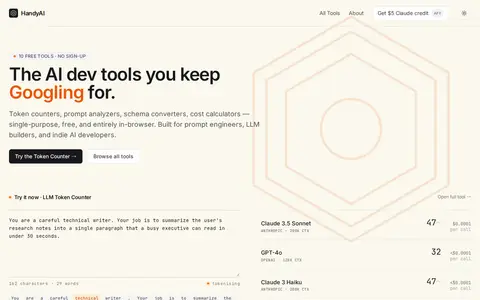
HandyAI is a collection of free browser-based tools for AI and Claude developers, including token counters, prompt analyzers, JSON to tool-use converters and cost calculators. It requires no sign-up and lists the LLM Token Counter and AI Cost Calculator as live tools, with others announced for later release.
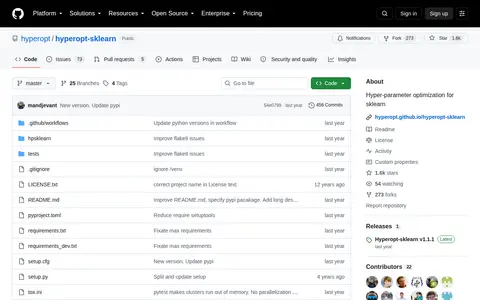
hyperopt (hyperopt-sklearn) is an open-source project that provides hyper-parameter optimization functionality for the scikit-learn (sklearn) machine learning library. It is hosted as a public repository on GitHub for collaborative development.
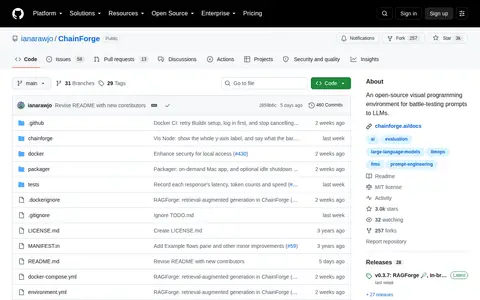
ChainForge is an open-source visual programming environment for battle-testing prompts to large language models. It supports querying multiple models at once, comparing response quality across prompts, models and model settings, and setting evaluation metrics to visualize results. Built on ReactFlow and Flask, it can be installed locally with pip or tried on the web, where features are limited.
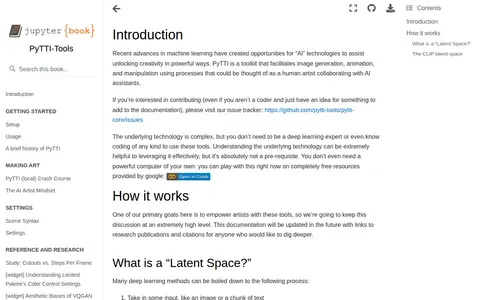
PyTTI is a toolkit that facilitates image generation, animation, and manipulation through processes described as a human artist collaborating with AI assistants. The project states that users do not need to be deep learning experts or know coding to use the tools.
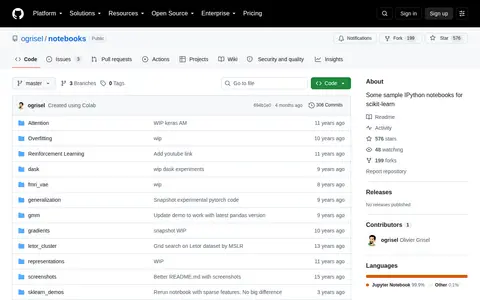
The ipython-notebooks repository, hosted on GitHub under the user ogrisel, contains sample IPython notebooks for use with the scikit-learn machine learning library. It is an open-source project that accepts contributions from GitHub users.
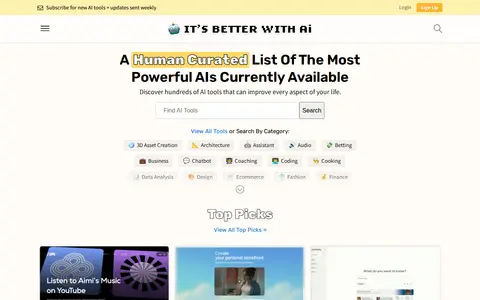
It's Better With AI is a human-curated directory of AI tools organized by categories such as coding, image generation, writing and summarization. The site lists tools with brief descriptions and starting prices, and offers a weekly newsletter for new AI tools and updates. It includes a submission page and a contact page for a human.
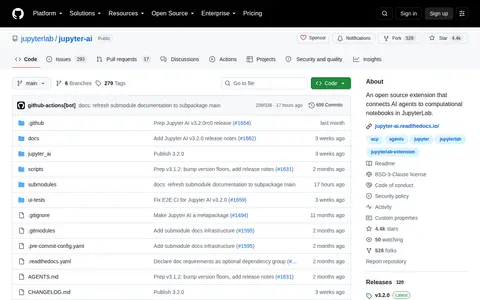
Jupyter AI is an open source extension that connects AI agents to computational notebooks in JupyterLab. It provides a native chat UI and integrates agents through the Agent Client Protocol, with a permission system requiring approval before files are written or commands executed. It is under incubation in the JupyterLab organization.
The Kaggle Merck repository, hosted on GitHub under the user zygmuntz, contains code for the Merck challenge hosted on the Kaggle data science platform. It is an open-source project that accepts contributions via GitHub.
The kaggle-bestbuy big repository, hosted on GitHub under the user zygmuntz, contains code for the Best Buy competition hosted on the Kaggle data science platform. It is an open-source project that accepts contributions from GitHub users.
Keploy is an open-source AI-powered API and unit testing tool for developers. It builds a digital twin of production behavior using real API traffic, mocks, and dependencies to verify AI- or human-written code changes in continuous integration pipelines before deployment, and requires no code changes to implement.