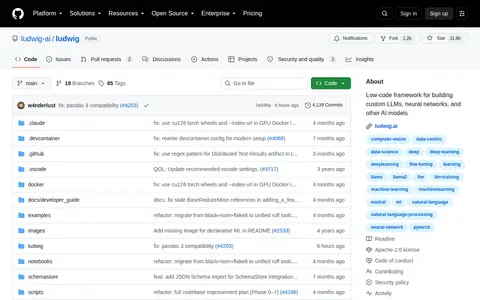

Ludwig is a low-code framework for building custom large language models, neural networks, and other AI models. The project's repository includes introductory documentation, release notes for version 0.16, installation guides, quick start materials, and resources for instruction fine-tuning of LLMs.
Directory
Search results
Published directory entries matching your search.
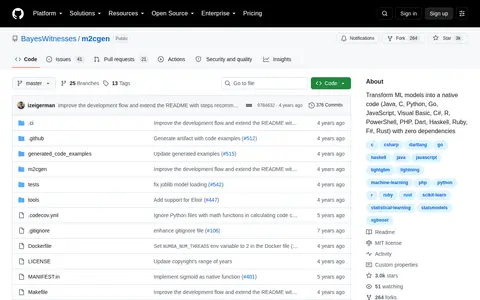
m2cgen is a tool that transforms trained machine learning models into native code across a wide range of programming languages including Java, C, Python, Go, JavaScript, C#, R, PHP, Dart, Haskell, Ruby, F#, and Rust, with zero dependencies. Its codebase is hosted in the BayesWitnesses GitHub repository, which includes navigation for installation, development guidance, supported languages, and supported model types.

Machine Learning Mastery is a website that provides educational content such as tutorials, quick start guides, and eBooks to help developers learn and apply machine learning concepts and algorithms. It covers topics like deep learning, computer vision, natural language processing, and specific libraries including TensorFlow, PyTorch, and scikit-learn.
Supports teaching, studying or skills practice with AI-guided learning tools.
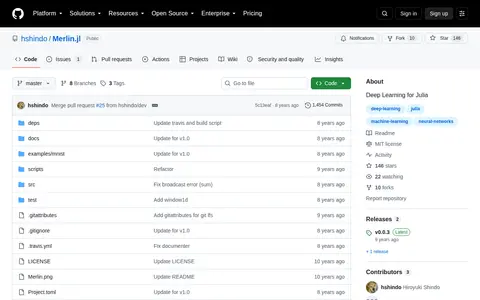
Merlin is a deep learning framework for the Julia programming language, hosted as a GitHub repository under the user hshindo. The repository includes documentation, installation instructions, and a quick start guide for users.
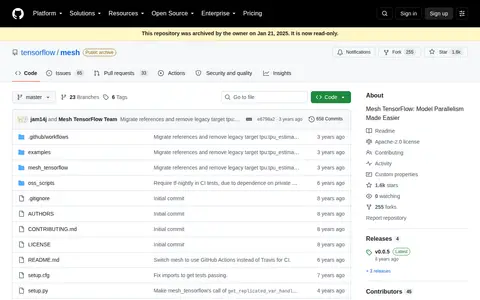
Mesh TensorFlow is a tool designed to simplify model parallelism for distributed computation, hosted as a GitHub repository under the TensorFlow organization. The repository includes an introduction, guidance on use cases, and a getting started guide.
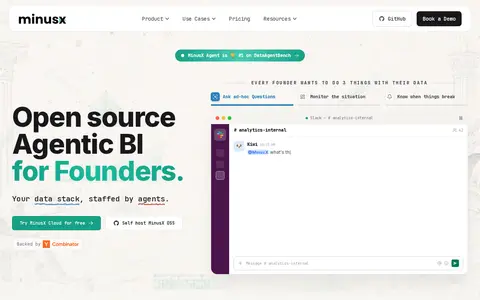
MinusX is an open source agentic business intelligence platform that combines a data agent with a BI tool. It answers questions, builds dashboards and sets alerts, with slides and data stories, visualizations and a SQL GUI. It can be self-hosted or used via MinusX Cloud, and the source is available and inspectable.
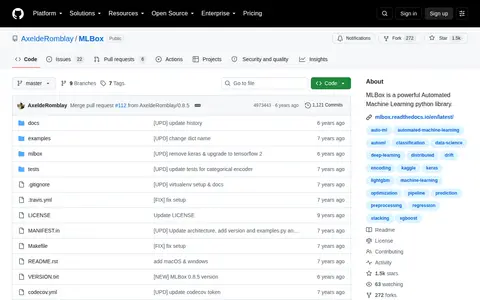
MLBox is an open-source automated machine learning library implemented in Python, hosted in the AxeldeRomblay/MLBox GitHub repository. It provides contribution guidelines, project topic information, and resources documenting the library's functionality.
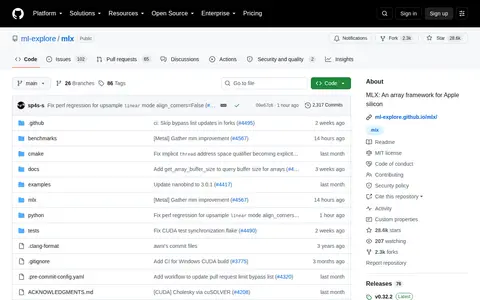
MLX is an array framework developed for use on Apple silicon hardware. The project includes example code, quickstart guides, installation instructions, and contribution guidelines. It is hosted as an open source repository on GitHub.
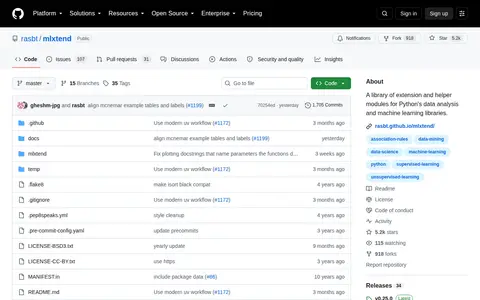
mlxtend is a library that provides extension and helper modules for Python's data analysis and machine learning libraries. The project includes installation guides, example code, license information, and contact details. It is hosted as an open source repository on GitHub.
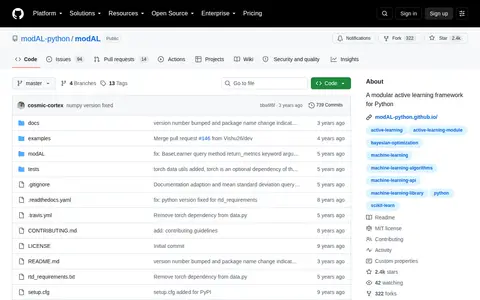
modAL is a modular active learning framework designed for use with the Python programming language. The project includes introductory documentation, overviews of active learning concepts, usage examples, and quickstart guides. It is hosted as an open source repository on GitHub.
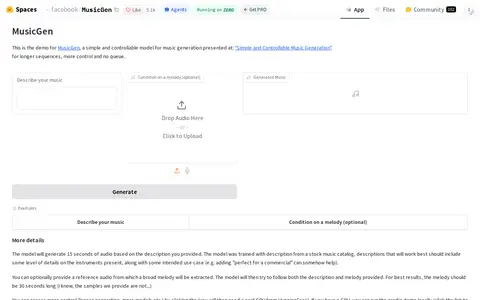
MusicGen is a Hugging Face Space by facebook that generates music audio from a text description. Users can optionally upload a short melody to guide it and set parameters such as length; the app then creates a music audio file.
Supports teaching, studying or skills practice with AI-guided learning tools.
Neuroph is a lightweight, open source Java neural network framework released under the Apache 2.0 license. It provides a Java library and a GUI editor, Neuroph Studio, based on the NetBeans Platform, for creating, training and saving neural networks. It supports architectures including Perceptron, Multi Layer Perceptron, Hopfield, Kohonen and RBF networks, and both supervised and unsupervised learning rules.
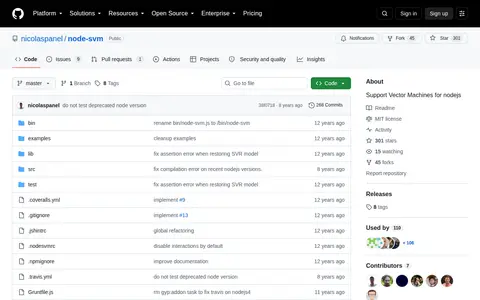
Node-SVM is a GitHub repository that provides support vector machine (SVM) implementations for Node.js. The project enables developers to use SVM algorithms within JavaScript applications. It includes installation instructions, a quick start guide, and an API reference. The repository is open source and contributed to by the community.
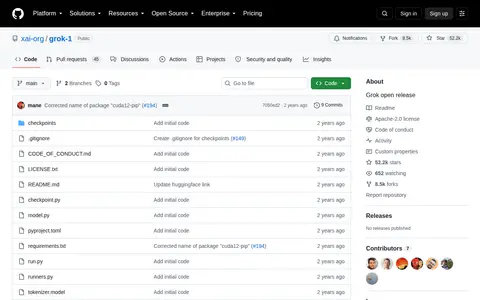
This GitHub repository hosts the open-source release of xAI's Grok-1 model. It provides model specifications, guidance for downloading model weights, associated license information, and accepts community contributions to the project.
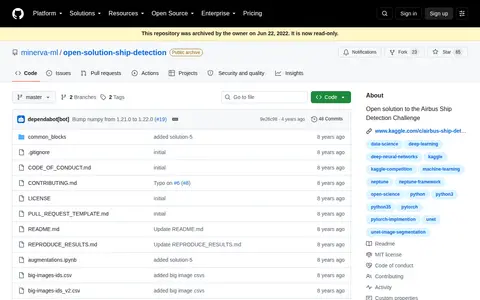
This GitHub repository hosts an open solution for the Airbus Ship Detection Challenge. It outlines the project's goals, includes a disclaimer, provides guidance for getting started, and shares information about the implemented solutions, while accepting community contributions.
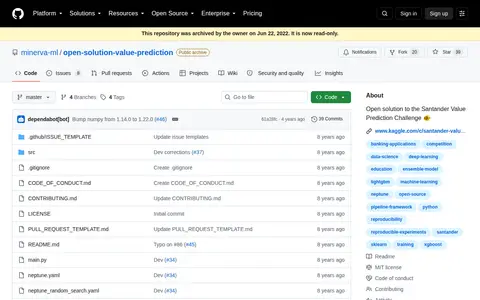
This GitHub repository hosts an open solution for the Santander Value Prediction Challenge. It outlines the project's goals, includes a disclaimer, provides guidance for getting started, and links to related competition resources, while accepting community contributions.
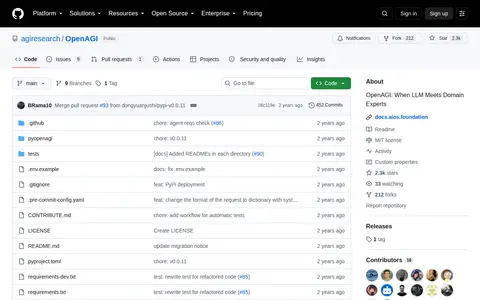
OpenAGI is an open-source GitHub project for AI agent creation, described as a tool where large language models meet domain experts. It provides documentation for getting started, installation steps, usage guidance, and information for contributing to the project.
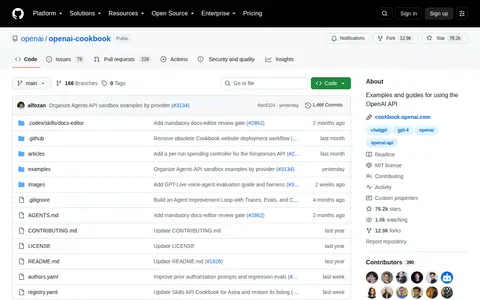
OpenAI Cookbook is a GitHub repository that provides examples and guides for using the OpenAI API. The collection helps developers integrate OpenAI models into their applications. It includes code samples, best practices, and documentation. The project is open source and accepts community contributions.
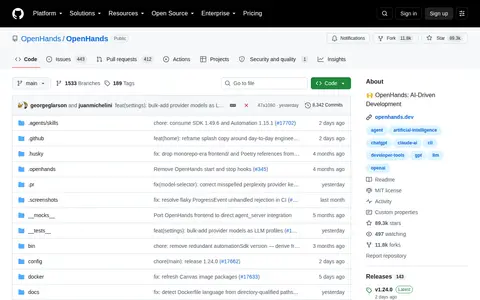
OpenHands is an open-source project focused on AI-driven development. Hosted on GitHub as the OpenHands/OpenHands repository, its documentation includes an agent canvas, quickstart guides for sandboxed environments, and installation instructions.
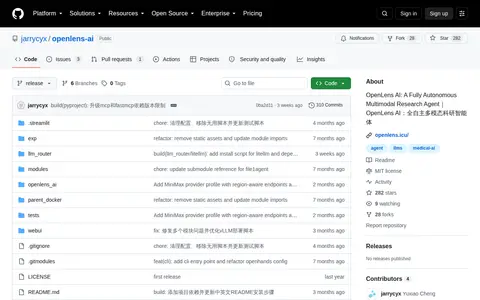
OpenLens AI is a fully autonomous multimodal research agent. The project is hosted on GitHub as the jarrycyx/openlens-ai repository, and its documentation covers key features, a quick start guide, and prerequisites.
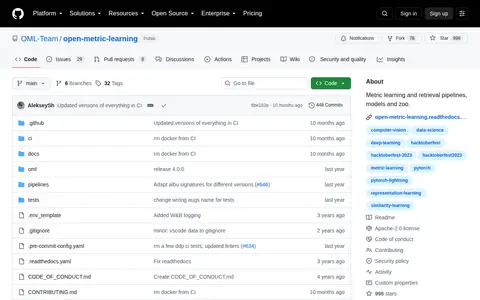
OpenMetricLearning is a repository that provides metric learning and retrieval pipelines, pre-trained models, and a model zoo for related machine learning tasks. It includes documentation, installation guides, and example implementations for users.
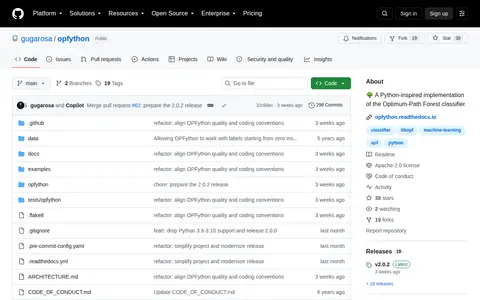
OPFython is a GitHub repository offering a Python-inspired implementation of the Optimum-Path Forest classifier. The library enables classification tasks using the optimum-path forest algorithm. It includes installation instructions, quick start guides, and classifier documentation. The project is open source and welcomes contributions from the community.