GradGPT provides tools for grading college essays, profile evaluation, college matching and counseling, built by former admission officers. It scores essays and gives line-by-line feedback without writing the essay for the student. It also offers application guides, college search, a letter of recommendation builder and admit profiles.
Directory
Search results
Published directory entries matching your search.
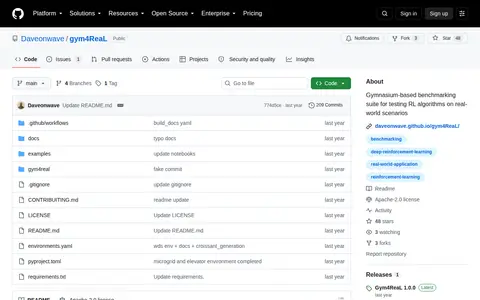
Gym4ReaL is an open-source GitHub repository maintained by Daveonwave. It is a Gymnasium-based benchmarking suite for testing reinforcement learning algorithms on real-world scenarios. The repository includes documentation on supported characteristics, reinforcement learning paradigms, folder structure, contribution guidelines, and licensing terms.
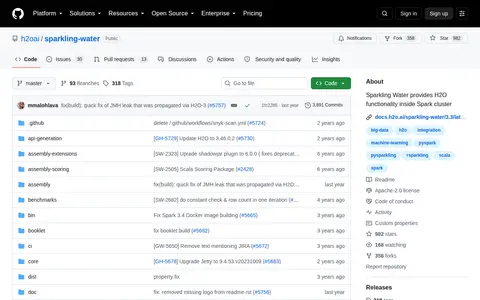
H2O Sparkling Water is an open-source GitHub repository maintained by the h2oai organization. It provides H2O machine learning functionality that can run inside Apache Spark clusters. The repository includes getting started guides, user documentation, binary download options, and resources for testing the tool.
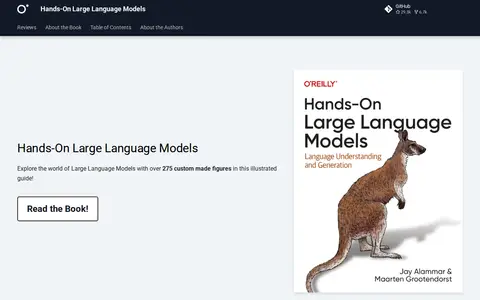
Hands-On Large Language Models is an illustrated guide to large language models. It includes over 275 custom figures, working code examples, timelines, and references to key research papers. The book has received positive reviews from Andrew Ng, Nils Reimers, Josh Starmer, Luis Serrano, Leland McInnes, and Prof. DDr. Roman Egger.
A blog guide on FinetuneDB covering best practices for evaluating Large Language Model outputs. It explains what LLM output evaluation is, why it matters, and describes evaluation datasets, model-based judgments and human judgments as approaches for structuring the process.
Humanloop was a development platform for LLM applications that provided management and evaluation of AI applications. The team announced it is joining Anthropic, and the Humanloop platform is to be sunset on September 8th, 2025. A migration guide covers exporting Files, Versions, Logs and Evaluations.
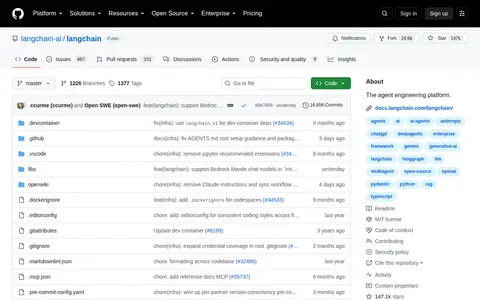
hwchase17/langchain is a GitHub repository for LangChain, an agent engineering platform. The repository hosts resources related to the LangChain ecosystem, including quickstart guides and documentation for users and developers working with the platform.
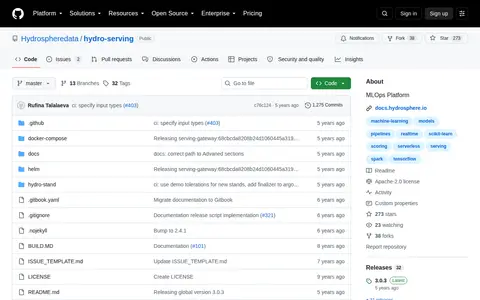
Hydrosphere is a GitHub repository for an MLOps platform. The repository provides documentation for getting started with the platform, including installation instructions and guidance for deployment using Docker and Kubernetes.
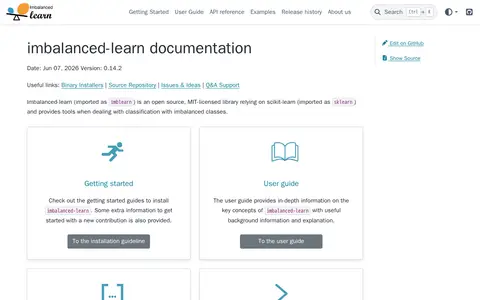
An open source, MIT-licensed Python library imported as imblearn that relies on scikit-learn. It provides tools for classification with imbalanced classes. The documentation includes installation guides, a user guide, an API reference and a gallery of examples.
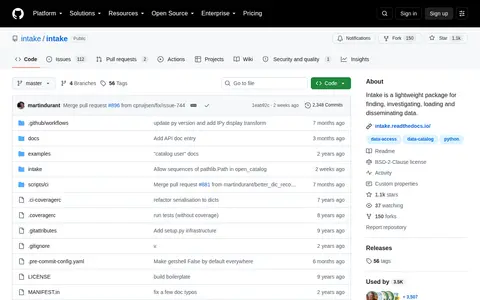
Intake is a lightweight package for finding, investigating, loading, and disseminating data. It is hosted on GitHub at https://github.com/intake/intake. The repository includes documentation, installation instructions, development guidelines, and support information.
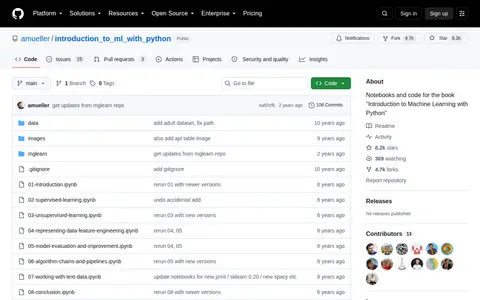
A GitHub repository holding the notebooks and code for the book "Introduction to Machine Learning with Python" by Andreas Mueller and Sarah Guido, together with the mglearn library of helper functions for figures and datasets. The book requires scikit-learn 0.20.0, and the code also needs numpy, scipy, matplotlib, pandas and pillow.
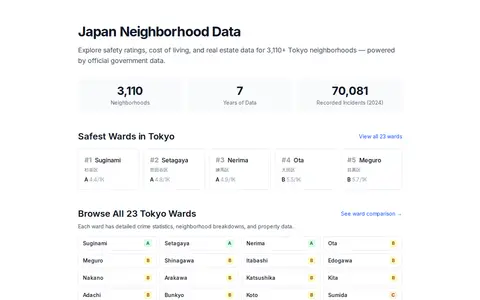
Japan Neighborhoods provides data-driven neighborhood guides for Japan. It offers crime statistics, safety scores, demographic data, cost of living, and real estate information for over 5,000 Tokyo neighborhoods. The data is sourced from official government sources and presented through safety rankings, interactive maps, and property listings.
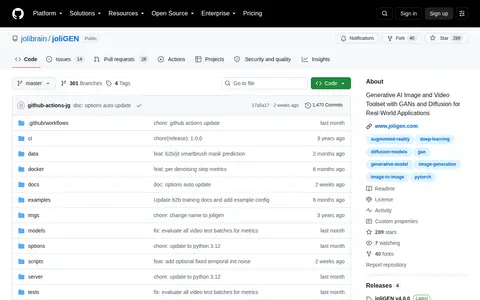
joliGEN is an integrated framework for training custom generative AI image-to-image models. It implements GAN, diffusion and consistency models for paired and unpaired image-to-image translation, including domain and style adaptation that preserves semantics such as image and object classes and masks. A server with REST API is provided for deployment, and documentation includes quickstarts and dataset guidance.
Supports teaching, studying or skills practice with AI-guided learning tools.
JSON Schema is a declarative language for annotating and validating JSON documents' structure, constraints, and data types. It enables JSON data consistency, validity, and interoperability, and has a tooling ecosystem of validators, generators, and linters. Documentation covers schema design, guides, and keyword reference.


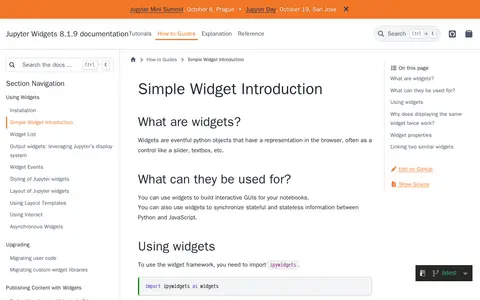
This page is the Simple Widget Introduction of the Jupyter Widgets documentation. It describes widgets as eventful Python objects with a browser representation, used to build interactive GUIs for notebooks and synchronize information between Python and JavaScript. It covers display, views, closing widgets, and properties.
A beginner-friendly guide on using Keras to implement a simple neural network in Python. It walks through MNIST handwritten digit classification, covering setup, data preparation, building the model, compiling, training, testing and using the model. It is intended for complete beginners to Keras who have a basic background knowledge of neural networks.
A guide that introduces data processing and cleaning in JavaScript, teaching how to load, modify and transform data using JavaScript libraries. It covers tasks geared around preparing data for further analysis and visualization, demonstrated with core JavaScript API, d3.js and lodash. It assumes some basic knowledge of JavaScript.
The Pinecone Learning Center is a resource section of the Pinecone website offering educational content related to Pinecone's AI knowledge platform. Available materials include articles, whitepapers, and guides covering topics such as vector database architecture, hybrid search, and retrieval-augmented generation workflows.
Supports teaching, studying or skills practice with AI-guided learning tools.
This is a blog post from Confident AI that serves as a guide to LLM evaluation metrics. It covers retrieval-augmented generation (RAG) metrics such as faithfulness and answer relevancy, agent metrics, LLM-as-a-judge approaches, and includes working DeepEval code examples.
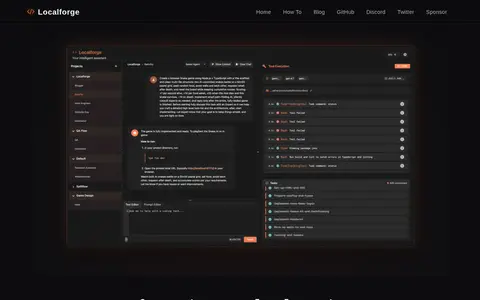
Localforge is a free, open-source desktop GUI for Codex AI, Claude and other LLMs. It runs locally and lets autonomous agent loops edit files, run tests and work on large multi-file codebase tasks. It supports swapping providers and storing prompt templates, and is distributed under the MIT license.
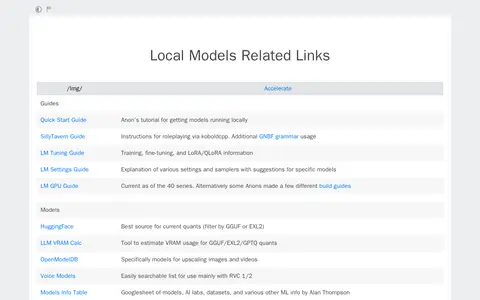
A links page listing resources related to running local language models. It gathers guides, including a quick start guide for running models locally, model sources such as HuggingFace for current quants, and inferencing frontends including Text Gen WebUI.