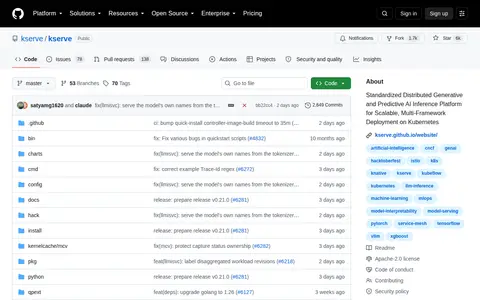

github.com
Kubernetes custom resource definition for serving ML models on arbitrary frameworks.
Directory
Published directory entries matching your search.
Kubernetes custom resource definition for serving ML models on arbitrary frameworks.

LangMagic is an adaptive language learning platform that provides reading, listening, and grammar practice tools for approximately 30 languages, covering A1 to C2 proficiency levels. It offers two core products: the Endless Book, an adaptive reader that adjusts difficulty and provides word definitions and audio, and a content portal with a library of adaptive learning materials for learners and educators. The platform adjusts to each user's pace and chosen content genres.

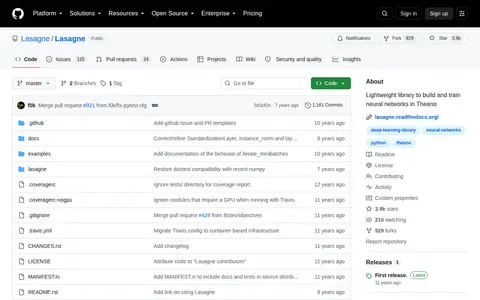
Lasagne is a lightweight library for building and training neural networks in Theano. It supports feed-forward networks such as convolutional neural networks, recurrent networks including LSTM, multiple inputs and outputs, and optimization methods including Nesterov momentum, RMSprop and ADAM. Cost functions are freely definable and gradients derive from Theano's symbolic differentiation.

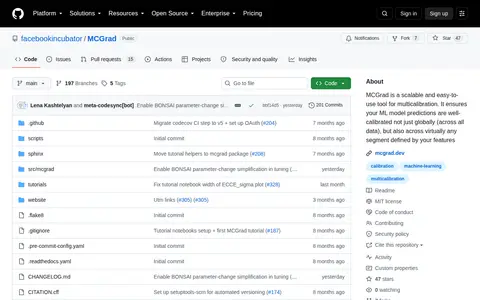
MCGrad is a tool for multicalibration that aims to keep machine learning model predictions calibrated globally and across segments defined by features. It requires Python 3.10+ and is installed with pip or conda; the project's own description says it has been deployed at Meta on hundreds of production models.

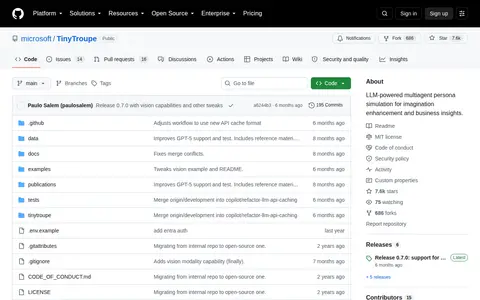
TinyTroupe is an experimental Python library for simulating people with defined personalities, interests and goals. These agents, called TinyPersons, interact in simulated TinyWorld environments using large language models. The project targets imagination enhancement and business insights, with suggested uses such as evaluating digital ads offline, generating synthetic data and simulating focus groups.

Define rules for communication and cooperation.

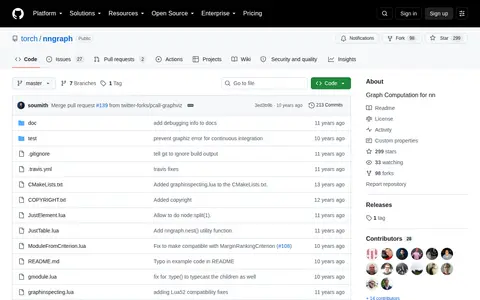
nngraph is an open source GitHub repository that provides graph computation capabilities for Torch's nn neural network package. It enables users to define and work with neural network graph structures for their machine learning projects.

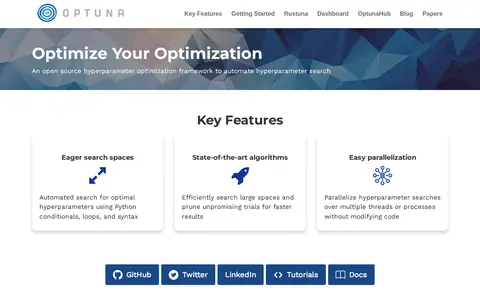
Optuna is an open source automatic hyperparameter optimization software framework designed for machine learning. It provides an imperative, define-by-run style user API with eager search spaces, algorithms that prune unpromising trials, and parallelization of searches over multiple threads or processes without modifying code. It is framework agnostic and can be installed with pip on Python 3.10 or newer.

Paintings by Style on WikiArt is a webpage that catalogs artworks by art style, with styles ranging from Gothic to Impressionism. It defines art style as the distinctive visual elements, techniques, and methods of an artwork, which typically correspond to an art movement or the school or group its creator is associated with.

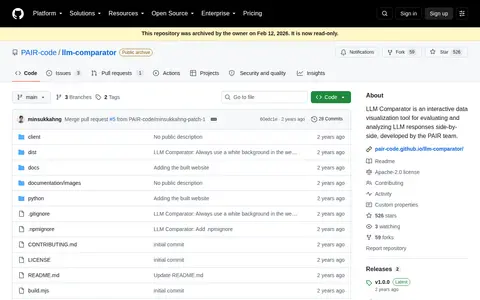
LLM Comparator is an interactive data visualization tool for evaluating and analyzing large language model responses side-by-side, developed by the PAIR team. It includes a Python library for creating JSON files and a defined JSON data format.

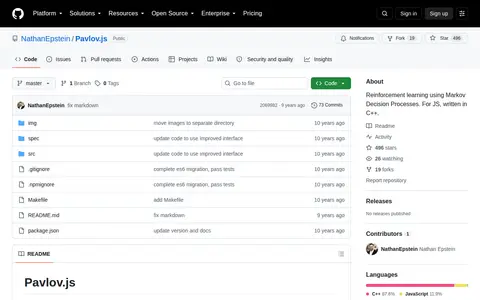
Pavlov.js is a reinforcement learning library that uses Markov Decision Processes. It is written in C++ and compiled to JavaScript. The package is installed through npm. Users define transitions and rewards, then call learn to derive a policy and query actions for states.

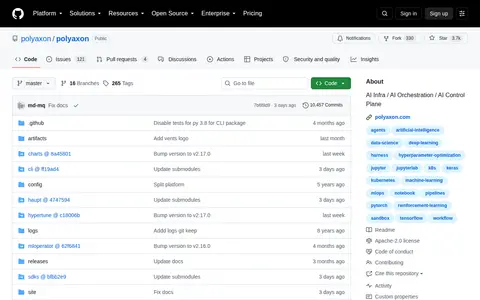
Polyaxon is a platform for building, training, and monitoring large-scale deep learning applications. It deploys into any data center or cloud provider and supports major deep learning frameworks such as Tensorflow, MXNet, Caffe, and Torch. It manages workloads with container and node management and offers hyperparameter tuning through experiment groups defining a search algorithm and search space.

Questflow is described as an AI finance agent that lets users invest alongside top investors across markets. It supports selection among models such as GPT, Claude and Gemini, skills defining investment strategy, plugins for financial data, and accounts that connect exchanges, brokerages, wallets and tokens for analyzing positions and executing trades.

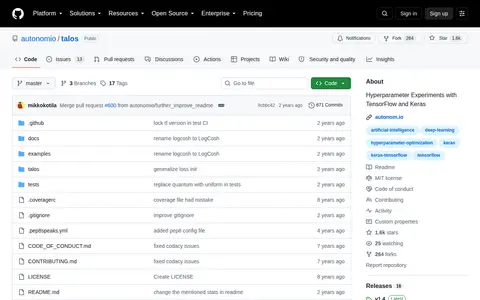
Talos is a Python package for running parameter sweeps for Keras, TensorFlow and PyTorch models. Experiments can use the Python Scan interface or a single-file definition run through Python or the CLI. The Talos 2 generation is in active maintenance, and the Talos 1.x series will remain supported at least until 2028.

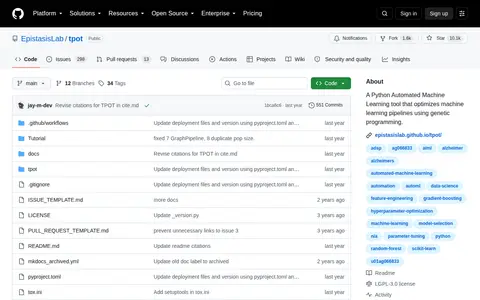
TPOT (Tree-based Pipeline Optimization Tool) is a Python automated machine learning tool that optimizes machine learning pipelines using genetic programming. The project underwent a major refactoring, merging what was once called TPOT2 into the main package, with new features including genetic feature selection, multi-objective optimization and an expanded method of defining search spaces.

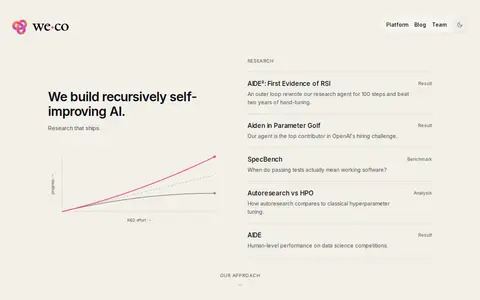
Weco is a research and product lab building recursively self-improving AI. Its platform points at an eval script and iteratively optimizes code against a metric the user defines, such as speed, accuracy or cost. Supported model providers include GPT, Claude, Gemini, Kimi, GLM and MiniMax, with bring your own key.

A blog post explaining why upscaling AI-generated images matters in image-to-image workflows. It describes how diffusion models apply and remove noise, and how higher-resolution reference images give the model more defined details. The post compares a low-resolution and upscaled example using Stable Diffusion's ControlNet with the canny model, and mentions upscaling options including ImgUpscaler, TopazLabs and Upscale Media.