

Calculus Made Easy is an HTML edition of Silvanus P. Thompson's book on calculus, originally published in 1910. The site offers a table of contents covering differentiation and integration topics, and notes the text is based on the Project Gutenberg PDF version converted to HTML by hand.
QuickChem
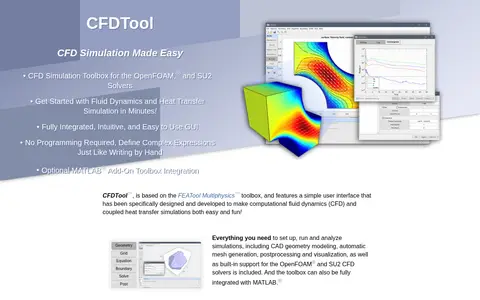
QuickChem is an educational resource for documentaries, courses, books, reference material, or self-learning.
Links
Tags
-
0
Calculus Made Easy is an HTML edition of Silvanus P. Thompson's book on calculus, originally published in 1910. The site offers a table of contents covering differentiation and integration topics, and notes the text is based on the Project Gutenberg PDF version converted to HTML by hand.
-
0DermNet is a free dermatology resource that presents evidence-based information on skin conditions, procedures and treatments. It also offers a topics A–Z, clinical images, videos and a student resource centre, with sections aimed at healthcare professionals.
-
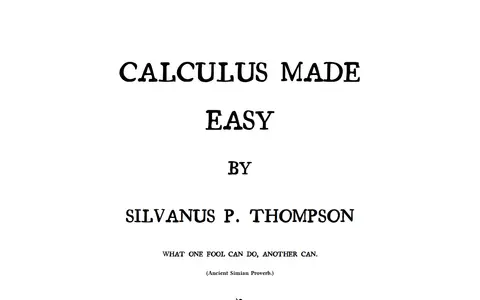
0CFDTool is a graphical user interface toolbox based on the FEATool Multiphysics toolbox for computational fluid dynamics and coupled heat transfer simulations. It includes CAD geometry modeling, automatic mesh generation, postprocessing and visualization, and support for the OpenFOAM and SU2 solvers. Models can be defined once and used with the solvers interchangeably. It can be integrated with MATLAB.
-
0
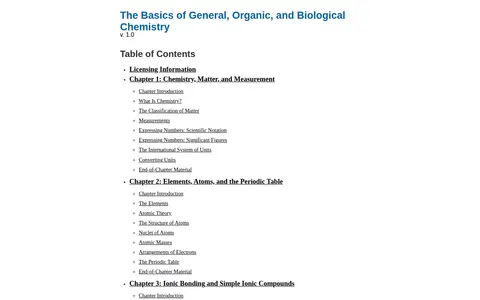
The Basics of General, Organic, and Biological Chemistry is an open textbook covering chemistry, matter and measurement, elements and the periodic table, bonding, chemical reactions, quantities, energy, and organic chemistry topics.
-
0Avogadro is a molecular editor and visualization tool intended for cross-platform use in computational chemistry, molecular modeling, bioinformatics, materials science and related areas. The source lists a flexible rendering framework and a plugin architecture, with Open Babel import of chemical files and support for multiple computational packages, crystals and biomolecules.
-
0WebElements presents the periodic table of the elements. The table arranges the chemical elements by atomic number so that periodic properties are made clear, and each entry gives the element's symbol, atomic weight and name.
Community notes
Reviews and discussion
No reviews yet
Be the first to share how this project worked for you.
Join the discussion
Sign in with a verified account to leave a review or join the discussion.
Sign in to review