


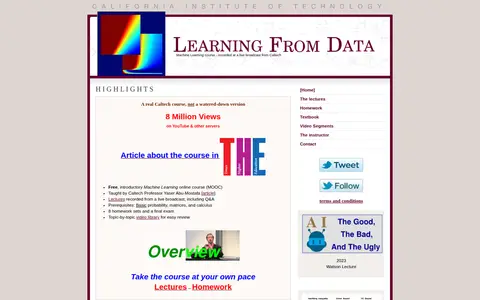
An introductory machine learning course taught by Caltech Professor Yaser Abu-Mostafa, recorded from a live broadcast and available as a free online MOOC. It covers basic theory, algorithms and applications across 18 lectures, with homework sets and a final exam. Prerequisites are basic probability, matrices and calculus.
Parler-TTS
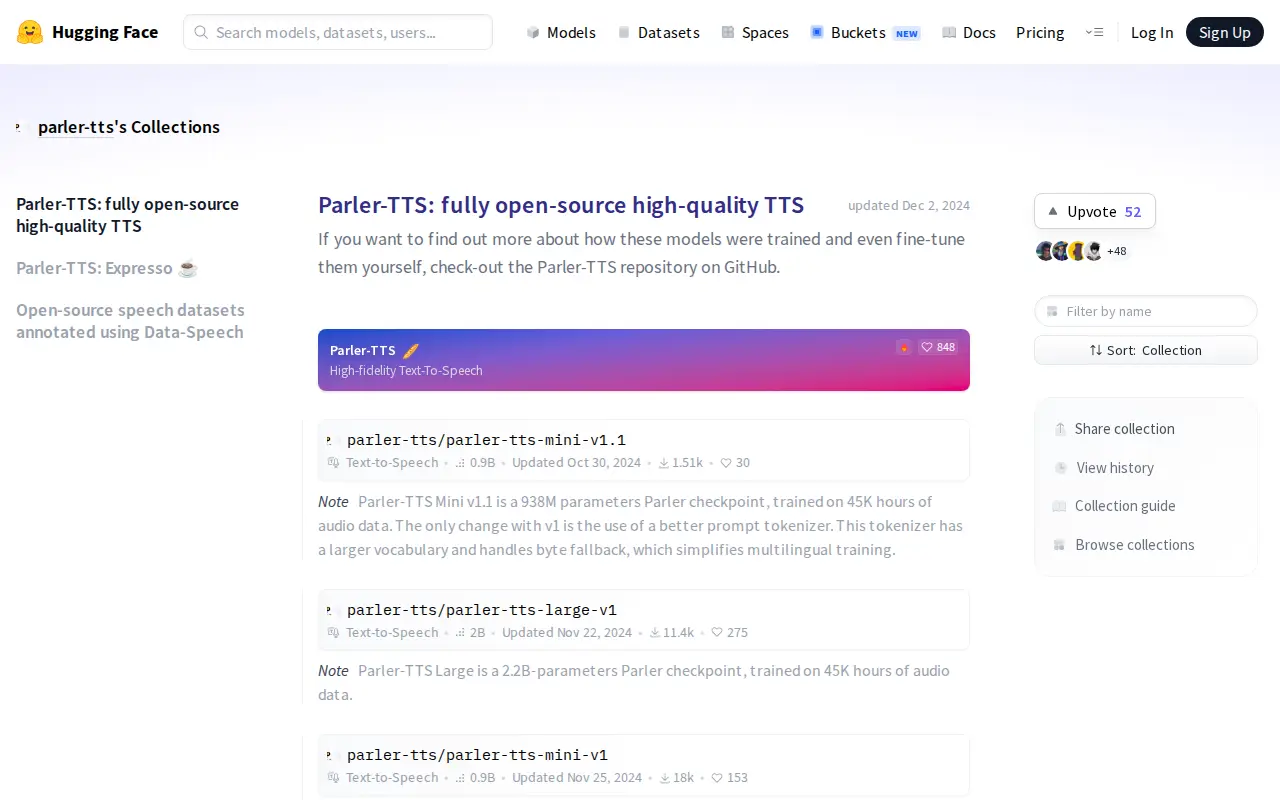
If you want to find out more about how these models were trained and even fine-tune them yourself, check-out the Parler-TTS repository on GitHub.
Links
Tags
-
0
An introductory machine learning course taught by Caltech Professor Yaser Abu-Mostafa, recorded from a live broadcast and available as a free online MOOC. It covers basic theory, algorithms and applications across 18 lectures, with homework sets and a final exam. Prerequisites are basic probability, matrices and calculus.
-
0ShopPal is a U.S.-based company providing AI infrastructure integration, operational enablement and go-to-market execution services for fashion and apparel brands. Its services cover shopping agent integration, AI system implementation and operations, and AI-assisted content and campaign execution.
-
0
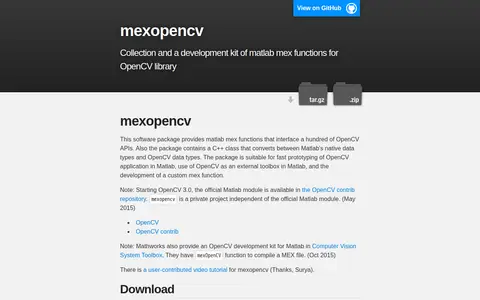
mexopencv is a collection and development kit of MATLAB MEX functions for the OpenCV library. It provides MATLAB MEX functions interfacing a hundred OpenCV APIs and includes a C++ class converting between MATLAB and OpenCV data types. The package is intended for fast prototyping of OpenCV applications in MATLAB and for developing custom MEX functions.
-
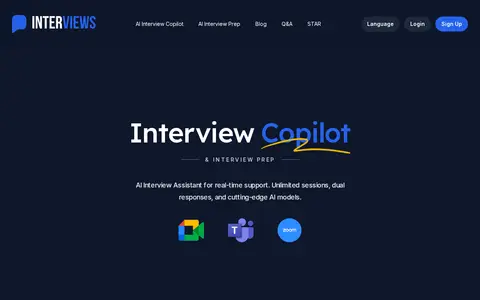
0Interviews Chat is an AI interview assistant that provides real-time suggestions and live transcription during interviews. It offers AI interview preparation and mock interview practice, and responds to technical and behavioral questions in formats such as STAR answers, bullet points and follow-up questions. A Chrome extension can connect to a browser tab with a task and generate a solution with reasoning.
-
0Telegram link is a Telegram channel, group, or bot link for updates, files, community posts, or support.
-
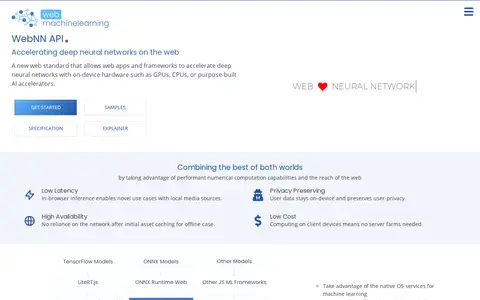
0WebNN is a web standard that lets web apps and frameworks accelerate deep neural networks using on-device hardware such as GPUs, CPUs, or purpose-built AI accelerators. The introduction states that in-browser inference supports local media sources, keeps user data on-device, and needs no network after initial asset caching.
Community notes
Reviews and discussion
No reviews yet
Be the first to share how this project worked for you.
Join the discussion
Sign in with a verified account to leave a review or join the discussion.
Sign in to review