

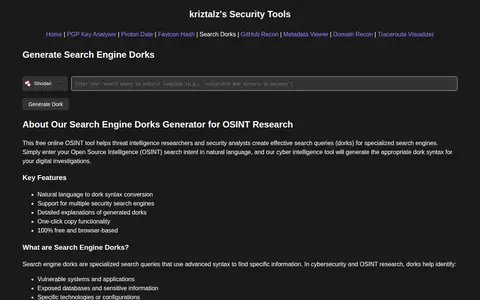

SearchDorks is a free, browser-based OSINT tool that converts natural language search intent into dork syntax for Shodan, Censys, Google, FOFA and ZoomEye. It is aimed at threat intelligence researchers and security analysts, offers explanations of generated dorks and one-click copying, and does not store queries.

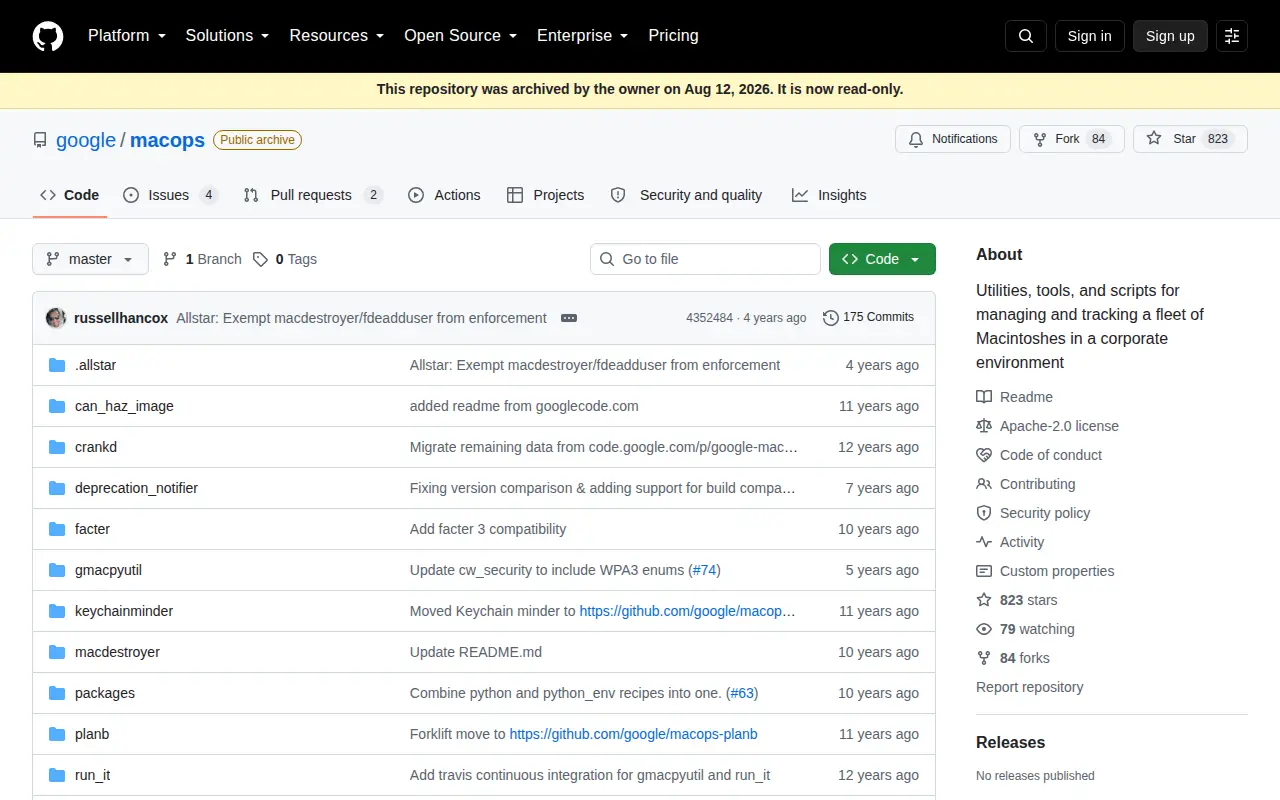
macops
Utilities, tools, and scripts for managing and tracking a fleet of Macintoshes in a corporate environment
Links
Tags
-
0SearchDorks is a free, browser-based OSINT tool that converts natural language search intent into dork syntax for Shodan, Censys, Google, FOFA and ZoomEye. It is aimed at threat intelligence researchers and security analysts, offers explanations of generated dorks and one-click copying, and does not store queries.
-
0Social Media Search is a page that uses the Google Programmable Search Engine to display publicly available search results from top social networks without logging in. It supports phrase search with double quotes, excluding terms with a minus sign, and the OR operator in all capitals. The page states it is not affiliated with or endorsed by any social network or Google.
-
0
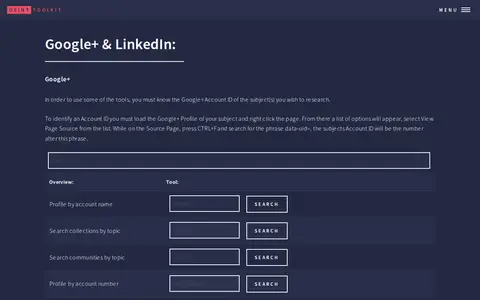
Google+ & LinkedIn is an OSINT toolkit page listing tools for researching Google+ and LinkedIn. Google+ tools include profile by account name, searching collections and communities by topic, profile by account number, and Google Trends. LinkedIn tools include profile by name, finding individuals by job title, and searching by location. A LinkedIn account login is required for the LinkedIn tools.
-
0GuildBit is a free service for deploying temporary Mumble voice servers for a group. The service says it is funded by donations and upgrades, and free servers are currently limited to 15 slots.
-
0The Skopenow OSINT Blog publishes articles on open-source intelligence for investigations, including financial crime, fraud, organized retail crime and insurance. Posts cover evaluating OSINT platforms and data quality, and the blog is run by Skopenow, an investigations platform vendor.
-
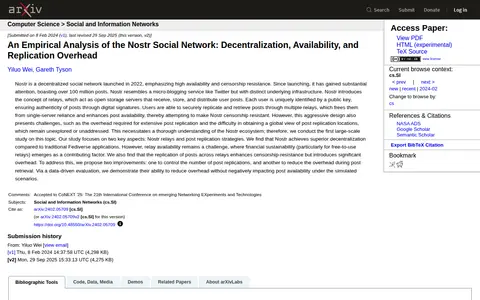
0This arXiv paper presents the first large-scale study of the Nostr social network, focusing on relays and post replication strategies. The authors find Nostr achieves superior decentralization compared to traditional Fediverse applications, while relay availability remains a challenge and replication introduces overhead. They propose two improvements.
Community notes
Reviews and discussion
No reviews yet
Be the first to share how this project worked for you.
Join the discussion
Sign in with a verified account to leave a review or join the discussion.
Sign in to review