


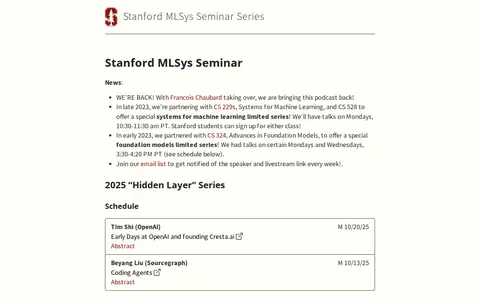

Stanford MLSys Seminar Series is a seminar series on the frontier of machine learning and systems. Its 2025 "Hidden Layer" series schedule lists talks, and earlier limited series covered systems for machine learning and foundation models. Stanford students could sign up for associated classes, and an email list provides speaker and livestream notifications.

JSMLT
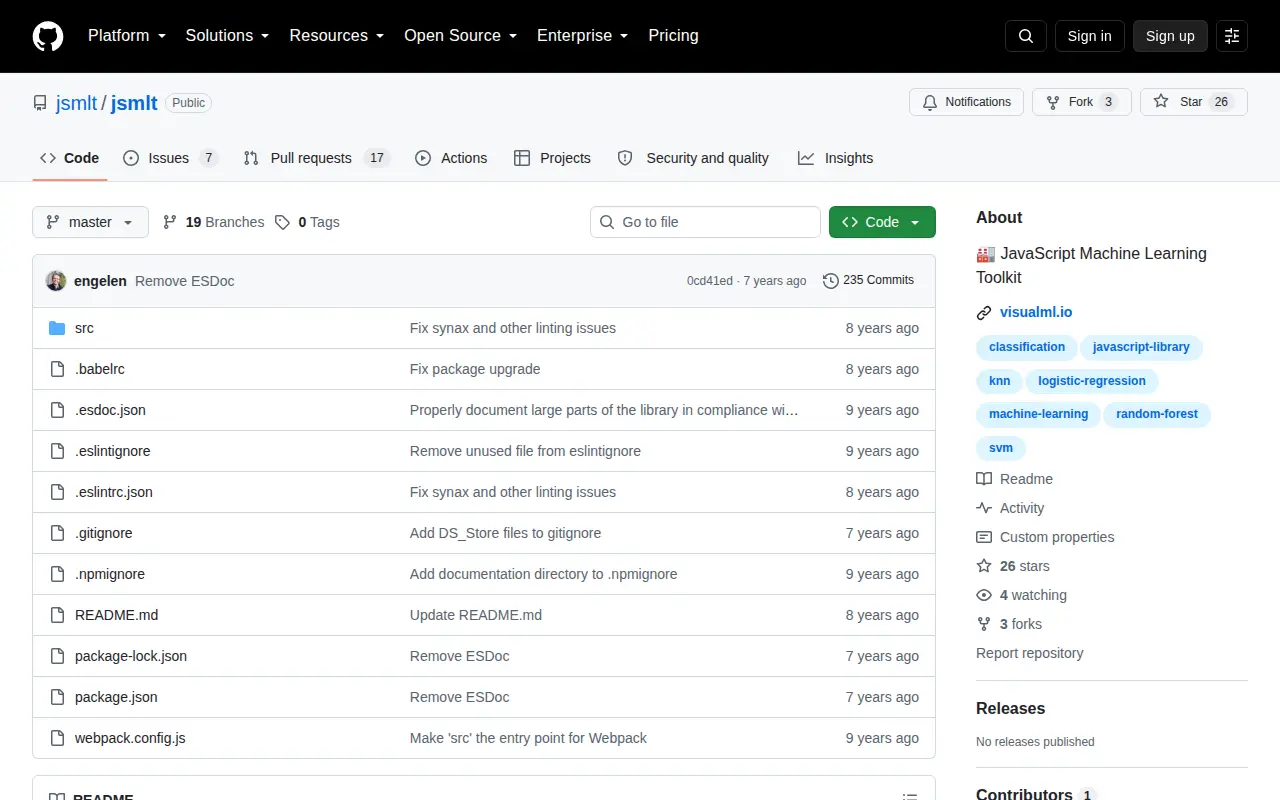
JSMLT is an open source JavaScript library for education in machine learning. It implements supervised learning algorithms, including SVM, random forest, decision tree, perceptron, neural networks, k-nearest neighbors and logistic regression, and provides visualization examples for exploring how the algorithms work.
Features
- open source JavaScript library for education in machine learning Source: github.com
Links
Tags
-
0Stanford MLSys Seminar Series is a seminar series on the frontier of machine learning and systems. Its 2025 "Hidden Layer" series schedule lists talks, and earlier limited series covered systems for machine learning and foundation models. Stanford students could sign up for associated classes, and an email list provides speaker and livestream notifications.
-
0A collaboration platform where the machine learning community shares models, datasets and applications. It hosts public models, datasets and Spaces, and offers an open source stack including libraries such as Transformers, Datasets and Accelerate. It also provides paid Compute and Enterprise solutions, with an Inference Providers API giving access to models from multiple AI providers.
-
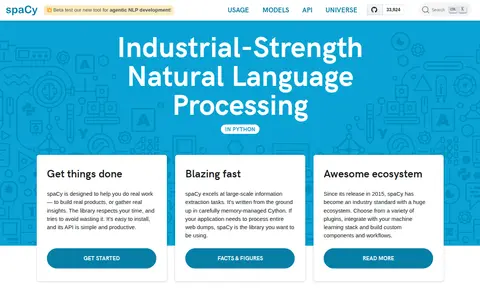
0spaCy is a free open-source library for Natural Language Processing in Python. It features named entity recognition, part-of-speech tagging, dependency parsing and word vectors, supports over 75 languages and provides 84 trained pipelines for 25 languages.
-
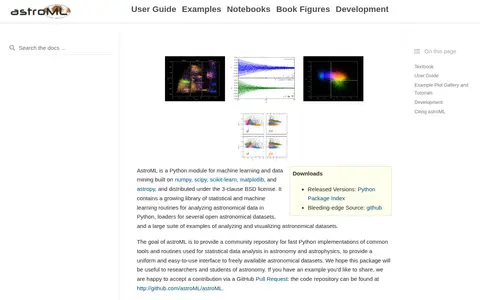
0astroML is a Python module for machine learning and data mining built on numpy, scipy, scikit-learn, matplotlib and astropy, distributed under the 3-clause BSD license. It provides statistical and machine learning routines for analyzing astronomical data, loaders for open astronomical datasets, and examples of analyzing and visualizing datasets. The project was started in 2012 to accompany a textbook on statistics, data mining and machine learning in astronomy.
-
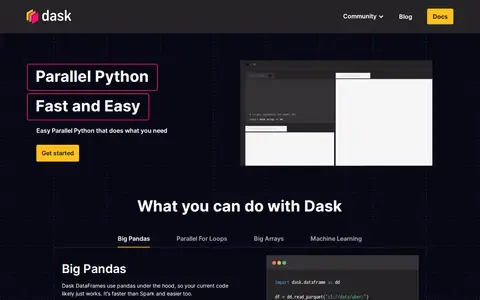
0Dask is an open-source Python library for parallel computing maintained by contributors across dozens of companies. The site describes uses including Dask DataFrames for pandas, parallel for loops, large arrays with NumPy and Xarray, and machine learning. It can run on a laptop or be deployed on resource managers such as Kubernetes or cloud.
-
0
MEKA is an open source implementation of methods for multi-label learning and evaluation, based on the WEKA Machine Learning Toolkit. It includes dozens of multi-label methods from the scientific literature and a wrapper to the MULAN framework. The project is distributed via SourceForge, with code hosted on GitHub.
Community notes
Reviews and discussion
No reviews yet
Be the first to share how this project worked for you.
Join the discussion
Sign in with a verified account to leave a review or join the discussion.
Sign in to review