


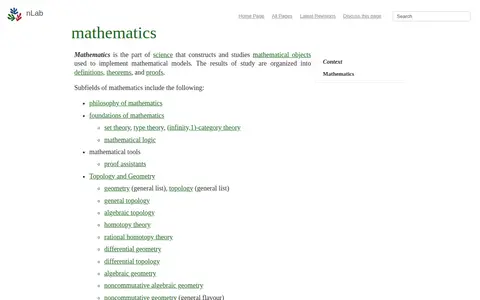

The nLab page on mathematics is a reference entry covering the field of mathematics. It states that mathematics is the part of science that constructs and studies mathematical objects used to implement mathematical models, with results organized into definitions, theorems, and proofs. The page lists subfields including philosophy of mathematics, foundations, logic, topology, algebra, and analysis.
HyperPhysics
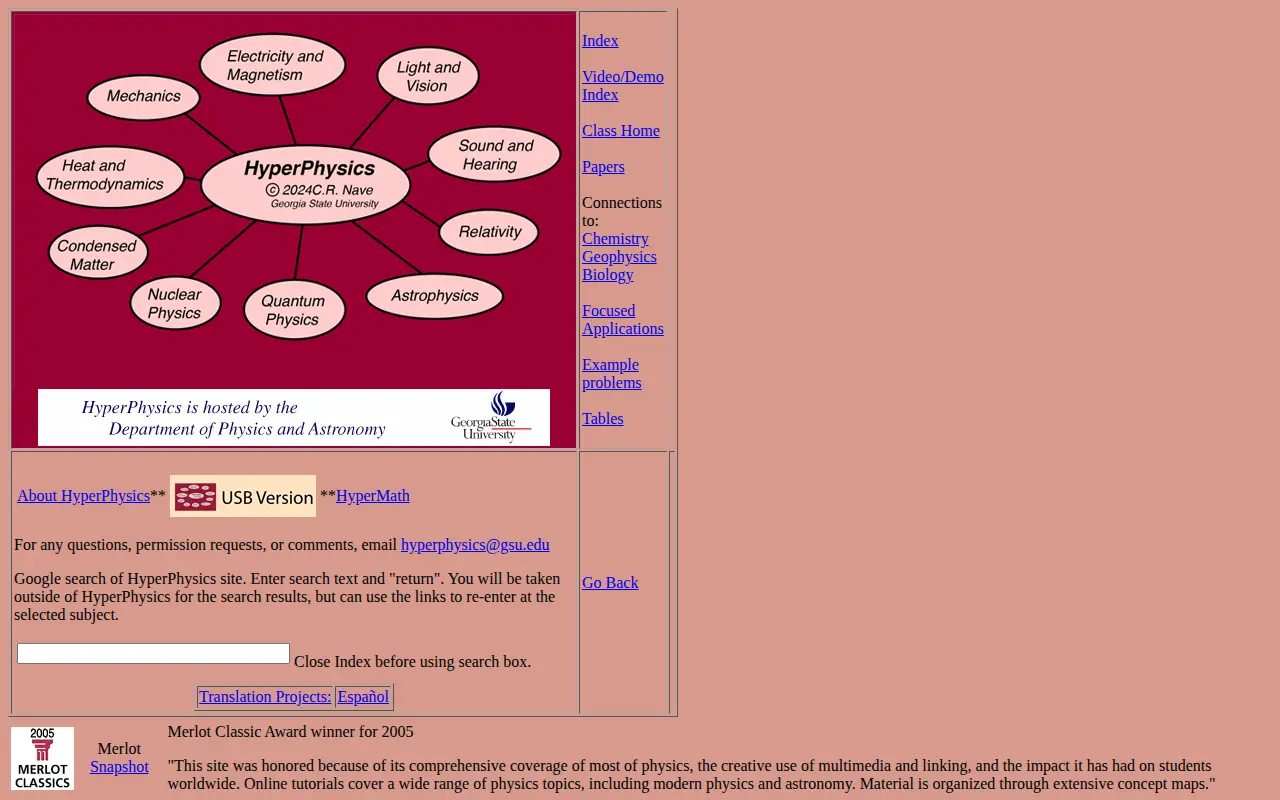
HyperPhysics is a physics content repository created in 1998 by Dr. Carl Rod Nave of Georgia State University. It serves as a copy of lecture materials for physics courses and covers a wide range of physics and astrophysics topics. Material is organized through concept maps and small segments called cards, interconnected with thousands of links and JavaScript-enabled calculations.
Features
- employs concept maps and other linking strategies Source: hyperphysics.phy-astr.gsu.edu
Links
Tags
-
0The nLab page on mathematics is a reference entry covering the field of mathematics. It states that mathematics is the part of science that constructs and studies mathematical objects used to implement mathematical models, with results organized into definitions, theorems, and proofs. The page lists subfields including philosophy of mathematics, foundations, logic, topology, algebra, and analysis.
-
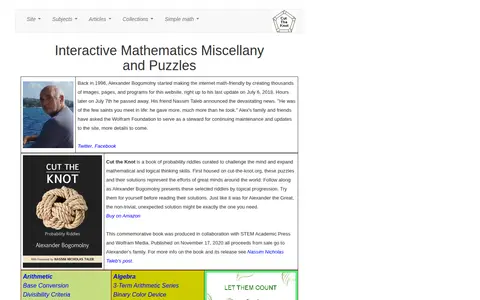
0An encyclopedic collection of mathematics resources covering arithmetic, algebra, geometry, probability and trigonometry, with games, problems, puzzles and articles. It was created in 1996 by Alexander Bogomolny, who maintained it until July 2018. The Wolfram Foundation was asked to continue maintenance and updates.
-
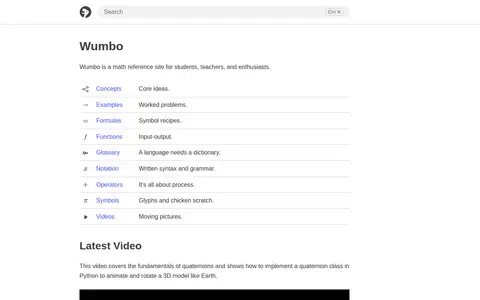
0Wumbo is a math reference site for students, teachers, and enthusiasts. It organizes core concepts, worked examples, formulas, functions, a glossary, notation, operators, symbols, and videos, including a video on quaternions implemented in Python. It offers a contributing membership that funds future videos and resources.
-
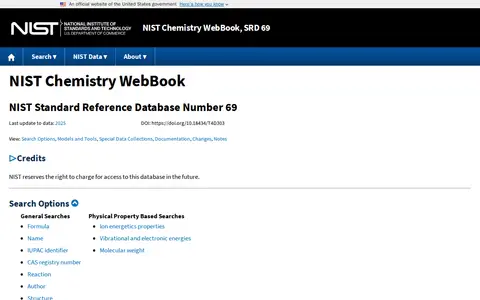
0The NIST Chemistry WebBook provides access to chemical and physical property data for chemical species over the internet. Data come from collections maintained by the NIST Standard Reference Data Program and outside contributors. The system organizes data by chemical species, allows searching by various means, and displays data including thermochemical and thermophysical properties and optical, electronic and mass spectra.
-
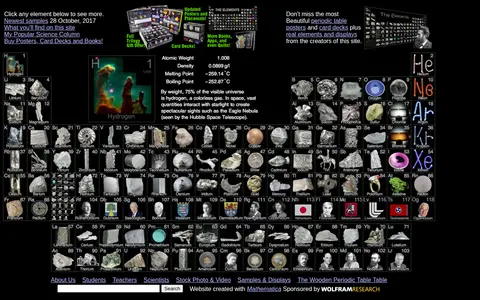
0The Photographic Periodic Table of the Elements is an online periodic table reference site. It includes technical data, along with photographs and descriptions of thousands of samples of the chemical elements. Clicking an element shows more information.
-
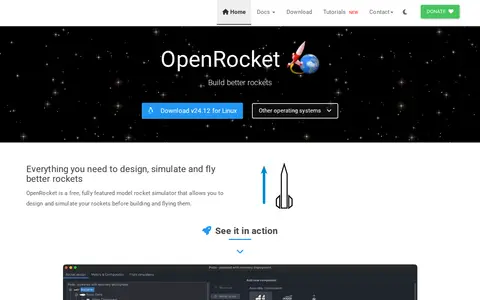
0OpenRocket is a free model rocket simulator that allows users to design and simulate rockets before building and flying them. It offers a six-degrees-of-freedom flight simulation, CAD-based design, real-time performance data and design optimization. It is written in Java and is cross-platform, with source code available under the GNU GPL.
Community notes
Reviews and discussion
No reviews yet
Be the first to share how this project worked for you.
Join the discussion
Sign in with a verified account to leave a review or join the discussion.
Sign in to review