






Vanna 2.0 is an AI agent framework that connects large language models to databases. It lets an LLM run SQL queries and generate charts, with tool memory that saves successful interactions to improve later answers. Access controls apply per user, and optional hosted admin features include observability, agent memory, file storage, audit logs and data retention. It works with various LLM providers and databases.
FedML
Federated Learning - The Production AI Platform for Federated Learning at Scale.
Links
Tags
-
0Vanna 2.0 is an AI agent framework that connects large language models to databases. It lets an LLM run SQL queries and generate charts, with tool memory that saves successful interactions to improve later answers. Access controls apply per user, and optional hosted admin features include observability, agent memory, file storage, audit logs and data retention. It works with various LLM providers and databases.
-
0Awesome MCP Servers supports AI agents, automated workflows, orchestration, or delegated tasks.
-
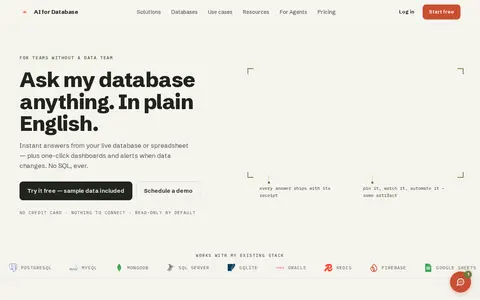
0A tool that lets users connect databases and spreadsheets and ask questions in plain English instead of writing SQL. Supported sources include PostgreSQL, MySQL, MongoDB, SQL Server and Google Sheets. It provides instant answers, dashboards and reports, and automated workflows with alerts through Slack, email and webhooks.
-
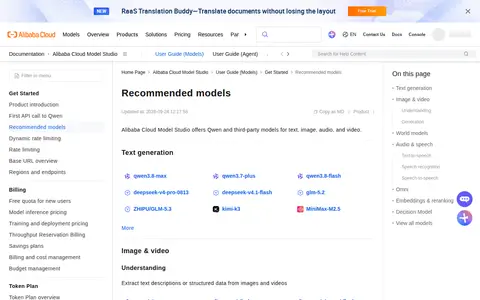
0The listing qwen3.6-max-preview points to Alibaba Cloud Model Studio's supported models overview page. The page states that Alibaba Cloud Model Studio offers Qwen and third-party models for text, image, audio, and video use cases, with model categories including text generation, image and video generation, audio and speech processing, and world models, along with specific example models for each category.
-
0Mistral offers frontier open-weight models that organizations can own and control. Models can be customized with Forge, deployed with Studio, and run on-premises, in a VPC, or in Mistral's cloud. It also provides Vibe, a personal AI agent available on web and mobile.
-
0A blog post summarizing a University of Illinois study on solo performance prompting (SPP), a prompt engineering method in which an LLM summons multiple personas that collaborate on a task. The post describes the SPP prompt structure and reports on three experiments: Trivia Creative Writing, Codenames Collaborative, and Logic Grid Puzzle.
Community notes
Reviews and discussion
No reviews yet
Be the first to share how this project worked for you.
Join the discussion
Sign in with a verified account to leave a review or join the discussion.
Sign in to review