



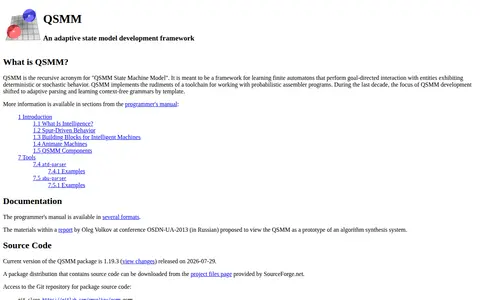
QSMM is a framework for learning finite automatons that perform goal-directed interaction with entities exhibiting deterministic or stochastic behavior. It implements the rudiments of a toolchain for working with probabilistic assembler programs, and development focus shifted to adaptive parsing and learning context-free grammars by template. It includes atd-parser and abu-parser tools.
Catniff
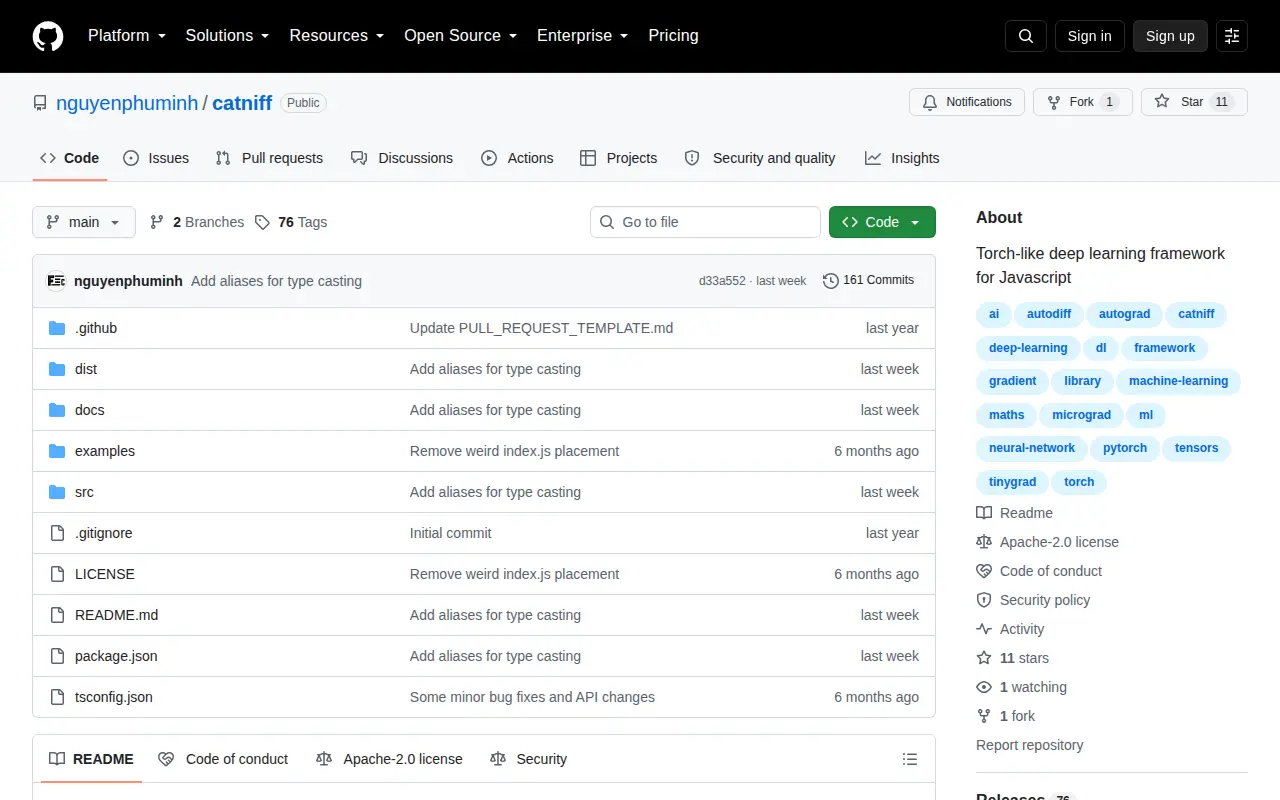
Catniff is a small deep learning framework for JavaScript built to be Torch-like and inspired by Tinygrad APIs. It is under development, and its APIs can be unstable and backwards-incompatible. It provides tensors, autograd and optimizers, and is installed through npm.
Features
- small deep learning framework for Javacript, built to be Torch-like Source: github.com
Limitations
- APIs can be unstable and backwards-incompatible Source: github.com
Links
Tags
-
0QSMM is a framework for learning finite automatons that perform goal-directed interaction with entities exhibiting deterministic or stochastic behavior. It implements the rudiments of a toolchain for working with probabilistic assembler programs, and development focus shifted to adaptive parsing and learning context-free grammars by template. It includes atd-parser and abu-parser tools.
-
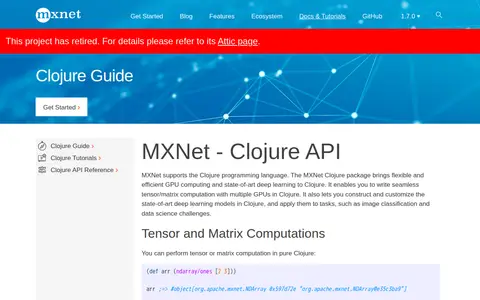
0The MXNet Clojure package brings GPU computing and deep learning to the Clojure programming language. It enables tensor and matrix computation with multiple GPUs in Clojure, and allows constructing and customizing deep learning models for tasks such as image classification and data science challenges.
-
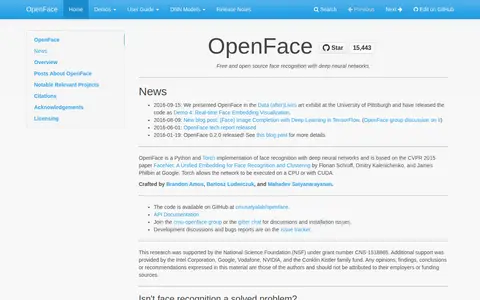
0OpenFace is a free and open source face recognition implementation with deep neural networks, written in Python and Torch and based on the CVPR 2015 FaceNet paper. It detects faces, aligns them, and embeds faces on a 128-dimensional unit hypersphere.
-
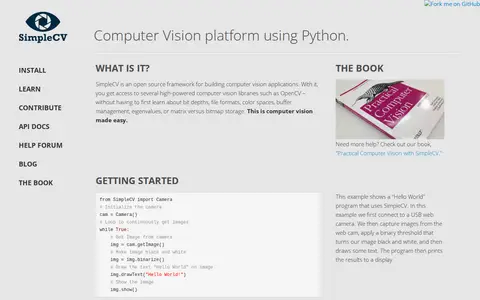
0SimpleCV is an open source framework for building computer vision applications, providing access to libraries such as OpenCV without requiring knowledge of bit depths, file formats, color spaces or buffer management. The platform uses Python, and examples include connecting to a camera, binarizing images and drawing text.
-
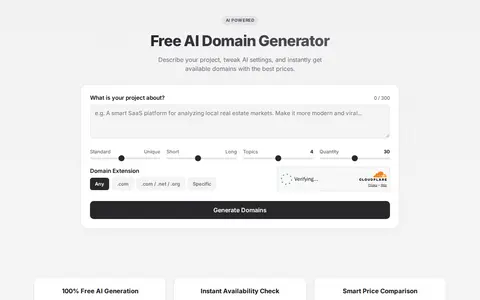
0Free AI Domain Generator turns a project description into suggested domain names. Users enter a project topic and can choose style, length, topic options, quantity and domain extension. The tool checks live registrar data to filter out taken domains and compares live registration prices across providers including Namecheap, Porkbun and Dynadot.
-
0PrivateGPT is a private AI tool that connects an organization's own data sources and answers questions in natural language. It links services such as Notion, JIRA, Slack and Github to retrieve company knowledge, and people receive answers only about information they are permitted to access. A live demo is offered.
Community notes
Reviews and discussion
No reviews yet
Be the first to share how this project worked for you.
Join the discussion
Sign in with a verified account to leave a review or join the discussion.
Sign in to review