


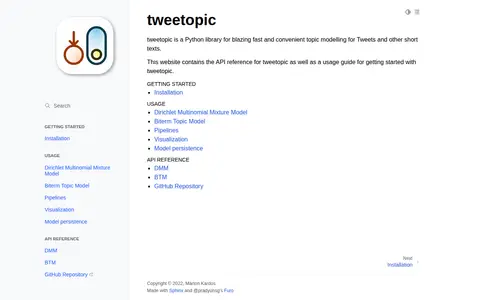
tweetopic is a Python library for topic modelling of Tweets and other short texts. Its documentation site provides an API reference and a usage guide covering installation, the Dirichlet Multinomial Mixture Model, the Biterm Topic Model, pipelines, visualization and model persistence.
Annoy
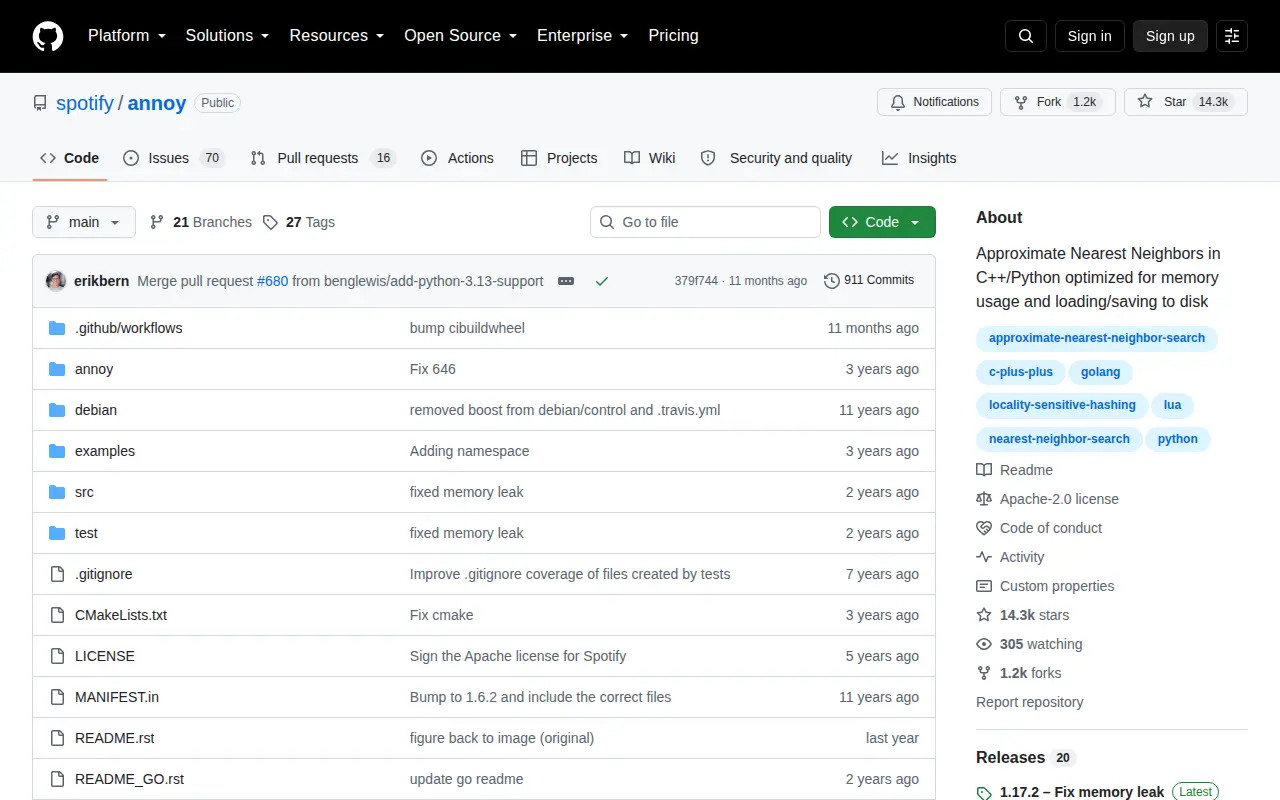
Annoy is a C++ library with Python bindings for approximate nearest neighbor search. It creates large read-only file-based indexes that are mmapped into memory so many processes can share the same data. Supported distances include Euclidean, Manhattan, cosine, Hamming and dot product.
Features
- C++ library with Python bindings to search for points in space Source: github.com
Links
Tags
-
0
tweetopic is a Python library for topic modelling of Tweets and other short texts. Its documentation site provides an API reference and a usage guide covering installation, the Dirichlet Multinomial Mixture Model, the Biterm Topic Model, pipelines, visualization and model persistence.

-
0
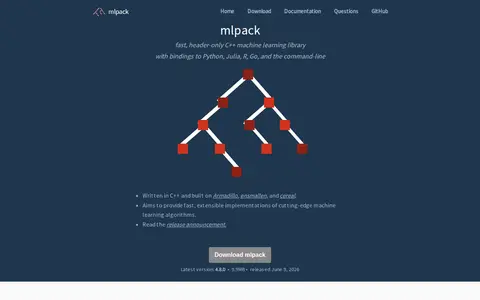
mlpack is a header-only C++ machine learning library with bindings to Python, Julia, R, Go, and the command line. It is built on Armadillo, ensmallen, and cereal and provides implementations of machine learning algorithms. The documentation lists classification, regression, clustering, and preprocessing facilities. It is open source under the 3-clause BSD license.
-
0Microsoft Azure for Students offers access to cloud services, developer tools and $100 in Azure credits for students to build apps and explore AI and data science. Signup uses a school email, renews yearly while the user is a student, and does not require a credit card.
-
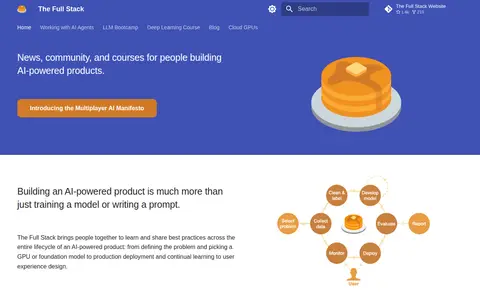
0Full Stack Deep Learning offers news, community, and courses for people building AI-powered products. It covers the lifecycle of an AI-powered product, from defining the problem and picking a GPU or foundation model to production deployment and continual learning.
-
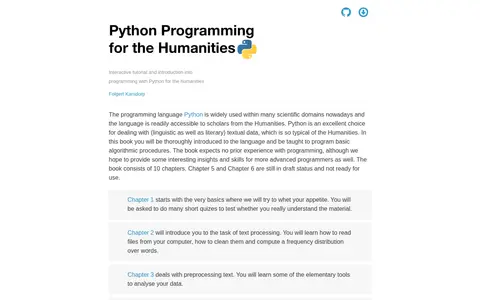
0An interactive tutorial and introduction to programming with Python for the humanities by Folgert Karsdorp. The book has 10 chapters covering text processing, preprocessing, programming principles, readability computation, authorship attribution, object-oriented programming, information retrieval, a PDF search web application, classification and hierarchical clustering. It expects no prior programming experience. Chapters 5 and 6 are in draft status.
-
0Generative AI Explained by NVIDIA is an educational course offered by NVIDIA focused on generative AI. The course includes learning objectives, a list of covered topics, a full course outline, and related training resources. It provides public virtual workshop options structured as six 2-hour sessions, and offers private team or individual training upon request.
Community notes
Reviews and discussion
No reviews yet
Be the first to share how this project worked for you.
Join the discussion
Sign in with a verified account to leave a review or join the discussion.
Sign in to review