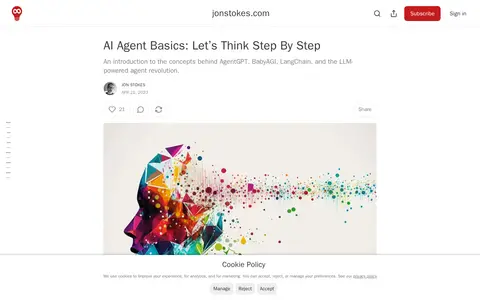
A newsletter post by Jon Stokes introducing the concepts behind AgentGPT, BabyAGI, LangChain and LLM-powered agents. It covers core agent concepts, how LLMs make plans, chain of thought reasoning, action planning, and example prompt-response pairs.

Agentic AI
Agentic AI is a Hugging Face Space created by user bstraehle that generates text responses to user prompts via the OpenAI API. Users must supply an OpenAI API key, enter a prompt, and select an agent option to receive a text output. The tool uses LangChain and LlamaIndex frameworks.
Website Directory import
Links
Tags
-
 0
A newsletter post by Jon Stokes introducing the concepts behind AgentGPT, BabyAGI, LangChain and LLM-powered agents. It covers core agent concepts, how LLMs make plans, chain of thought reasoning, action planning, and example prompt-response pairs.
-
 0
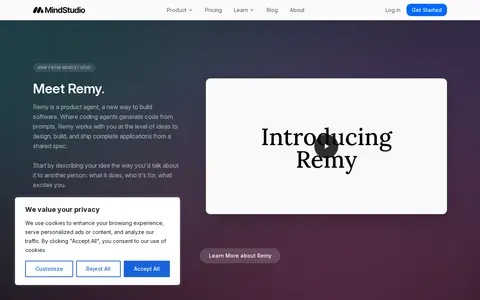
MindStudio is a visual platform for designing, building and deploying AI agents without coding, with optional code extensibility. It offers over 100 templates and connects to 200+ AI models. A product agent named Remy, in alpha, builds applications from a shared spec.
-
 0
BrainSoup supports AI agents, automated workflows, orchestration, or delegated tasks.
-
 0
Twig offers Sera, an AI receptionist that answers, qualifies and books calls, texts and web chats. Plans start at $49 per month for the Starter tier, and every plan includes a 15-day free trial with voice. Twig also publishes developer documentation covering its API, MCP server, SDKs, data connectors, RAG strategies and agent configuration.
-
 0
Westworld is a multi-agent simulation library for simulating and optimizing systems with multiple interacting agents. Inspired by Unity and Unity ML Agents and adapted in Python, it provides grid environments, agents, obstacles, collectibles and triggers, spawning, simple pathfinding and wandering behaviors, maze generation and simulation visualization and export. The project is described as extremely experimental and in alpha release.
-
 0
A freeCodeCamp handbook for developers on organizing AI agents for real business cases. It covers prerequisites, large language models, definitions of AI agents, and a decision algorithm for creating optimal agents, including checking budget, starting with one agent, and measuring performance. It uses a Google Research, Google DeepMind, and MIT paper as its primary source and code examples in a Google Colab notebook.
Community notes
Reviews and discussion
No reviews yet
Be the first to share how this project worked for you.
Join the discussion
Sign in with a verified account to leave a review or join the discussion.
Sign in to reviewKeep exploring
More in AI Agents & Automation
mindstudio.ai
MindStudio is a visual platform for designing, building and deploying AI agents without coding, with optional code extensibility. It offers over 100 templates and connects to 200+ AI models. A product agent named Remy, in alpha, builds applications from a shared spec.
nurgo-software.com
BrainSoup supports AI agents, automated workflows, orchestration, or delegated tasks.
twig.so
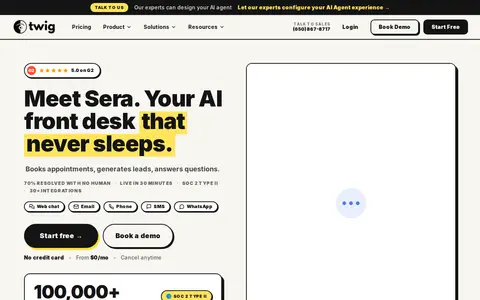
Twig offers Sera, an AI receptionist that answers, qualifies and books calls, texts and web chats. Plans start at $49 per month for the Starter tier, and every plan includes a 15-day free trial with voice. Twig also publishes developer documentation covering its API, MCP server, SDKs, data connectors, RAG strategies and agent configuration.
theolvs.github.io
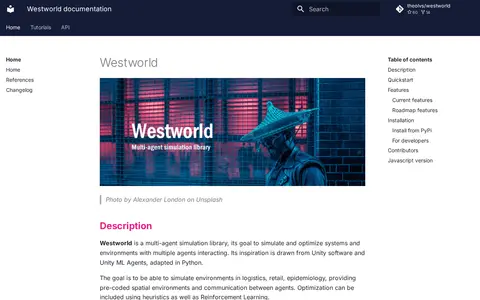
Westworld is a multi-agent simulation library for simulating and optimizing systems with multiple interacting agents. Inspired by Unity and Unity ML Agents and adapted in Python, it provides grid environments, agents, obstacles, collectibles and triggers, spawning, simple pathfinding and wandering behaviors, maze generation and simulation visualization and export. The project is described as extremely experimental and in alpha release.
freecodecamp.org
A freeCodeCamp handbook for developers on organizing AI agents for real business cases. It covers prerequisites, large language models, definitions of AI agents, and a decision algorithm for creating optimal agents, including checking budget, starting with one agent, and measuring performance. It uses a Google Research, Google DeepMind, and MIT paper as its primary source and code examples in a Google Colab notebook.