
pypi.org
OSINT tool for gathering emails, domains, hosts, and public data from search engines and sources.
Directory
Explore Advanced Search resources in Search & Discovery.
OSINT tool for gathering emails, domains, hosts, and public data from search engines and sources.

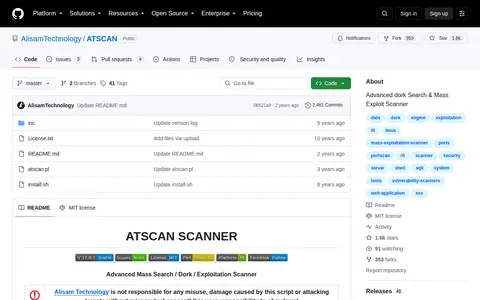
ATSCAN is an advanced dork search and mass exploit scanner. It is a GitHub repository by AlisamTechnology. The tool automates the process of searching for vulnerabilities using dork queries and scanning for exploits.

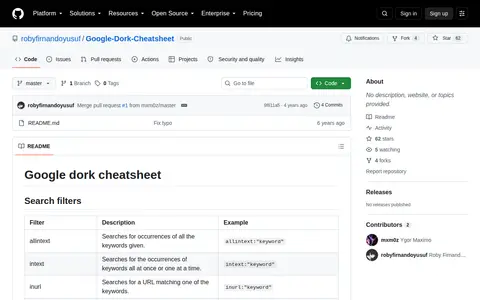
Google Dork Cheatsheet is a reference resource that documents Google advanced search operators and accompanying example queries. It lists operators such as allintext, inurl, filetype, and related, along with sample searches for use cases including locating specific file types, site-specific content, and publicly indexed directories.

ZoomEye is a cybersecurity search engine focused on internet asset discovery. It indexes internet-connected devices and supports open-source intelligence (OSINT) and threat intelligence use cases. The platform has offered Black Friday lifetime deals with one-time payments for permanent access, and allows users to create free accounts to get started.

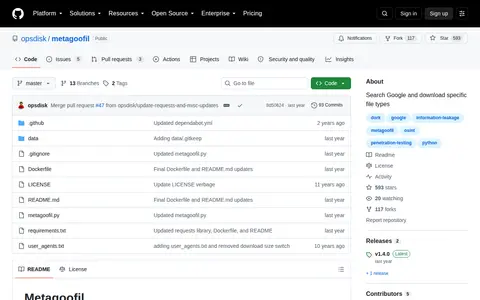
metagoofil is a Python security tool that searches Google for specific file types hosted on a target website, with optional local download of discovered files. It is intended for open source intelligence gathering, penetration testing, and identifying files organizations publicly expose to search indexers. It is a maintained fork of the original metagoofil project, preinstalled by default on Kali Linux, and deliberately excludes built-in metadata analysis in favor of external tools like exiftool.

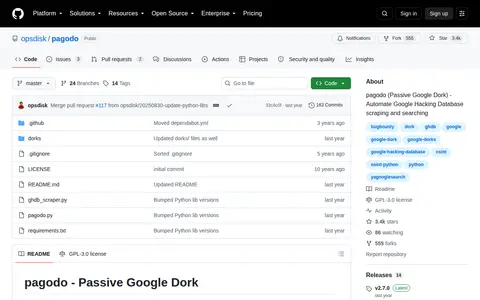
pagodo (Passive Google Dork) is a Python security tool that automates scraping of the Google Hacking Database and subsequent Google searches to identify potentially vulnerable web pages and applications. It replaces manual Google dork searches, consists of a dork retrieval component and a search execution component, uses the yagooglesearch library, and supports native HTTP(S) and SOCKS5 proxy support. Scraping Google Search results may violate Google's Terms of Service.

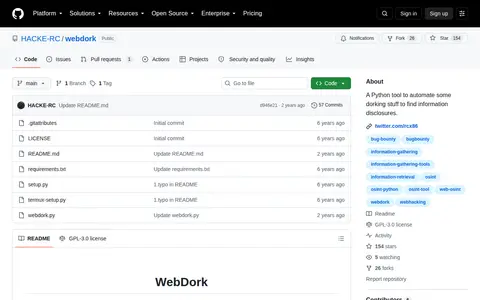
WebDork is an open-source Python tool that automates dorking tasks to find publicly available information disclosures for specified companies and organisations. It accepts a target company or organisation name as input, runs dork searches either in a browser or via the terminal, and allows users to view, save, or suppress output of results, with optional proxy support to avoid blocks. The tool is intended for ethical information gathering, and users are required to independently verify any information found through its use.