economist.com
The Economist instructions for submitting documents securely through its verified SecureDrop service.
Directory
Dark Web and Underground collects research, journalism, and tools that relate to hidden services and anonymous publishing. Whistleblowing and anonymous publishing covers secure drop systems and submission platforms. Tor and hidden services holds the software, directories, and explanation pages around the Tor network. Dark web research and studies and dark web news and analysis gather academic work, reports, and reporting on how these networks are used. Breach and leak research lists data breach checkers and disclosure trackers, and deep web resources and discovery covers guides to what sits beyond indexed pages. Archives and historical records, dark web search and directories, and underground communities and forums make up the remaining topics. Several entries here are news archives or academic projects rather than services you sign up for, so weigh each one by who published it and when.
The Economist instructions for submitting documents securely through its verified SecureDrop service.

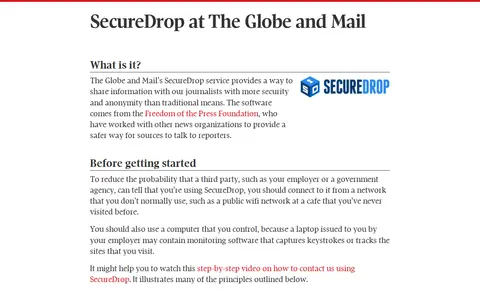
The Globe and Mail's SecureDrop service provides a way to share information with its journalists with more security and anonymity than traditional means. The software comes from the Freedom of the Press Foundation. The service uses the Tor network to anonymize interactions and is reached through the Tor Browser.

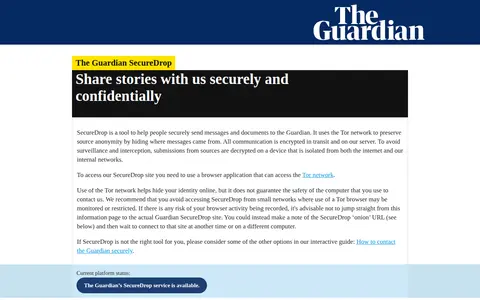
The Guardian SecureDrop is a tool for securely sending messages and documents to the Guardian. It uses the Tor network to hide where messages came from, and communication is encrypted in transit and on the server. Sources access it through an onion URL using the Tor browser.
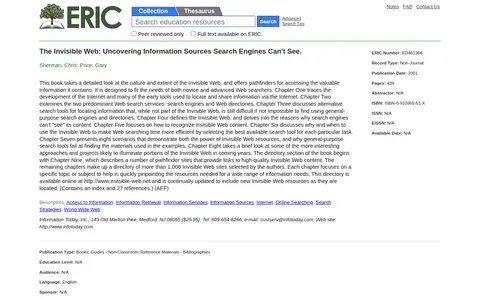
A 2001 book by Chris Sherman and Gary Price examining the nature and extent of the Invisible Web and offering pathfinders for accessing its content, aimed at novice and advanced web searchers. Chapters cover the development of the Internet, search engines and web directories, why search engines cannot see invisible web content, how to recognize it, and when to use it. A directory section lists more than 1,000 Invisible Web sites by topic.
Explains federated searching across government science databases often described as the deep web.

The Washington Post instructions for submitting documents securely through its verified SecureDrop service.

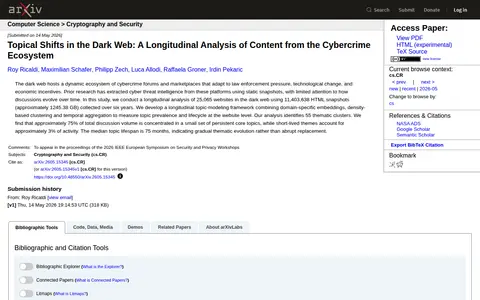
An arXiv paper presenting a longitudinal analysis of the dark web cybercrime ecosystem. The authors analyze 25,065 websites using 11,403,638 HTML snapshots collected over six years, applying a topic-modeling framework with domain-specific embeddings, density-based clustering and temporal aggregation. The analysis identifies 55 thematic clusters and measures topic prevalence and lifecycle at the website level.

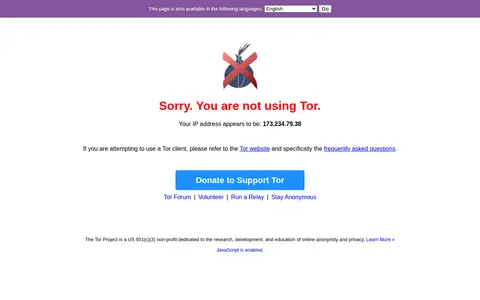
Official page that tests whether the current connection appears to be using the Tor network.

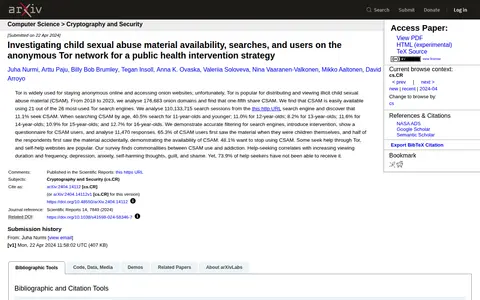
Public-health research measuring harmful-content availability and searches on the Tor network.
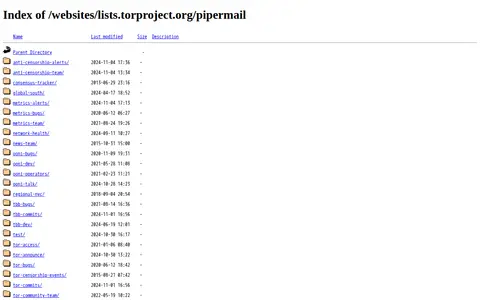
Historical public mailing-list messages documenting Tor development, research and relay operations.
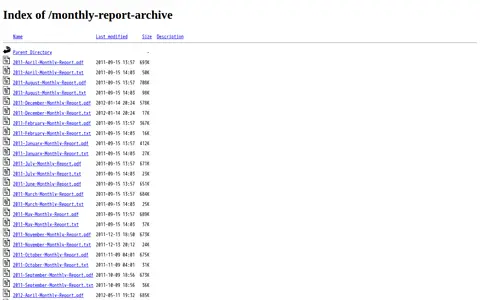
Archive of Tor Project monthly reports documenting development, research and community activity.
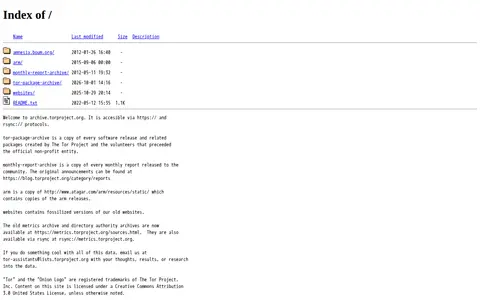
Official archive of older Tor software, websites, mailing lists, reports and project material.

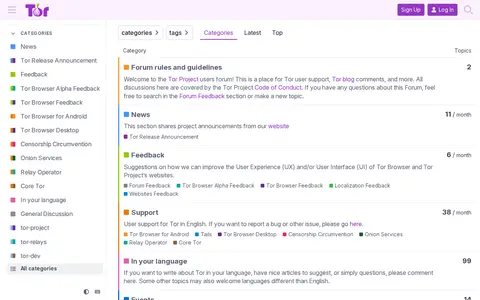
The Tor Project Forum is a discussion site for Tor users. It hosts user support, Tor blog comments, project announcements, feedback on Tor Browser and Tor Project websites, and discussions in languages other than English. It also covers events, general Tor ecosystem topics, read-only mirrors of Tor Project mailing lists, and development of Arti.

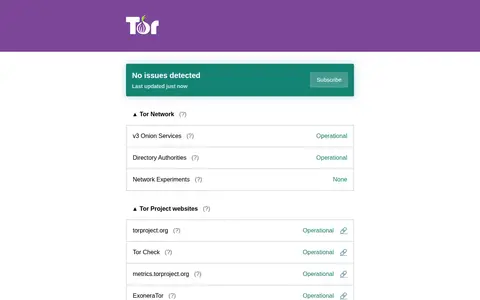
Official service-status page for Tor Project websites, bridges, directories and network services.

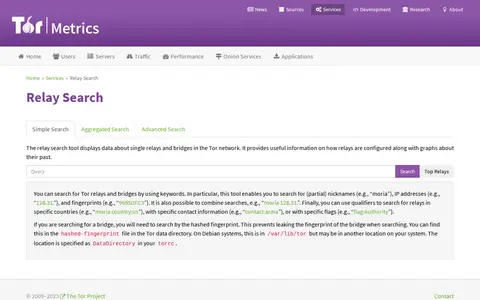
Relay Search is a service in the Tor Project's metrics site for looking up Tor relays. The page renders search results, and the site's data is released under a CC0 no copyright declaration.

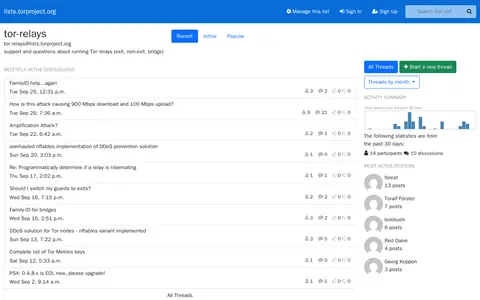
The tor-relays mailing list is a Tor Project email list for support and questions about running Tor relays, including exit, non-exit and bridge relays. Its archive shows discussions grouped by month from 2011 onward, with activity summaries and lists of active posters.
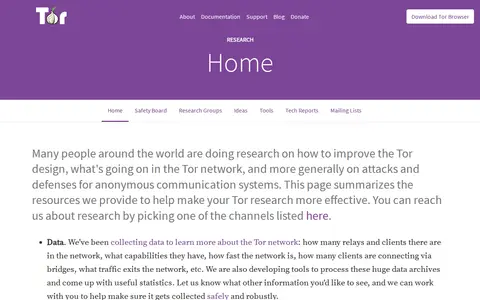
A Tor Project page that summarizes resources the project provides for research on improving Tor design, monitoring the Tor network, and studying attacks and defenses for anonymous communication systems. It points researchers to data collection, analysis guidance and measurement and attack tools.

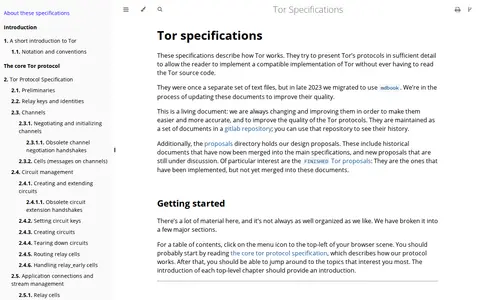
A set of documents describing how Tor works, intended to present its protocols in enough detail for a reader to implement a compatible implementation without reading the Tor source code. The documents were migrated to mdbook in late 2023 and are maintained in a gitlab repository; a separate proposals directory holds design proposals.

Tor Stack Exchange is a question-and-answer site for researchers, developers, and users of Tor. Questions cover topics such as onion services, exit relays, Tails, the Tor Browser Bundle, anonymity, and configuration.

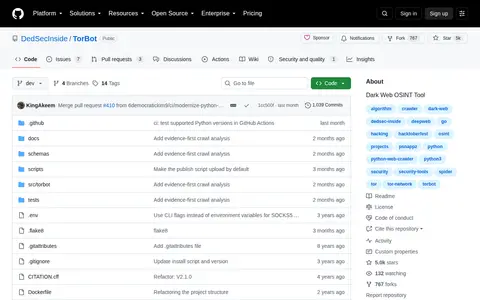
Open-source research crawler for collecting links and metadata from reachable onion pages.

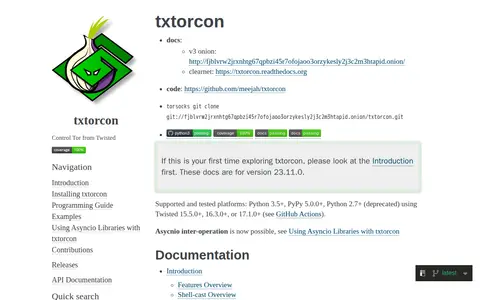
Twisted-based Python library for controlling Tor and building onion-service applications.

UNODC report on darknet-enabled cybercrime threats and policy responses in Southeast Asia.

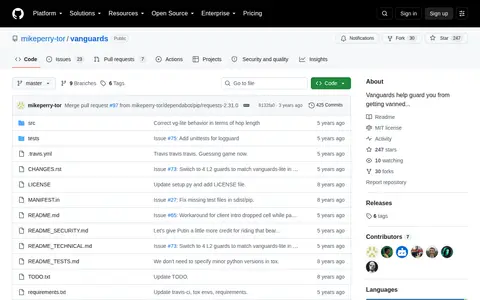
Tor add-on that helps onion-service operators reduce guard-discovery and related attacks.

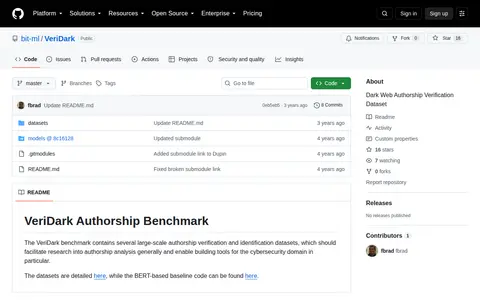
Research archive containing dark-web authorship verification datasets and baseline models.