onlinedisassembler.com
Online disassembler for inspecting executable files and assembly output during reverse engineering.
Directory
Explore Security Tools & Toolkits resources in Cybersecurity.
Online disassembler for inspecting executable files and assembly output during reverse engineering.

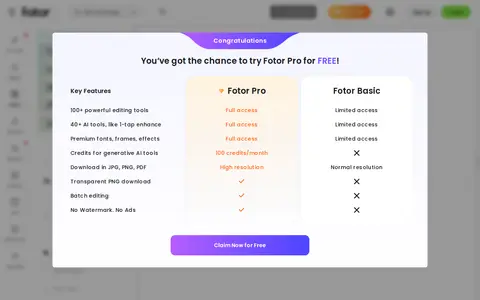
Browser photo editor for quick image edits, design work, and visual content adjustments.

Digital Methods tool for scraping search engine results and collecting web research data.

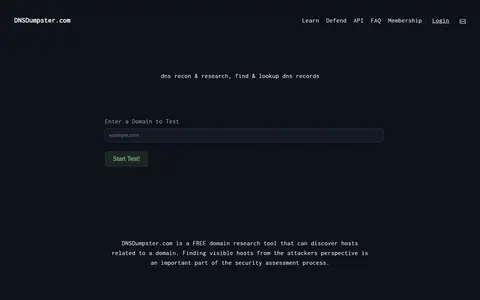
A free domain research tool that discovers hosts related to a domain and looks up DNS records. It presents visible hosts from an attacker's perspective for red and blue teams, and is intended for reconnaissance, penetration testing, bug bounties, threat analysis and network OSINT.

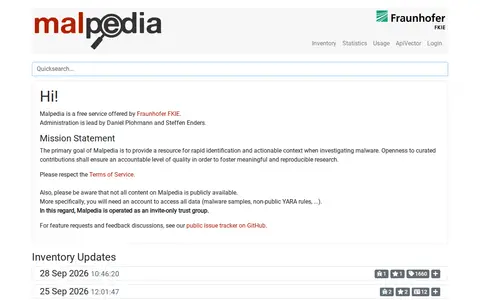
Malpedia is a free service from Fraunhofer FKIE aimed at providing a resource for rapid identification and actionable context when investigating malware. Curated contributions are intended to support accountable quality and reproducible research. Not all content is publicly available; an account is needed to access all data, such as malware samples and non-public YARA rules, and it is operated as an invite-only trust group.

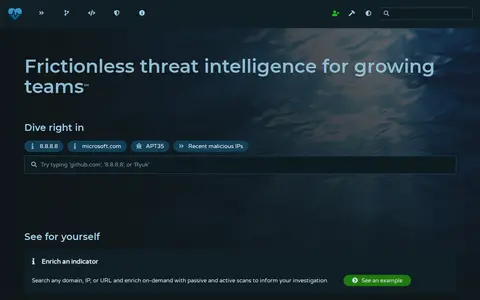
Pulsedive is a free threat intelligence platform for searching, scanning and enriching IPs, URLs, domains and other IOCs from OSINT feeds or submitted data. It supports on-demand passive or active scans and a query language for pivoting across indicators and threats, with export options. Paid tiers are listed for non-commercial and commercial use, including API and feed access.

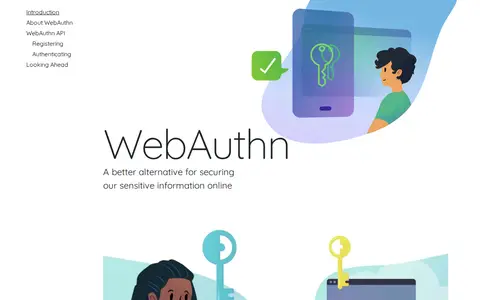
A guide introducing Web Authentication (WebAuthn), a W3C and FIDO specification that lets servers register and authenticate users using public key cryptography instead of passwords. It explains how credentials work, with a private key stored on the user's device and a public key sent to the server, and covers registering credentials and authenticating with them.

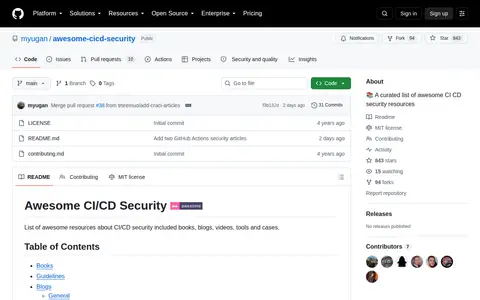
Awesome CI/CD Security is a GitHub repository or organization with source code, releases, documentation, or project resources.

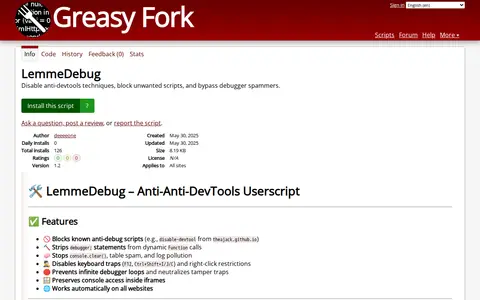
LemmeDebug supports reverse engineering, malware analysis, file inspection, or security research workflows.

Simple browser tool for encoding or decoding URLs, query strings, and escaped characters.

ThreatFox is a project from abuse.ch and Spamhaus for sharing indicators of compromise associated with malware with the infosec community, AV vendors and cyber threat intelligence providers. Users can upload IOCs, browse the database, and use APIs to push and pull signals and automate bulk queries. Spamhaus datasets are enhanced with malware samples from ThreatFox.

DNSPerf compares the speed and uptime of enterprise and commercial DNS services. It lists DNS providers sorted by DNSPerf rank based on data for the last 30 days, calculated using 40% performance, 45% uptime and 15% quality.

Synk is a developer resource for coding, documentation, communities, security research, or software tools.

Cheatsheet provides developer documentation, references, tutorials, or learning resources.

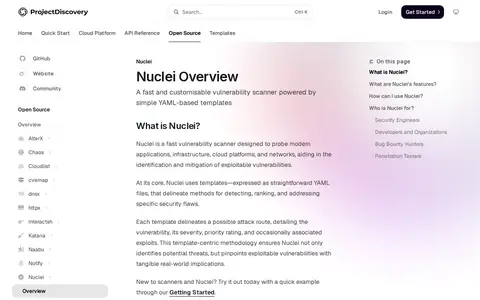
Nuclei provides developer documentation, references, tutorials, or learning resources.

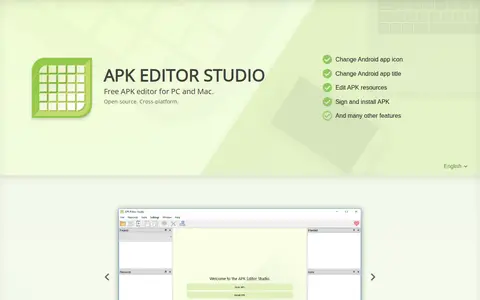
APK Editor Studio is a free, open-source, cross-platform APK reverse-engineering tool for Windows, macOS, and Linux. It allows users to extract, edit, or replace APK resources, including changing the app icon and title, removing unwanted permissions, signing and installing APKs, and viewing signatures. It includes many built-in tools such as a code editor, manifest editor, and APK cloner.

How To Turn off IPv6 helps developers write, search, review, test, or manage code and projects.

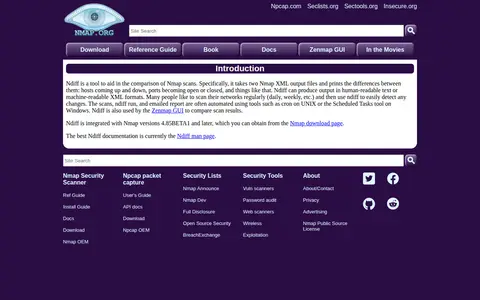
Ndiff is a tool that compares Nmap scans. It takes two Nmap XML output files and prints the differences between them, such as hosts coming up and down and ports becoming open or closed. It can produce human-readable text or machine-readable XML output and is used by the Zenmap GUI to compare scan results.

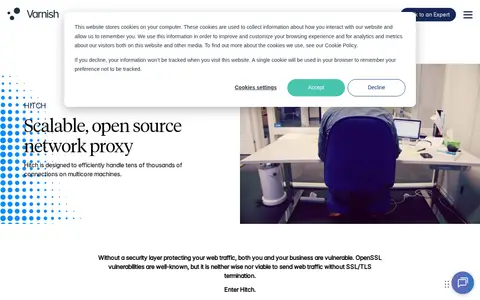
Hitch is a scalable, open source SSL/TLS proxy based on libev. It handles large numbers of connections on multicore machines, supports TLS 1.0, 1.1 and 1.2, and is the successor of the Stud project. It is licensed under a 2-clause BSD license and has been tested on Linux.
Iocaine is a developer resource for coding, documentation, communities, security research, or software tools.
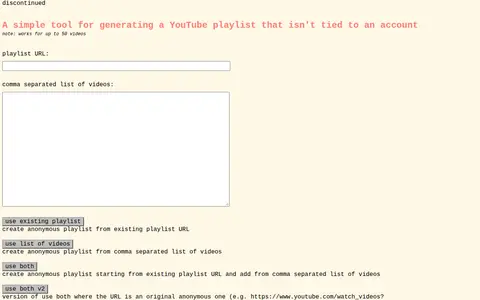
A discontinued simple tool for generating a YouTube playlist that isn't tied to an account. It creates anonymous playlists from an existing playlist URL or a comma separated list of videos, and works for up to 50 videos.

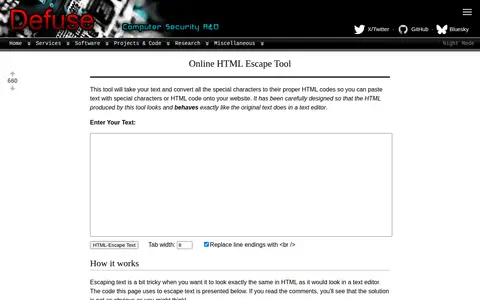
An online HTML escape tool that converts special characters in entered text into their proper HTML codes, so text or HTML code can be pasted onto a website. The produced HTML is designed to look and behave like the original text in a text editor.

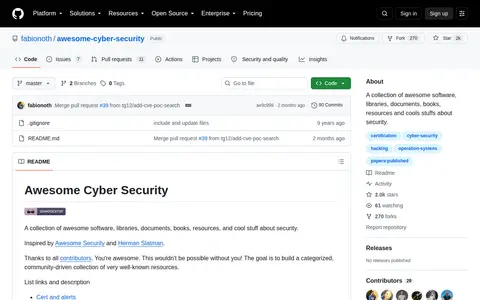
Awesome Cyber Security is a GitHub repository or organization with source code, releases, documentation, or project resources.

URLhaus is a platform operated by abuse.ch with the purpose of sharing malicious URLs used for malware distribution. It allows reporting URLs and browsing a database of malicious URLs. APIs enable pushing and pulling signals and automating bulk queries, and Spamhaus datasets enhanced by URLhaus are offered for threat hunting, email protection and network protection.